At Aarogyaa Bharat, we believe that awareness of essential
medical tools empowers both healthcare professionals and patients. In this
blog, we explore what haemostats are, how they work, their types, uses,
benefits, and important safety precautions.
What Are Haemostats?
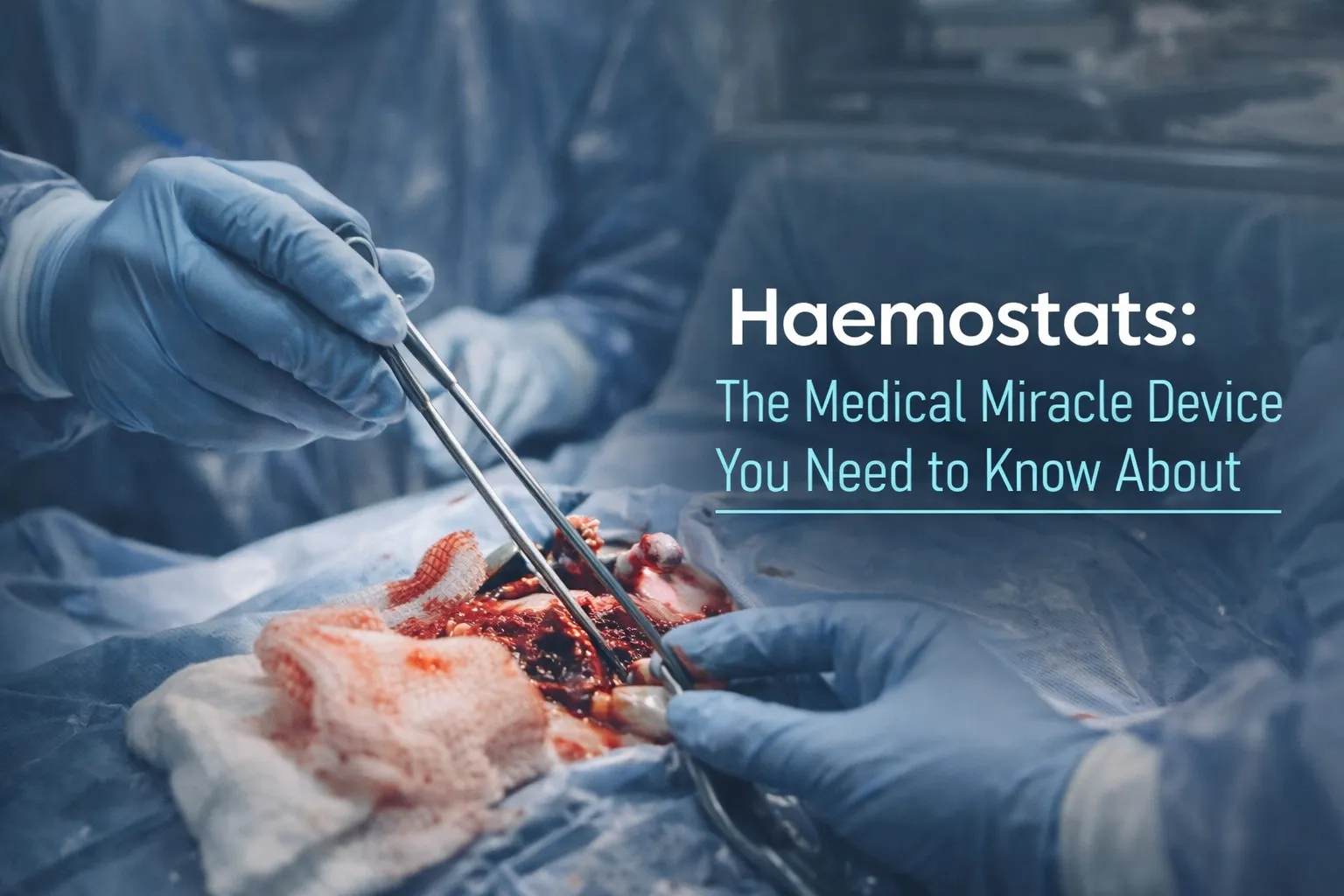
Haemostats are medical devices or agents designed to
control, reduce, or stop bleeding by promoting blood clotting at the site of
injury or surgery. They are widely used across medical specialties, including
surgery, dentistry, trauma care, and wound management.
Haemostats help prevent excessive blood loss, reduce
surgical time, and support faster healing.
Why Haemostats Are Essential in Modern Medicine
Uncontrolled bleeding can lead to severe complications such
as infection, delayed healing, or even life-threatening conditions. Haemostats
help address these risks by:
- Providing
rapid bleeding control
- Improving
surgical visibility
- Reducing
the need for sutures or cauterization
- Enhancing
patient safety
Their role is especially critical in minimally invasive
procedures and emergency care.
How Do Haemostats Work?
Haemostats function by supporting the body’s natural
clotting process. Depending on their type, they may:
- Absorb
blood and concentrate clotting factors
- Create
a physical barrier at the bleeding site
- Activate
platelets to form clots faster
- Promote
tissue sealing and healing
This targeted action allows bleeding to stop efficiently
without affecting surrounding healthy tissue.
Types of Haemostats
Haemostats are broadly categorized based on their
composition and mechanism of action.
1. Mechanical Haemostats
These work by providing a physical structure that supports
clot formation.
Common examples include:
- Collagen-based
haemostats
- Gelatin
sponges
- Oxidized
cellulose
They are widely used in surgical procedures due to their
absorbent nature.
2. Active Haemostats
Active haemostats contain biological components like
thrombin that actively promote clotting.
They are commonly used in surgeries where rapid bleeding
control is required.
3. Flowable Haemostats
Flowable haemostats combine a gelatin matrix with thrombin,
allowing them to conform to irregular wound surfaces.
They are ideal for hard-to-reach bleeding areas.
4. Topical Haemostats
Topical haemostats are applied directly to wounds or
surgical sites. They are commonly used in:
- Dental
procedures
- Minor
surgical wounds
- Emergency
first aid
Common Medical Uses of Haemostats
Haemostats are used across a wide range of medical settings:
- Surgical
procedures: General, orthopedic, cardiovascular, and minimally invasive
surgeries
- Emergency
and trauma care: Rapid bleeding control in accidents
- Dental
treatments: Tooth extractions and oral surgeries
- Wound
care: Managing cuts, ulcers, and post-operative wounds
- Home
healthcare: First-aid and minor injury management
Their versatility makes them a cornerstone of effective
patient care.
Benefits of Using Haemostats
Faster Bleeding Control
Haemostats stop bleeding quickly, reducing the risk of
complications.
Reduced Surgical Time
Improved bleeding control enhances surgical efficiency and
precision.
Enhanced Patient Safety
Lower blood loss means reduced infection risk and better
recovery outcomes.
Supports Faster Healing
Controlled bleeding promotes cleaner wounds and faster
tissue repair.
Safety Precautions When Using Haemostats
While haemostats are generally safe, proper usage is
essential:
- Use
only as recommended by medical professionals
- Avoid
excessive application
- Ensure
compatibility with the patient’s condition
- Follow
sterile handling practices
Patients should always consult healthcare providers before
using haemostatic products at home.
Choosing the Right Haemostat
Selecting the appropriate haemostat depends on:
- Type
and severity of bleeding
- Surgical
or wound location
- Patient
health conditions
- Clinical
setting
Trusted healthcare providers and suppliers like Aarogyaa
Bharat ensure access to reliable, quality-assured haemostatic solutions.
Frequently Asked Questions (FAQs)
Q1. Are haemostats safe for all patients?
Most haemostats are safe when used correctly, but
suitability depends on the patient’s medical condition.
Q2. Can haemostats be used for home wound care?
Yes, certain topical haemostats are suitable for minor cuts
and first-aid use under guidance.
Q3. Do haemostats dissolve in the body?
Many haemostats are absorbable and naturally dissolve over
time.
Q4. Are haemostats used only in surgery?
No, they are also used in dental care, trauma management,
and wound care.
Conclusion
Haemostats truly represent a medical miracle, transforming
the way bleeding is managed across healthcare settings. By enabling rapid,
safe, and effective bleeding control, they play a critical role in improving
patient outcomes and surgical success.
Understanding how haemostats work and where they are used
empowers both healthcare professionals and patients to make informed decisions.
At Aarogyaa Bharat, we are committed to providing awareness
and access to high-quality medical solutions that support safer, more effective
care because every drop of care counts.