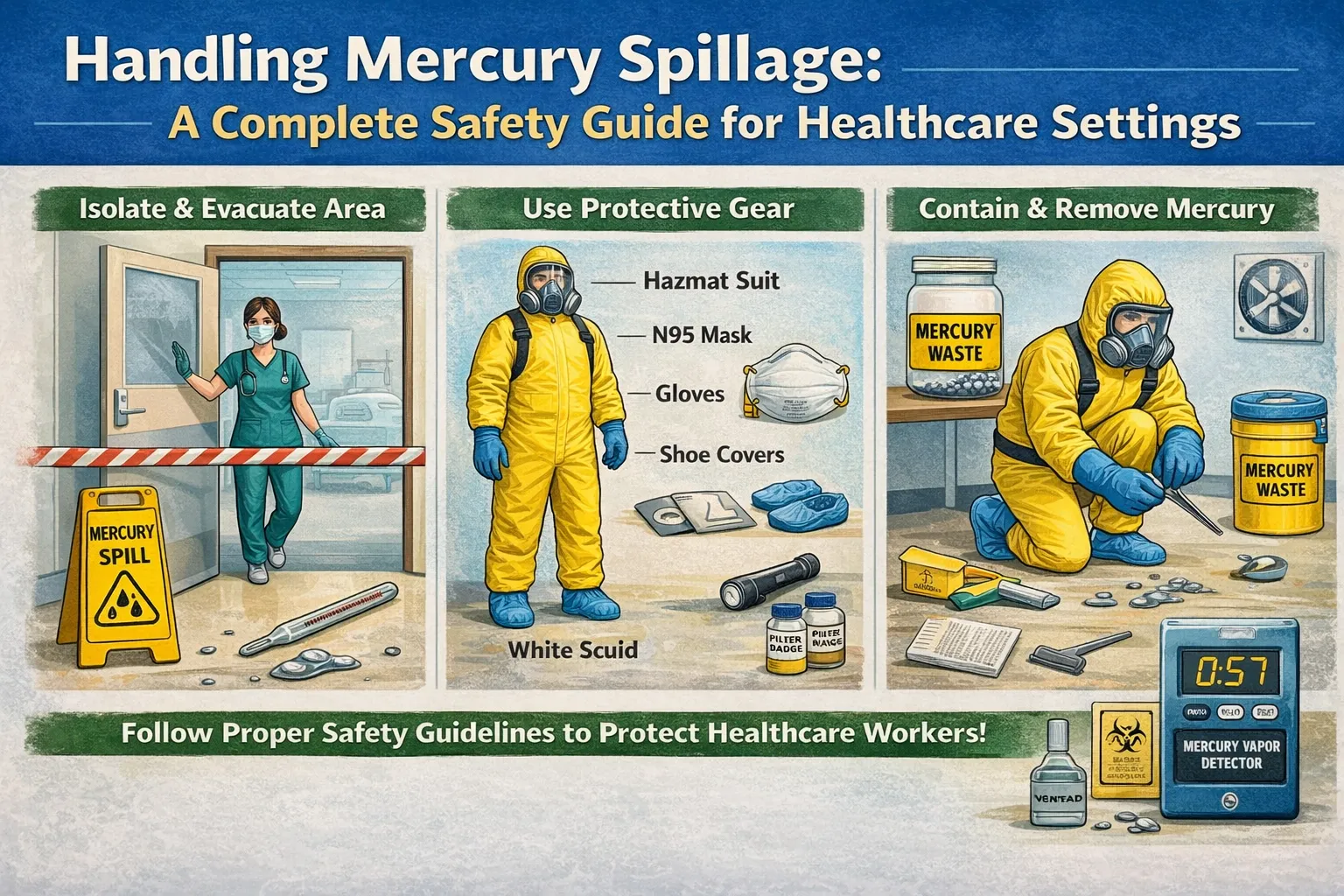
This blog explains what mercury spillage is, why it is
dangerous, how to handle it safely, and the complete list of items required in
a Mercury Spillage Kit, ensuring compliance with healthcare safety standards.
What Is Mercury and Why Is It Dangerous?
Mercury is a heavy metal that exists in liquid form at room
temperature. When spilled, it breaks into tiny droplets that can easily roll
into cracks, drains, and hidden spaces. Over time, these droplets evaporate,
releasing toxic mercury vapors into the air.
Exposure to mercury vapors can cause:
- Headaches
and dizziness
- Respiratory
irritation
- Memory
problems and nervous system damage
- Kidney
damage
- Serious
health risks to pregnant women and children
This is why medical equipment containing mercury must be
handled with extreme care.
Common Medical Equipment Containing Mercury
Although many healthcare facilities are shifting to
mercury-free alternatives, mercury-based devices are still found in some
settings.
Common examples include:
- Mercury
sphygmomanometers (BP apparatus)
- Mercury
thermometers
- Laboratory
measuring devices
- Some
older diagnostic and dental equipment
Any breakage or leakage from these devices can result in
mercury spillage.
What Is Mercury Spillage?
Mercury spillage refers to the accidental release of liquid
mercury due to:
- Breakage
of medical equipment
- Improper
handling or transportation
- Dropping
or mishandling of devices
- Equipment
wear and tear
Even a small spill requires immediate and correct response.
Why Proper Handling of Mercury Spillage Is Critical
1. Health and Safety Risks
Mercury vapors are invisible and odorless, making exposure
difficult to detect.
2. Environmental Hazards
Mercury contaminates soil and water, entering the food chain
and causing long-term ecological damage.
3. Regulatory Compliance
Healthcare facilities must comply with biomedical waste and
hazardous material management guidelines. Improper handling can lead to
penalties and legal consequences.
4. Prevention of Secondary Contamination
Incorrect cleaning methods can spread mercury further
instead of removing it.
Immediate Actions to Take After Mercury Spillage
If mercury spillage occurs:
- Evacuate
people from the affected area
- Restrict
access to prevent spreading
- Turn
off air conditioning or fans
- Open
windows for ventilation
- Do
NOT touch mercury with bare hands
- Do
NOT use a vacuum cleaner or broom
Once the area is secured, use a Mercury Spillage Kit.
Mercury Spillage Kit: List of Required Items
A mercury spillage kit is an essential safety resource for
any facility using mercury-containing medical equipment.
Essential Components of a Mercury Spillage Kit
- Personal
Protective Equipment (PPE)
- Disposable
gloves (nitrile or latex)
- Face
mask or respirator
- Protective
gown or apron
- Safety
goggles
- Mercury
Collection Tools
- Mercury
scoop or scraper
- Stiff
cardboard sheets
- Syringe
or eyedropper for suction
- Absorbent
and Binding Materials
- Sulfur
powder or zinc powder (to bind mercury)
- Absorbent
pads or paper towels
- Adhesive
tape (to pick tiny droplets)
- Containment
Supplies
- Sealable,
leak-proof plastic containers
- Zip-lock
bags
- Labelled
hazardous waste bags
- Cleaning
and Decontamination Supplies
- Disinfectant
solution
- Damp
cloths
- Soap
and water for final cleaning
- Warning
and Documentation Materials
- Hazard
warning labels
- Incident
reporting forms
- Instruction
manual for mercury spill management
Step-by-Step Procedure for Handling Mercury Spillage
Step 1: Wear PPE
Ensure complete personal protection before approaching the
spill.
Step 2: Collect Mercury Droplets
Use a syringe or eyedropper to collect visible droplets.
Cardboard can help guide mercury together.
Step 3: Bind the Mercury
Sprinkle sulfur or zinc powder over the area to bind
remaining mercury.
Step 4: Collect Residue
Use absorbent materials and adhesive tape to remove fine
particles.
Step 5: Secure Disposal
Place all collected materials in labelled, sealed
containers.
Step 6: Clean the Area
Wipe the area with disinfectant and wash thoroughly.
Step 7: Dispose Through Authorized Channels
Hand over waste only to authorized hazardous waste disposal
agencies.
What NOT to Do During Mercury Spillage
- Do
not sweep mercury with a broom
- Do
not use vacuum cleaners
- Do
not pour mercury into sinks or drains
- Do
not wash contaminated clothing in washing machines
- Do
not ignore small spills
Training and Preventive Measures
- Regular
staff training on mercury handling
- Proper
storage of mercury devices
- Immediate
replacement with mercury-free alternatives
- Availability
of mercury spillage kits in high-risk areas
Transition to Mercury-Free Medical Equipment
Healthcare institutions are encouraged to shift to digital
BP monitors and mercury-free thermometers. This reduces health risks and aligns
with global environmental safety initiatives.
Platforms like Aarogyaa Bharat promote safe, modern, and
compliant medical equipment for hospitals, clinics, and home-care settings.
Frequently Asked Questions (FAQs)
Q1. Can household cleaning methods be used for mercury
spills?
No. Improper methods can spread contamination.
Q2. Is a mercury spillage kit mandatory in hospitals?
Yes, especially where mercury-based devices are used.
Q3. Can mercury be reused after spillage?
No. Spilled mercury must be disposed of as hazardous waste.
Handling mercury spillage is not just a safety protocol it
is a responsibility toward healthcare workers, patients, and the environment.
Proper training, quick action, and the availability of a mercury spillage kit
can prevent serious health hazards and ensure regulatory compliance. As
healthcare evolves, transitioning to mercury-free equipment remains the safest
long-term solution for everyone involved.
Responsible healthcare begins with responsible handling.