Introduction :
Have you ever sat down to work or study, only to look at the clock hours later and realize… nothing’s done?
Enter the Pomodoro Technique—a ridiculously simple yet powerful time management method that helps you stay focused, fight procrastination, and get work done without feeling drained.
Let’s break down what it is, how it works, and why it could completely change the way you work or study.
What is the Pomodoro Technique?
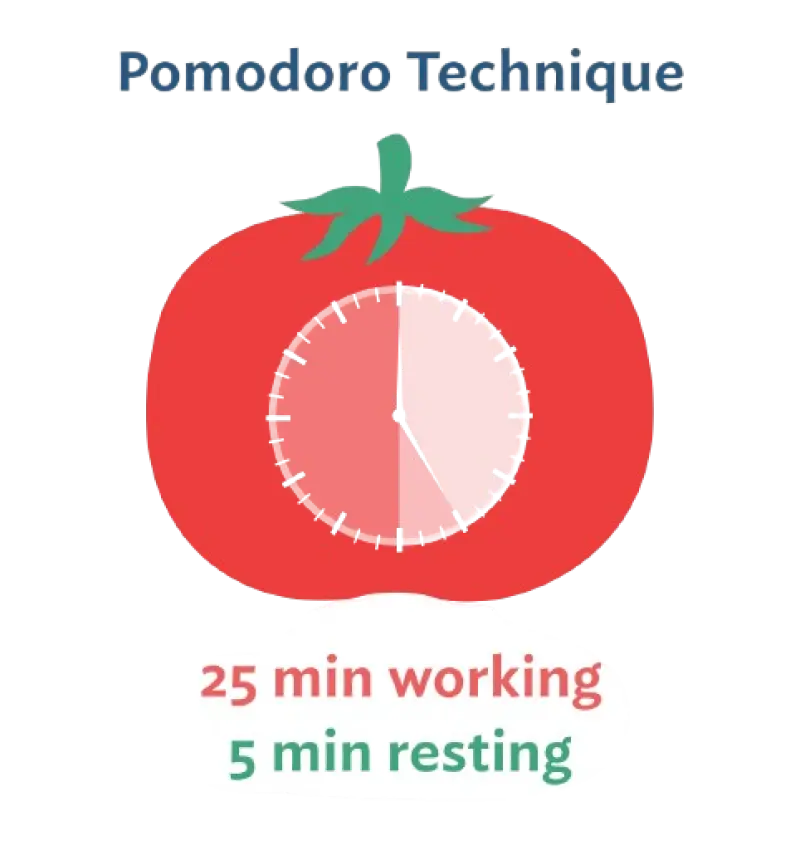
Invented in the late 1980s by Francesco Cirillo, the Pomodoro Technique is a time management method that breaks your work into focused 25-minute sessions followed by short breaks.
Each 25-minute block is called a "Pomodoro", inspired by the tomato-shaped kitchen timer Cirillo used as a student (pomodoro means tomato in Italian 🍅).
Here’s how it works:
Step-by-Step:
Choose a task you want to work on
Set a timer for 25 minutes
Work with full focus—no distractions
When the timer rings, take a 5-minute break
Repeat this for 4 sessions
After 4 Pomodoros, take a longer break (15–30 mins)
That’s it. Simple. But powerful.
How Pomodoro Helps an Individual: Real Benefits That Matter
1. It Improves Your Focus Instantly
25 minutes feels short, so your brain naturally commits better. You tell yourself:
“I can handle just 25 minutes of deep work.”
It makes getting started easier—the hardest part of any task.
2. Beats Procrastination Without Pressure
Instead of dreading a 3-hour work block, you’re just tackling one small chunk. That reduces overwhelm and helps you begin.
It shifts your mindset from:
“I’ll never finish this.”
To:
“Let me do just one Pomodoro.”
3. It Builds a Routine Without Burning You Out
The built-in 5-minute breaks act like mini rewards.
Stretch. Breathe. Grab coffee. Check your phone (a little). Then return with a refreshed brain.
This cycle prevents:
Mental fatigue
Burnout
Constant switching between tasks
4. Helps Track Progress
Each Pomodoro is a measurable unit of effort. After 4–6 Pomodoros, you’ll know exactly how much focused time you’ve invested.
For students, freelancers, and remote workers—it’s a great way to monitor productivity.
5. Promotes Deep Work, Reduces Distractions
When you start a Pomodoro, the rule is clear:
No checking your phone. No switching tabs. No multitasking.
It teaches your mind to focus on one thing at a time—a rare superpower in the digital world.
6. Adapts to Any Work Style
Whether you're:
A student prepping for exams
A designer working on client projects
A writer trying to finish a draft
An employee stuck in email overload
The Pomodoro Technique adapts. It’s flexible, lightweight, and requires nothing but a timer.
7. Helps You Finish What You Start
Since each task is broken into Pomodoros, you’ll feel a sense of progress with every timer tick.
No more half-done reports or unread chapters. It builds momentum—and momentum gets things done.
Pro Tips for Mastering Pomodoro
Use a dedicated app like Forest, Pomofocus, or Focus Booster
Turn off all notifications before starting a session
Group similar tasks into one Pomodoro (like replying to emails)
Use breaks mindfully—don’t just scroll, walk or hydrate
Customize the timing (e.g., 50:10 if 25:5 feels too short)
Final Thoughts: Tiny Tomato. Massive Impact.
If you’re struggling with focus, procrastination, or time management, give the Pomodoro Technique a try.
It’s not about doing more. It’s about doing better—with intention, energy, and a whole lot less stress.
Because at the end of the day, productivity isn’t about working non-stop—it’s about working smart, resting right, and staying consistent.
And sometimes… all it takes is a timer.
Ready to try your first Pomodoro today? Set that 25-minute timer and dive in. You’ll be amazed at how much you can achieve in less time.