In Indian homes, where
bedrooms are compact, furniture placement is tight, doorways are narrow, and
bathrooms often have limited manoeuvring space, incorrect measurements can turn
a helpful medical aid into a daily obstacle. A properly measured commode chair
placement ensures safety, comfort, dignity, and ease of use, while a poorly
planned one increases fall risk, frustration, and caregiver strain. At Aarogyaa
Bharat, we strongly emphasise accurate space measurement as the foundation of
safe commode chair use, regardless of patient condition or chair type.
Why Space Measurement Is Critical for Safety and Comfort
A commode chair is not just placed in a room; it becomes
part of the daily movement pattern of the user and caregiver. If the chair is
too close to the bed, transfers become awkward and unsafe. If it is too far,
the user may struggle to reach it in time, especially at night. Insufficient
side clearance makes it difficult to sit, stand, clean, or assist, increasing
the risk of slips and back injuries. Proper space measurement ensures smooth
transfers, clear walking paths, and enough room for dignity-preserving hygiene.
In Indian households with tiled floors and shared spaces, even a few
centimetres of miscalculation can significantly affect safety.
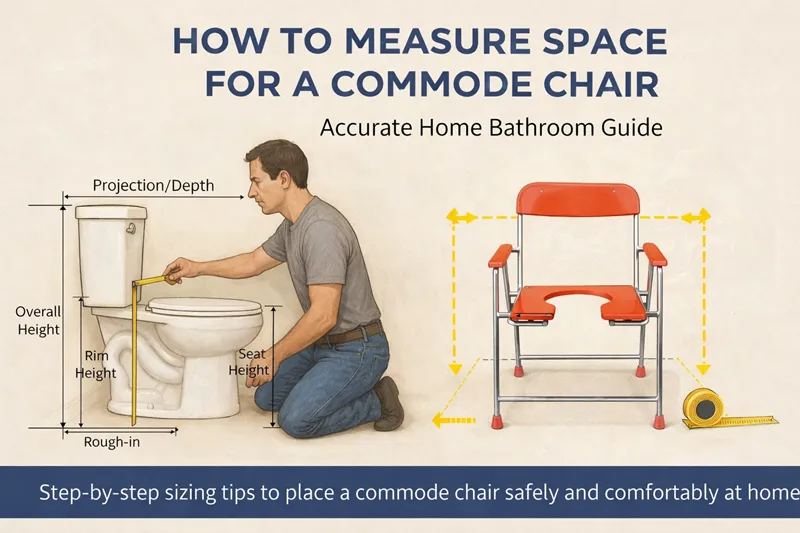
Step One: Measuring the Available Floor Area
The first and most important step is measuring the clear
floor area where the commode chair will be placed. This includes not just the
footprint of the chair itself, but also the surrounding free space needed for
safe movement. Using a measuring tape, families should measure the length and
width of the area beside the bed, near the bathroom, or in the chosen room. It
is important to account for fixed furniture such as beds, wardrobes, side
tables, and walls. Aarogyaa Bharat recommends measuring the space in
centimetres rather than estimating visually, as visual judgement often
underestimates how much space transfers and assistance actually require.
Step Two: Allowing Clearance for Safe Transfers
A commode chair should never be placed tightly between
objects. Safe transfers require clearance on at least one side, ideally both,
so the user can approach, turn, and sit comfortably. Caregivers also need space
to stand close without twisting or bending awkwardly. Clearance space prevents
bumping into furniture, catching feet on obstacles, or losing balance during
transfers. This is especially important for elderly users, bariatric patients,
ICU discharge patients, and those with walkers or wheelchairs.
Step Three: Measuring Bed Height and Seat Height
Compatibility
Seat height alignment is a key safety factor that depends
directly on measurement. If the commode chair seat is too low compared to the
bed, standing up becomes painful and unsafe. If it is too high, feet may not
touch the floor, compromising balance. Families should measure the bed height
from the floor to the mattress top and ensure the commode chair’s adjustable
height range can match or slightly exceed this measurement. Proper alignment
allows smoother bed-to-chair transfers with minimal joint strain.
Step Four: Doorway and Passage Measurements
If the commode chair needs to be moved into a bathroom for
cleaning or positioned in different rooms, doorway width and passage clearance
must be measured. Many Indian homes have narrow door frames, sometimes as small
as 60–65 cm. A commode chair that fits beside the bed may not pass through
doorways if not measured correctly. This is especially important for wheeled or
bariatric commode chairs, which are wider than standard models. Aarogyaa Bharat
advises measuring the narrowest doorway the chair must pass through before
selecting a model.
Step Five: Bathroom Space Measurement (If Applicable)
Some families prefer placing the commode chair inside or
near the bathroom. In such cases, measuring bathroom floor space, door swing
area, and turning radius is essential. Bathrooms often contain buckets, stools,
and shelves that reduce usable space. Measuring ensures the chair can be placed
without blocking exits, taps, or drainage areas. Adequate bathroom measurement
prevents water splashes, slipping hazards, and cramped usage.
Step Six: Night-Time Accessibility Planning
Night-time use demands special spatial planning. The commode
chair should be reachable within one or two steps from the bed, with a clear,
obstacle-free path. Measuring night-time access space includes checking for
loose rugs, wires, footwear, or furniture edges that could cause tripping.
Adequate clearance allows users to approach the chair confidently even in low
light, significantly reducing fall risk.
Step Seven: Space for Hygiene and Cleaning
Measuring space should also include consideration for
cleaning and bucket removal. Caregivers need enough room to access the rear or
underside of the chair without lifting it awkwardly. Tight placement may make
hygiene management difficult, leading to rushed cleaning or spills. Proper
spacing supports cleanliness and dignity, especially in shared living spaces.
Measurement Reference Table for Commode Chair Planning
|
Measurement
Area |
Recommended
Minimum Space |
Why It
Matters |
|
Chair
footprint area |
Chair width +
10–15 cm |
Prevents
tight placement |
|
Side
clearance |
30–45 cm |
Safe
transfers and caregiver access |
|
Front
clearance |
45–60 cm |
Comfortable
approach and turning |
|
Bed-to-chair
distance |
30–60 cm |
Easy, safe
transfers |
|
Doorway width |
≥ Chair width
+ 5 cm |
Smooth
movement between rooms |
|
Night-time
pathway |
Clear,
obstacle-free |
Fall
prevention |
|
Cleaning
access space |
20–30 cm
behind chair |
Hygiene and
bucket removal |
Common Measurement Mistakes to Avoid
Many families measure only the chair size listed online and
forget to include clearance and movement space. Others measure during the day
but ignore night-time conditions, when visibility and balance are reduced.
Measuring without considering caregiver presence is another common mistake,
leading to cramped assistance. Avoiding these errors ensures the commode chair
remains a safety solution rather than a daily inconvenience.
Matching Measurements with the Right Chair Type
Once space measurements are complete, families can choose
the right commode chair type. Compact or foldable chairs suit small apartments,
while wider bariatric chairs require additional clearance. Wheeled chairs need
extra turning space, and chairs with armrests require side clearance. Aarogyaa
Bharat uses space measurement data to recommend models that fit comfortably
within Indian homes without compromising safety.
Why Aarogyaa Bharat Emphasises Space Planning
Aarogyaa Bharat understands that even the best-designed
commode chair fails if it does not fit properly within the home. By guiding
families through accurate measurement and planning, we help prevent unnecessary
returns, safety issues, and frustration. Proper space planning ensures that the
commode chair integrates seamlessly into daily life, supporting dignity and
confidence.
Conclusion
Measuring space for a commode chair is not a minor technical step but a crucial safety process that directly affects usability, comfort, and fall prevention. By carefully measuring floor area, clearance, bed height, doorways, night-time access, and hygiene space, families can ensure the commode chair truly supports safe and dignified home care. In Indian homes where space is precious and mobility risks are real, accurate measurement transforms a commode chair from a simple product into a reliable, life-improving solution. Aarogyaa Bharat remains committed to helping families plan home care thoughtfully, starting with the right measurements.