Unlike adults, infants especially premature and medically fragile babies are unable to independently regulate these critical physiological functions. This is where specialized infant care equipment becomes essential.
At Aarogyaa Bharat, we understand that infant care is not just about medical devices it is about protecting life at its most vulnerable stage. Whether in hospitals, maternity wards, neonatal intensive care units (NICUs), or home healthcare settings, infant and baby care equipment ensures stability, safety, and continuous monitoring during a period when even minor complications can have long-term consequences.
As India’s healthcare ecosystem continues to evolve, demand for high-quality, compliant, and clinically reliable infant care equipment has increased significantly. This detailed guide explores the importance, types, applications, safety standards, and future of infant and baby care equipment while highlighting how Aarogyaa Bharat supports healthcare providers and families in making informed, responsible choices.
Why Infant and Baby Care Equipment Is Critical in Modern Healthcare
The neonatal period the first 28 days of life is the most sensitive phase of human development. During this time, newborns undergo rapid physiological transitions, including independent breathing, thermoregulation, metabolic adjustment, and immune system activation. Any instability during this period can lead to severe complications.
Infant and baby care equipment addresses these challenges by:
- Providing controlled thermal environments
- Supporting respiratory and cardiovascular stability
- Allowing continuous monitoring of vital signs
- Minimizing infection risk and physical stress
- Enabling timely medical intervention
For premature infants, low birth weight babies, or newborns with congenital conditions, such equipment is often life-saving, not optional.
Core Categories of Infant and Baby Care Equipment
Infant care equipment spans multiple categories, each serving a specific clinical purpose. Together, they create a comprehensive neonatal care ecosystem.
1. Thermal Regulation Equipment
Newborns lose heat rapidly and cannot regulate body temperature effectively.
Key equipment includes:
- Infant incubators
- Radiant warmers
- Neonatal bassinets with thermal control
These devices prevent hypothermia and overheating, both of which can be fatal if unmanaged.
2. Monitoring and Life-Support Systems
Continuous monitoring allows early detection of distress before it becomes critical.
Common devices include:
- Neonatal multi-parameter monitors
- Pulse oximeters
- Apnoea monitors
- Neonatal ventilators and CPAP systems
These systems track heart rate, oxygen saturation, breathing patterns, and blood pressure in real time.
3. Feeding and Nutritional Support Equipment
Many newborns cannot feed independently due to prematurity or medical conditions.
Equipment includes:
- Feeding pumps
- Syringe pumps
- Breast milk storage and warming systems
Accurate nutritional delivery supports growth, immunity, and neurological development.
4. Treatment and Support Equipment
These devices address specific neonatal conditions.
Examples include:
- Phototherapy units for neonatal jaundice
- Infant resuscitation devices
- Transport incubators for safe transfers
Each device plays a targeted role in stabilizing and supporting infant health.
Creating a Secure and Protected Environment for Newborns
Infant care equipment is designed to recreate the protective conditions of the womb while allowing medical access. A secure neonatal environment focuses on:
- Temperature and humidity control
- Reduced noise and light exposure
- Minimal handling to prevent stress
- Infection prevention through enclosed systems
- Immediate alerts for physiological changes
This environment significantly reduces neonatal morbidity and supports faster recovery.
Role of Infant Care Equipment in NICUs and Special Care Units
Neonatal Intensive Care Units rely heavily on advanced infant care equipment to manage critically ill or premature babies.
NICU equipment enables:
- Individualized life support
- Gradual weaning from ventilation or oxygen
- Continuous observation without excessive handling
- Long-term monitoring of development
Without such equipment, survival rates and developmental outcomes would be dramatically lower.
Infant and Baby Care Equipment in Home Healthcare
With advances in technology and early discharge protocols, infant care is increasingly extending into home environments.
Home-based infant care equipment includes:
- Infant movement and breathing monitors
- Feeding assistance devices
- Temperature monitoring tools
These solutions allow families to care for babies safely at home while maintaining medical oversight—reducing hospital stays and emotional stress.
Safety, Quality, and Regulatory Compliance
Infant care equipment must meet the highest safety standards due to the vulnerability of patients.
Key compliance requirements include:
- Medical-grade materials
- Biocompatibility and non-toxicity
- Electrical and mechanical safety certification
- Precision alarms and fail-safe systems
Aarogyaa Bharat’s Role in Infant and Baby Care Equipment
Aarogyaa Bharat acts as a trusted healthcare sourcing partner, connecting hospitals, maternity centres, NICUs, and families with verified, compliant, and quality-assured infant care equipment.
Our approach focuses on:
- Manufacturer verification
- Clinical suitability
- Regulatory compliance
- Transparent procurement
- Long-term reliability
By simplifying access to neonatal and paediatric equipment, Aarogyaa Bharat strengthens India’s infant healthcare infrastructure and supports better outcomes for newborns.
Future of Infant and Baby Care Equipment
The future of neonatal care is technology-driven and patient-centric.
Key innovations include:
- Smart incubators with AI monitoring
- Wireless, cloud-connected neonatal monitors
- Predictive analytics for early risk detection
- Ergonomic designs that support development
As maternal and child health remains a national and global priority, advanced infant care equipment will play an increasingly critical role.
Conclusion
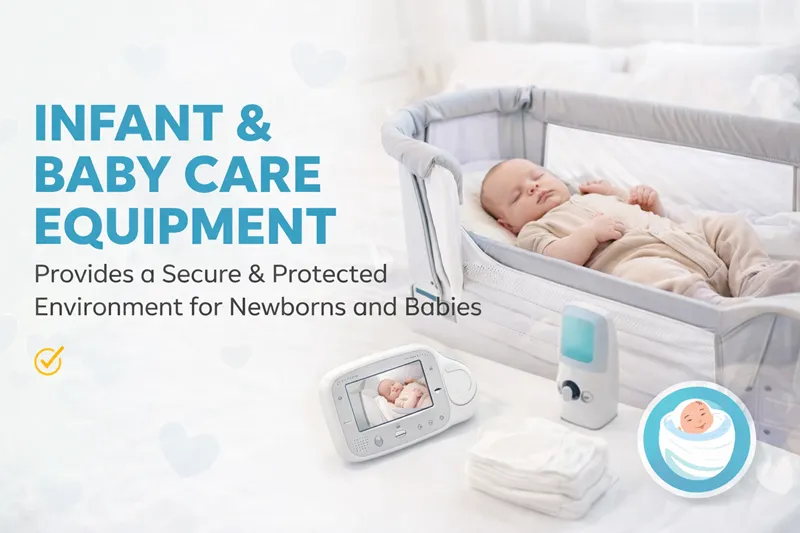
Infant and baby care equipment provides a secure, protected, and medically controlled environment for newborns and babies during the most critical phase of life. By supporting temperature regulation, breathing, feeding, monitoring, and infection control, these devices save lives and promote healthy development.
For hospitals, caregivers, and families alike, investing in reliable, compliant infant care equipment is not just a clinical decision—it is a responsibility toward the future. Aarogyaa Bharat remains committed to supporting this mission by enabling access to trusted neonatal and paediatric healthcare solutions across India.