Why Medical Equipment Is Often Needed at Home
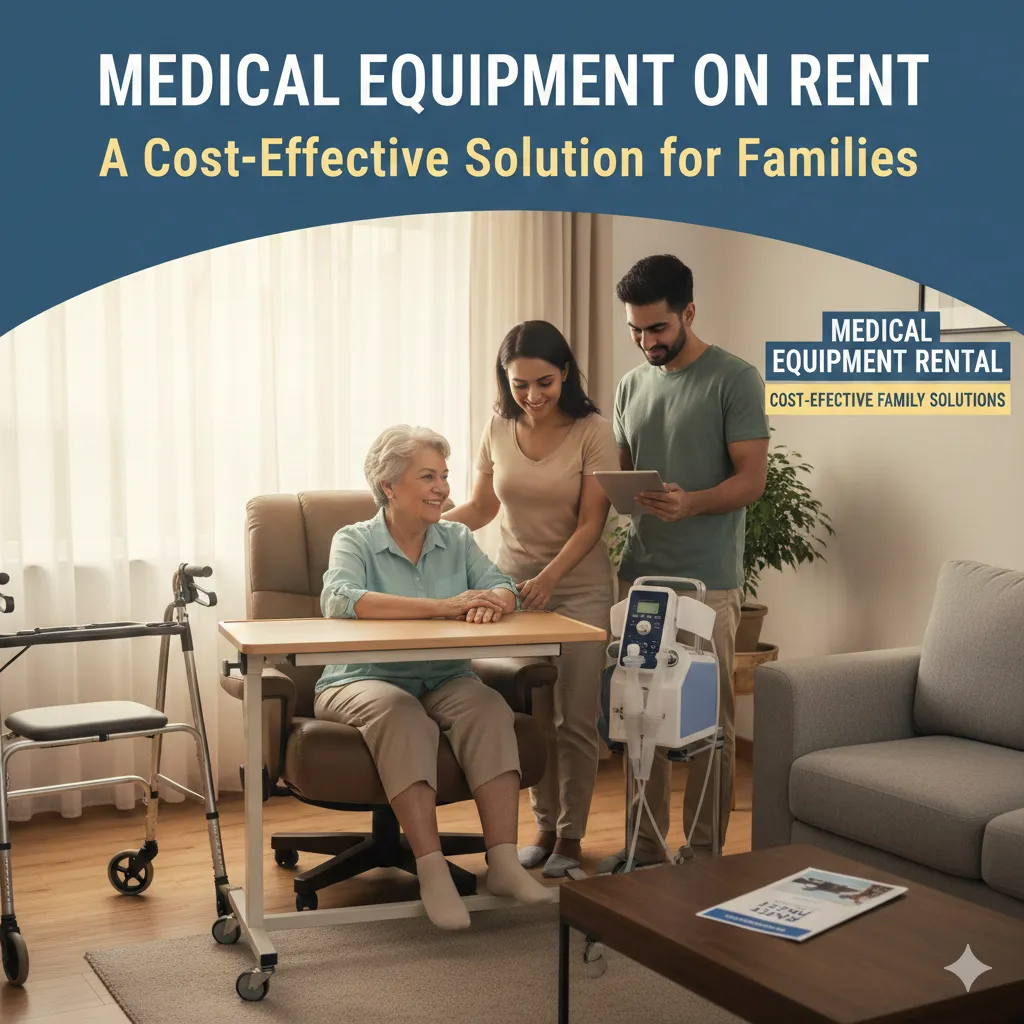
Home healthcare is becoming increasingly common. Hospitals encourage early discharge, and families prefer caring for loved ones in familiar surroundings. As a result, medical equipment is often required at home for:
Post-surgery recovery
Elderly care
Chronic illness management
Temporary injuries or fractures
Palliative and long-term care
Equipment such as wheelchairs, hospital beds, oxygen concentrators, walkers, and commode chairs plays a crucial role in making home care safe and effective.
However, buying all this equipment outright can be expensive and impractical especially when the need is temporary.
What Does Medical Equipment Rental Mean?
Medical equipment rental allows families to use healthcare devices for a fixed period by paying a rental fee, instead of purchasing them outright. Once the equipment is no longer needed, it is returned.
Rental services typically offer:
Short-term and long-term rental options
Home delivery and pickup
Maintenance and servicing
Flexible extensions
This model has made quality healthcare equipment accessible to a much wider population.
Why Renting Medical Equipment Is Cost-Effective
1. Avoids High Upfront Costs
Medical equipment can be expensive. Buying multiple items at once such as a wheelchair, hospital bed, and oxygen concentrator can put a heavy financial burden on families.
Renting spreads the cost over time and allows families to:
Pay only for the duration of use
Avoid large one-time expenses
Manage healthcare costs better during recovery
This is especially helpful when medical bills and medication costs are already high.
2. Ideal for Temporary Medical Needs
Many medical conditions require equipment only for a limited time.
Examples include:
Wheelchair after knee or hip surgery
Hospital bed during post-operative recovery
Oxygen support during short-term respiratory issues
In such cases, buying equipment often leads to unused items once recovery is complete. Renting ensures you only pay for what you actually use.
3. No Storage or Disposal Hassles
Once medical equipment is no longer needed, families often struggle with:
Finding storage space
Selling used equipment
Emotional difficulty of keeping unused medical items
With rented equipment, there’s no such worry. The equipment is simply returned, keeping the home clutter-free.
4. Maintenance and Servicing Are Usually Included
Medical equipment requires regular upkeep to remain safe and functional. Rental providers typically handle:
Routine maintenance
Repairs and part replacement
Basic cleaning and servicing
This removes an extra responsibility from caregivers, who already have a lot to manage.
5. Flexibility as Needs Change
Recovery is not always predictable. A patient’s needs may change over time:
A basic wheelchair may need to be replaced with a lightweight or commode wheelchair
Oxygen support may no longer be required after improvement
Renting allows families to upgrade, downgrade, or return equipment easily without financial loss.
Who Benefits Most from Renting Medical Equipment?
Families Caring for Elderly Parents
Elderly care often involves fluctuating needs. Renting provides flexibility and convenience, especially for mobility aids and hygiene support equipment.
Post-Surgery Patients
Surgery recovery usually has a defined timeline. Renting equipment during this phase avoids unnecessary long-term purchases.
Caregivers Managing Short-Term Illness
Temporary illnesses or injuries can require medical support for weeks or months. Renting fits these situations perfectly.
Families with Limited Space
Many homes do not have extra space to store bulky equipment. Renting eliminates storage concerns.
Commonly Rented Medical Equipment
Some medical devices are particularly well-suited for rental:
Wheelchairs
Often needed temporarily for recovery or elderly care.
Hospital Beds
Ideal for short-term home care after surgery or during illness.
Oxygen Concentrators
Useful for temporary respiratory support or recovery.
Commode Chairs
Helpful for elderly or post-surgery patients with mobility limitations.
Walkers and Mobility Aids
Used during rehabilitation and recovery phases.
Rent vs Buy: A Practical Perspective
Renting and buying are not competing options they complement each other.
Rent equipment that is bulky, expensive, or needed temporarily
Buy smaller, affordable items used daily for long-term monitoring
Many families use a mix of both approaches based on their needs.
Things to Consider Before Renting Medical Equipment
Before renting, keep these points in mind:
Duration of use (short-term or long-term)
Type of equipment required
Space available at home
Ease of use for patient and caregiver
Hygiene and maintenance support
Choosing a reliable rental provider is just as important as choosing the equipment itself.
Common Myths About Medical Equipment Rental
“Rented equipment is old or unsafe”
Good rental providers maintain and sanitize equipment before delivery.
“Renting is always expensive”
For short-term use, renting is almost always cheaper than buying.
“Rental equipment is uncomfortable”
Modern rental equipment is designed for comfort and safety.
Final Thoughts
Medical equipment rental has transformed home healthcare by making essential devices accessible, affordable, and flexible. For families navigating recovery, elderly care, or temporary illness, renting removes financial pressure and logistical challenges.
Instead of focusing on ownership, renting allows families to focus on what truly matters care, comfort, and recovery.
When chosen wisely, renting medical equipment is not just a cost-saving option; it’s a smart and compassionate decision.
Frequently Asked Questions (FAQs)
Is renting medical equipment safe?
Yes, when rented from trusted providers that clean and maintain equipment properly.
How long can medical equipment be rented?
Rental periods can range from a few days to several months, with easy extensions.
Is renting cheaper than buying?
For short-term use, renting is almost always more cost-effective.
What equipment is best suited for rent?
Wheelchairs, hospital beds, oxygen concentrators, and commode chairs are commonly rented.
Does rental include maintenance?
Most rental services include servicing and repairs during the rental period.
Can rented equipment be delivered to my home?
Yes, home delivery and pickup are usually provided.
Should I rent or buy for elderly care?
Renting is ideal for changing or temporary needs; buying suits long-term, permanent requirements.