Many patients receiving home nursing care suffers from
breathing difficulties due to chronic lung diseases, heart conditions,
post-COVID complications, neurological disorders, or age-related respiratory
decline. For these individuals, oxygen therapy is not an occasional
intervention but a daily necessity that stabilizes oxygen levels, reduces
breathlessness, protects vital organs, and prevents life-threatening
emergencies. In such situations, an oxygen concentrator becomes the backbone of
home nursing care, ensuring uninterrupted, hospital-grade oxygen delivery
without the logistical challenges of oxygen cylinders.
Unlike short-term home care where oxygen may be required for
only a few days or weeks, home nursing care often involves medium- to long-term
respiratory support. This makes reliability, safety, ease of operation, and
maintenance support far more important than in temporary oxygen therapy setups.
Families must ensure that the concentrator selected for home nursing care can
run for extended hours every day, deliver stable oxygen purity, and function
safely even during power outages or voltage fluctuations.
At Aarogyaa Bharat, we design customized oxygen therapy
solutions specifically for home nursing environments. This comprehensive guide
explains everything you need to know about using an oxygen concentrator for
home nursing care, including who needs it, how it works in a nursing setup,
medical benefits, safety requirements, equipment selection, power backup
planning, maintenance routines, caregiver responsibilities, and how to create a
truly safe and dependable home oxygen ecosystem.
What Is Home Nursing Care and Why Oxygen Therapy Is Often
Essential
Home nursing care refers to professional medical and
caregiving services provided to patients in their own homes rather than in
hospitals or nursing facilities. This care model is commonly used for elderly
individuals, post-operative patients, people with chronic illnesses,
individuals recovering from severe infections, and patients with mobility
limitations or neurological impairments. Home nursing care may include
medication administration, wound care, physiotherapy, vital sign monitoring,
catheter management, feeding support, and respiratory therapy.
For a large percentage of home nursing patients, respiratory
support becomes a core part of daily care. Conditions such as COPD, pulmonary
fibrosis, post-COVID lung damage, heart failure, bronchiectasis, and
neuromuscular disorders significantly impair lung function and oxygen
absorption. Without supplemental oxygen, these patients may experience
persistent breathlessness, low energy, confusion, sleep disturbances, and
repeated medical emergencies.
Oxygen therapy in home nursing care serves multiple
life-saving functions. It stabilizes blood oxygen levels, reduces strain on the
heart, improves sleep quality, enhances tissue healing, and supports cognitive
function. In many cases, oxygen therapy also reduces hospital readmissions and
allows patients to recover or stabilize more comfortably at home.
An oxygen concentrator is the most practical and reliable
oxygen source for home nursing care because it provides a continuous supply of
oxygen without the need for refilling or heavy cylinder handling. This makes it
especially suitable for long-duration therapy, 24/7 oxygen needs, and
situations where patient safety depends on uninterrupted oxygen delivery.
How an Oxygen Concentrator Works in a Home Nursing Setup
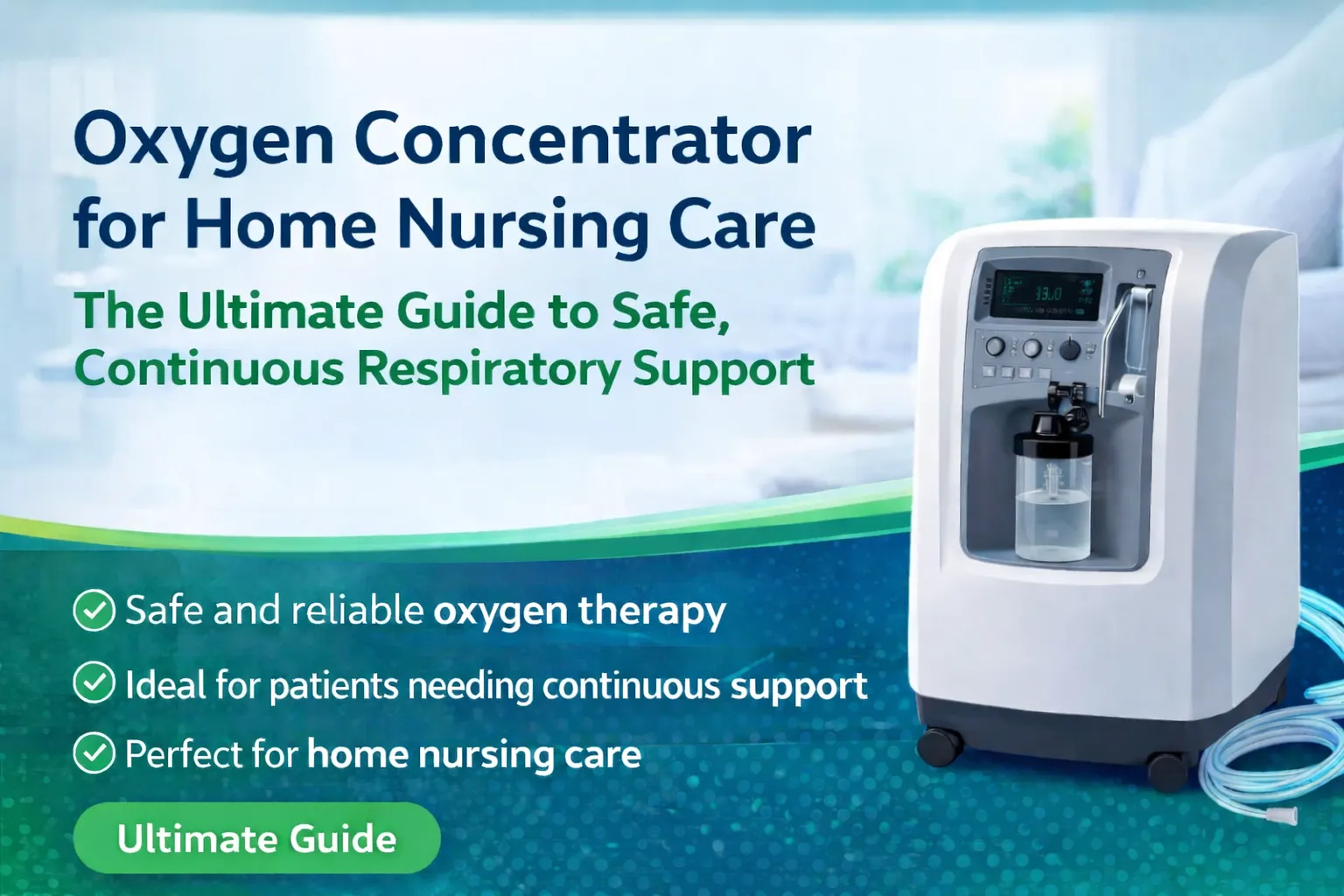
An oxygen concentrator works by pulling in room air,
filtering out nitrogen and other gases, and delivering oxygen-enriched air typically
between 90% and 96% purity through a nasal cannula or face mask. This purified
oxygen is delivered at a flow rate prescribed by a doctor, usually ranging from
1 to 5 liters per minute for most home nursing patients, though higher-capacity
machines are used for more severe cases.
In a home nursing environment, the concentrator often runs
for extended periods, sometimes 12-24 hours a day. The nasal cannula is
positioned comfortably in the patient’s nostrils, while soft tubing connects it
to the concentrator. For bedridden patients, longer tubing and swivel
connectors are used to allow repositioning without disconnecting oxygen flow.
Modern oxygen concentrators used in home nursing care are
equipped with advanced safety features such as oxygen purity sensors, flow
regulators, audible alarms, and digital displays. These features alert
caregivers if oxygen purity drops, power fails, or tubing becomes disconnected,
ensuring rapid intervention before a medical emergency occurs.
Many home nursing setups also include humidifier bottles
attached to the concentrator to prevent nasal dryness, throat irritation, and
sinus discomfort caused by prolonged oxygen therapy. Distilled water is used in
humidifiers to maintain hygiene and prevent bacterial growth.
Medical Conditions That Commonly Require Oxygen
Concentrators in Home Nursing Care
Chronic Obstructive Pulmonary Disease (COPD) is the most
common condition requiring long-term oxygen therapy in home nursing patients.
As COPD progresses, lung tissue damage prevents efficient oxygen absorption,
leading to persistent hypoxemia that must be corrected with continuous
supplemental oxygen.
Post-COVID lung damage has emerged as a major reason for
oxygen concentrator use in home nursing care. Many elderly and high-risk
patients develop lung fibrosis, reduced lung capacity, and long-term
breathlessness after COVID-19, making oxygen therapy essential for daily
functioning and gradual recovery.
Pulmonary fibrosis, interstitial lung disease, and
bronchiectasis are other chronic lung conditions that frequently require
long-term oxygen support. These diseases cause scarring and inflammation in
lung tissue, reducing oxygen exchange efficiency and making breathing
increasingly difficult without assistance.
Heart failure patients may also need oxygen therapy when
reduced cardiac output leads to inadequate oxygen delivery to tissues.
Supplemental oxygen reduces cardiac strain, improves circulation efficiency,
and stabilizes symptoms in such patients.
Neuromuscular disorders such as ALS, muscular dystrophy, and
spinal cord injuries often weaken breathing muscles, making oxygen therapy a
critical component of long-term home nursing care. In these cases, oxygen
concentrators are sometimes used alongside BiPAP or ventilator support.
Why Oxygen Concentrators Are Ideal for Home Nursing Care
One of the biggest advantages of oxygen concentrators in
home nursing care is uninterrupted oxygen availability. Unlike oxygen
cylinders, which store a limited amount of compressed oxygen and require
frequent refilling, concentrators generate oxygen continuously as long as
electricity is available. This eliminates the risk of running out of oxygen
unexpectedly.
Another major benefit is ease of operation. Most modern
concentrators have simple controls, clear digital displays, and automatic flow
regulation. This makes them easy for both nurses and family caregivers to
operate without specialized technical training.
Oxygen concentrators also significantly improve safety. They
eliminate the risks associated with high-pressure gas storage, reduce fire
hazards, and minimize physical strain from handling heavy cylinders. For
elderly patients and caregivers, this safety improvement is critical.
Perhaps the most important advantage is cost-effectiveness
for long-term care. While the initial investment may be higher than renting
cylinders, concentrators become far more economical over time because they do
not require refilling or delivery charges.
Types of Oxygen Concentrators Used in Home Nursing Care
There are two main types of oxygen concentrators used in
home nursing care: stationary concentrators and portable concentrators. Each
serves a specific role and may be used alone or in combination depending on
patient needs.
Stationary oxygen concentrators are designed for continuous
home use. They offer higher oxygen flow rates, stable performance, and
long-term durability. These machines are ideal for patients who are bedridden
or require oxygen therapy for many hours a day.
Portable oxygen concentrators are compact, lightweight, and
battery-powered devices designed for mobility and emergency backup. While they
usually provide lower flow rates, they are invaluable for doctor visits,
outdoor mobility, and power outage backup.
For comprehensive home nursing care, many families use a
stationary concentrator as the primary oxygen source and keep a portable
concentrator or oxygen cylinder as a backup.
Key Features to Look for in an Oxygen Concentrator for
Home Nursing Care
- When selecting an oxygen concentrator for home nursing care, reliability and safety should be top priorities. One of the most important features is a robust alarm system that alerts caregivers if power fails, oxygen purity drops, or tubing becomes disconnected.
- Flow stability and oxygen purity monitoring are also critical. Home nursing patients often depend on precise oxygen flow rates for stable health. Devices with built-in purity sensors and auto-adjustment features ensure consistent oxygen delivery.
- Noise level is another important consideration. Loud machines can disturb patients, increase anxiety, and disrupt sleep. Modern concentrators designed for home nursing typically operate at noise levels between 35-50 decibels.
- Battery backup or inverter compatibility is essential in areas with unreliable electricity. Home nursing care patients cannot afford oxygen interruptions during power outages.
Safety Guidelines for Oxygen Concentrator Use in Home
Nursing Care
- Always place the concentrator in a well-ventilated area at least 1-2 feet away from walls or furniture to ensure proper airflow and prevent overheating.
- Never allow smoking, candles, incense, or open flames near the oxygen setup. Oxygen-enriched environments significantly increase fire risk.
- Use only doctor-prescribed flow rates and never adjust oxygen levels without medical guidance.
- Secure tubing neatly along walls or under rugs to prevent tripping hazards, especially in homes with elderly patients or limited mobility.
- Ensure that all caregivers and nurses are trained to recognize device alarms and respond appropriately to emergencies.
Power Backup Planning for Home Nursing Oxygen Therapy
Power backup is not optional in-home nursing care it is a
life-saving necessity. Oxygen concentrators depend entirely on electricity, and
even short power outages can become medical emergencies.
A pure sine wave inverter with sufficient battery capacity
is the most common backup solution for home nursing setups. A single 150Ah
battery can provide approximately 2-3 hours of backup for a 5 LPM concentrator,
while multiple batteries can extend runtime to 6-12 hours or more.
UPS systems are useful for instant switchover during power
cuts, ensuring zero interruption in oxygen delivery. Portable power stations
offer plug-and-play backup for emergencies and travel.
Every home nursing care setup should also include a backup
oxygen cylinder or portable concentrator as a final safety net during prolonged
outages.
Maintenance Routine for Home Nursing Oxygen Concentrators
- Daily maintenance includes wiping the concentrator exterior, checking tubing connections, and ensuring air intake filters are clean.
- Weekly maintenance involves cleaning or replacing filters according to manufacturer guidelines to maintain oxygen purity.
- Monthly inspections should focus on checking alarm functionality, power cords, and tubing for wear and tear.
- Annual servicing by a professional technician ensures optimal performance, safety compliance, and long-term reliability.
Home Nursing Oxygen Care Decision Guide Table
|
Scenario |
Oxygen
Concentrator Needed? |
Typical
Duration |
|
COPD with
chronic hypoxemia |
Yes |
Long-term |
|
Post-COVID
lung damage |
Yes |
Temporary-Long |
|
Pulmonary
fibrosis |
Yes |
Long-term |
|
Heart failure
with hypoxemia |
Yes |
Long-term |
|
Neuromuscular
disorders |
Yes |
Long-term |
|
Post-surgical
recovery |
Sometimes |
Short-term |
Conclusion
For patients receiving home nursing care, an oxygen
concentrator is far more than a medical device it is a life-support system that
provides stability, safety, and dignity. From chronic lung diseases and
post-COVID complications to heart failure and neuromuscular disorders, oxygen
therapy plays a central role in modern home healthcare.
Choosing the right oxygen concentrator, ensuring power
backup readiness, following strict safety guidelines, and maintaining proper
equipment hygiene are essential for maximizing the benefits of home oxygen
therapy. With the right setup, patients can recover or stabilize more
comfortably at home, reduce hospital visits, and enjoy a significantly improved
quality of life.
At Aarogyaa Bharat, we specialize in providing high-quality
oxygen concentrators, backup power solutions, and expert guidance tailored to
home nursing care environments. Our mission is to ensure that every patient
receives safe, reliable, and dignified respiratory support at home.
If you or your loved one requires oxygen therapy as part of
home nursing care, Aarogyaa Bharat is always here to help you breathe easier,
recover safer, and live better.