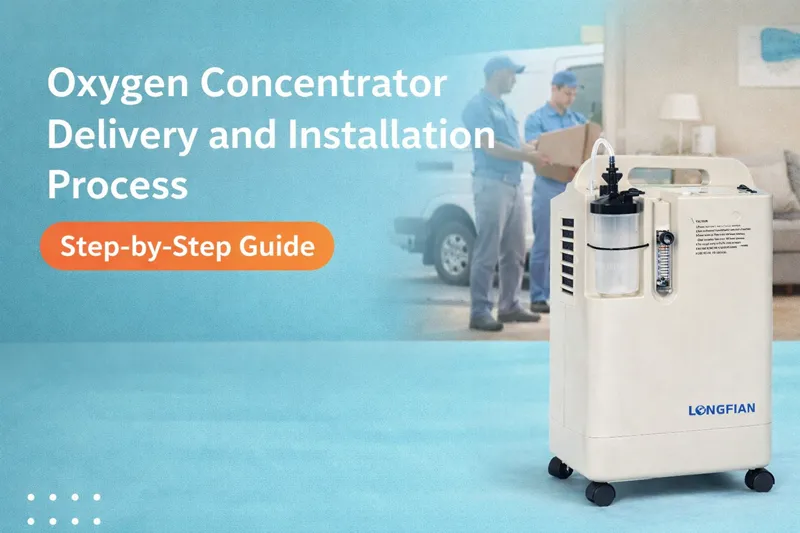
Unfortunately, many families assume that once they place an
order and receive the box, their responsibility is complete, and they can
simply plug in the machine and start using it immediately. In reality, improper
delivery handling, incorrect installation, wrong placement, missing
accessories, poor ventilation, incorrect flow rate settings, and lack of
caregiver training can silently compromise oxygen purity, machine lifespan, and
patient safety from day one. A poorly installed concentrator may still appear
to work normally, but it can overheat, produce low-purity oxygen, trigger
alarms, or fail unexpectedly during a critical therapy session.
This is why understanding the full delivery and installation
process is absolutely essential for every buyer, caregiver, and patient. A
proper end-to-end process ensures that the machine arrives undamaged, all
components are verified, oxygen purity is tested, safety rules are followed,
and the patient and family are trained correctly before therapy begins. This
comprehensive guide by Aarogyaa Bharat explains every stage of oxygen
concentrator delivery and installation in deep practical detail, including pre-delivery
preparation, packaging inspection, unboxing procedures, accessory verification,
site readiness checks, step-by-step installation, first-time startup, oxygen
purity testing, patient training, safety briefing, documentation,
post-installation monitoring, and long-term readiness planning so that every
household can begin oxygen therapy with total confidence and zero guesswork.
Why the Delivery and Installation Process Matters More
Than You Think
An oxygen concentrator contains sensitive internal
components such as compressors, molecular sieve beds, electronic control
boards, oxygen sensors, cooling fans, and precision valves that can be damaged
by improper handling, vibration, moisture exposure, or sudden impacts during
transportation. Even minor shipping damage that is not immediately visible can
lead to long-term reliability issues, reduced oxygen purity, and premature
machine failure.
Unlike consumer electronics, oxygen concentrators cannot
simply be replaced casually if something goes wrong, because any delay in
therapy can put a patient’s life at risk. This makes it critical that delivery
is handled professionally, packaging is inspected carefully, and installation
is performed systematically rather than casually. The installation phase is equally important because
incorrect placement, blocked ventilation, improper electrical connections,
wrong flow rate settings, and poor tubing setup can all create hidden safety
hazards that compromise both machine performance and patient well-being. A
rushed or careless installation process often leads to repeated breakdowns,
alarm warnings, overheating, and therapy interruptions that families mistakenly
blame on “bad machines” rather than poor setup practices
Pre-Delivery Preparation: What Families Should Do Before
the Machine Arrives
- A successful oxygen concentrator installation begins before the delivery vehicle even reaches your home. Families should prepare a suitable installation site in advance to avoid last-minute confusion, unsafe placements, and rushed decisions that compromise safety.
- The installation area should be well-ventilated, clean, dry, and free from dust, smoke, heat sources, and flammable materials. There should be at least one foot of open space on all sides of the machine to allow proper airflow and prevent overheating. The site should be close to the patient’s bed or primary sitting area to minimize tubing length and reduce tripping hazards.
- A dedicated wall socket should be identified for the concentrator, and ideally, a voltage stabilizer or UPS system should be installed to protect against power fluctuations and outages. Extension cords and multi-plug adapters should be avoided because they increase fire risk and can damage the machine.
- Families should also prepare a small table or stand to keep accessories such as humidifier bottles, spare tubing, nasal cannulas, and pulse oximeters organized. A backup oxygen cylinder should be kept nearby and checked for pressure levels in case of power failure or machine malfunction.
Delivery Inspection and Packaging Verification
- When the oxygen concentrator arrives, the first and most important step is to inspect the outer packaging thoroughly before accepting delivery. The box should be sealed properly, free from tears, dents, water stains, or signs of tampering. Any visible damage should be photographed immediately and reported to the delivery provider or supplier before signing the delivery receipt.
- Once the outer box is opened, all internal protective packaging materials such as foam inserts, air cushions, and shock absorbers should be inspected to ensure that the machine was well-protected during transit. The concentrator itself should be examined for scratches, cracks, loose parts, or unusual odors that could indicate shipping damage.
- The machine’s serial number should be matched with the invoice and warranty card to confirm that the correct model and unit were delivered. Any mismatch or missing documentation should be resolved immediately before proceeding with installation.
Accessory Checklist and Component Verification
- A complete oxygen concentrator delivery package should include several essential accessories that are required for safe and effective therapy. Families should verify the presence and condition of each item before moving forward.
- The package should include medical-grade oxygen tubing of appropriate length, a nasal cannula or oxygen mask, an external air intake filter, a humidifier bottle (if prescribed), a power cable, a user manual, a warranty card, and a service contact sheet.
- Each accessory should be inspected for visible defects such as cracks, loose fittings, or contamination. Tubing should be flexible and free from kinks, cannulas should be sealed in sterile packaging, and humidifier bottles should be clean and undamaged.
- Missing or defective accessories should be reported immediately because using non-standard or low-quality replacements can compromise oxygen delivery and patient safety.
Site Readiness Check Before Installation
- Before placing the concentrator in its final position, a site readiness check should be performed to ensure that the environment meets all safety and performance requirements.
- The installation area should be at least five to ten feet away from open flames, gas stoves, heaters, incense sticks, candles, and smoking zones. Curtains, bedding, furniture, and wall hangings should be kept away from the machine’s air intake and exhaust vents.
- The floor should be stable, flat, and dry to prevent vibrations and accidental tipping. Pets should be restricted from the installation area to avoid hair accumulation in air filters and accidental tubing damage.
- The wall socket should be tested for proper voltage stability, and the voltage stabilizer or UPS system should be connected and powered on before plugging in the concentrator.
Physical Placement and Ventilation Setup
- The concentrator should be placed upright on a flat surface and never tilted or laid on its side during installation. There should be at least one foot of clearance on all sides and additional space at the back where the air intake filter is located.
- The machine should not be placed inside cabinets, behind curtains, or under tables because restricted airflow causes overheating and reduces oxygen purity. Direct sunlight and areas near windows with cold drafts should also be avoided.
- Once positioned, the external air intake filter should be inserted properly, and its alignment should be checked to ensure that unfiltered air cannot bypass it.
Electrical Connection and Power Safety Setup
- The concentrator should be connected directly to a dedicated wall socket or through a medical-grade voltage stabilizer. Extension cords, power strips, and multi-plug adapters should never be used because they can overheat and cause electrical fires.
- The power cable should be routed safely along walls or under rugs using clips or tape to prevent tripping hazards. The cable should not be coiled tightly or placed under heavy furniture because this can cause overheating.
- If a UPS or inverter is being used, its load capacity should be verified to ensure that it can support the concentrator for the required backup duration.
Tubing, Humidifier, and Patient Interface Setup
- Medical-grade oxygen tubing should be connected securely to the concentrator’s oxygen outlet port. The tubing should be laid out neatly to avoid kinks, sharp bends, or loops that can restrict airflow.
- If a humidifier bottle is prescribed, it should be filled with distilled water up to the marked level and attached firmly to the concentrator outlet. The tubing should then be connected from the humidifier to the nasal cannula or oxygen mask.
- The nasal cannula or mask should be fitted comfortably on the patient without excessive tightness. Tubing length should be adjusted to allow free movement without creating tripping hazards.
First-Time Startup and Flow Rate Configuration
- Once all physical connections are complete, the concentrator can be powered on. Most machines require a warm-up period of three to five minutes to stabilize oxygen concentration levels.
- The prescribed flow rate should be set using the control knob or digital interface exactly as directed by the doctor. Flow rate settings should never be adjusted independently without medical advice.
- The airflow should be checked at the cannula or mask to ensure that oxygen is flowing steadily and without unusual noise or vibration.
Oxygen Purity Testing and Performance Verification
- Professional installation includes oxygen purity testing using an oxygen analyzer to confirm that the machine is delivering oxygen within medically acceptable purity ranges, typically above ninety percent for most stationary concentrators.
- If purity levels are below specifications, the machine should not be used, and the supplier should be contacted immediately for inspection or replacement.
- Alarm systems should also be tested by simulating power failure and airflow obstruction scenarios to ensure that warning signals function correctly.
Patient and Caregiver Training
- One of the most critical steps in the installation process is training the patient and caregivers on proper machine usage, safety rules, and emergency procedures.
- Training should include instructions on turning the machine on and off, setting the correct flow rate, recognizing alarm sounds, cleaning air filters, replacing tubing and cannulas, and switching to a backup oxygen source during power outages.
- Caregivers should also be educated on fire safety rules, including strict no-smoking policies, avoiding oil-based creams, and maintaining proper ventilation.
Documentation, Warranty Registration, and Service
Orientation
- Before completing installation, all documentation should be reviewed and completed. This includes warranty registration, service contact information, maintenance schedules, and emergency support numbers.
- Families should receive written instructions on filter cleaning frequency, servicing intervals, and troubleshooting steps for common issues.
- Warranty registration should be confirmed with the manufacturer or authorized distributor to ensure coverage activation.
Post-Installation Monitoring and First 48 Hours Checklist
- The first forty-eight hours after installation are critical for identifying hidden issues and ensuring stable performance.
- During this period, caregivers should monitor oxygen saturation levels using a pulse oximeter, observe machine temperature, listen for unusual noises, and watch for alarm warnings.
- Any abnormalities should be reported immediately to the supplier or service provider to prevent long-term damage and therapy interruptions.
Oxygen Concentrator Delivery and Installation Process
Table
|
Stage |
Key
Actions |
Responsibility |
Safety
Importance |
|
Pre-Delivery
Prep |
Site
readiness, power backup, ventilation setup |
Family |
High |
|
Delivery
Inspection |
Box check,
serial number match |
Supplier +
Family |
High |
|
Accessory
Verification |
Tubing,
filters, humidifier, manual |
Supplier |
High |
|
Site Check |
Fire safety,
ventilation clearance |
Supplier +
Family |
Very High |
|
Placement
Setup |
Upright
positioning, airflow space |
Supplier |
Very High |
|
Electrical
Connection |
Stabilizer,
safe wiring |
Supplier |
Very High |
|
Tubing Setup |
Kink-free
layout, secure fittings |
Supplier |
High |
|
Flow Rate
Setup |
Doctor-prescribed
settings |
Supplier |
Critical |
|
Purity
Testing |
Oxygen
analyzer check |
Supplier |
Critical |
|
Training |
Patient +
caregiver education |
Supplier |
Critical |
|
Documentation |
Warranty,
service info |
Supplier |
High |
|
Post-Install
Monitoring |
48-hour
observation |
Family |
High |
Why Aarogyaa Bharat Follows a Structured Delivery and
Installation Protocol
At Aarogyaa Bharat, we treat oxygen concentrator delivery
and installation as a medical service, not a logistics transaction. Our trained
technicians follow a standardized installation protocol that includes site
assessment, purity testing, safety checks, patient training, and documentation
support.
We ensure that every concentrator is installed correctly,
tested thoroughly, and supported with long-term service planning so that
families never have to worry about hidden setup errors or therapy
interruptions.
Our mission is to provide not just equipment, but complete
breathing security from day one.
Conclusion
The delivery and installation process of an oxygen
concentrator is a critical foundation for safe, effective, and uninterrupted
oxygen therapy at home. A poorly executed setup can silently compromise oxygen
purity, machine reliability, and patient safety, even if the machine appears to
function normally.
By following a structured, professional installation process
that includes inspection, verification, safety checks, training, and
documentation, families can eliminate avoidable risks and begin oxygen therapy
with total confidence. An oxygen concentrator is only as reliable as the system
built around it, and proper delivery and installation are the first and most
important steps in that system.