As COPD advances, the lungs become less efficient at absorbing oxygen from the air. This leads to low blood oxygen levels (hypoxemia), which can strain the heart, worsen breathlessness, increase hospital visits, and reduce life expectancy if left unmanaged.
For many COPD patients, oxygen therapy at home becomes a life-enhancing necessity rather than an optional support. Among all available oxygen delivery systems, oxygen concentrators have emerged as the most reliable, safe, and cost-effective solution for long-term COPD care at home.
At Aarogyaa Bharat, we work closely with families caring for COPD patients across India. This detailed guide explains everything you need to know about choosing the right oxygen concentrator for COPD patients, including medical needs, safety considerations, and practical home-care factors.
Understanding Why COPD Patients Need Oxygen Therapy
COPD gradually damages the airways and air sacs (alveoli) in the lungs, making it harder for oxygen to enter the bloodstream. Over time, even basic activities like walking, eating, or talking can cause breathlessness and fatigue.
Oxygen therapy helps COPD patients by:
- Maintaining safe oxygen saturation levels
- Reducing breathlessness and chest tightness
- Improving sleep quality
- Decreasing strain on the heart
- Enhancing mental clarity and energy
- Lowering the risk of emergency hospital admissions
Doctors typically prescribe oxygen therapy when blood oxygen saturation drops below medically safe limits, especially during rest, sleep, or physical activity.
Why an Oxygen Concentrator Is Ideal for COPD Home Care
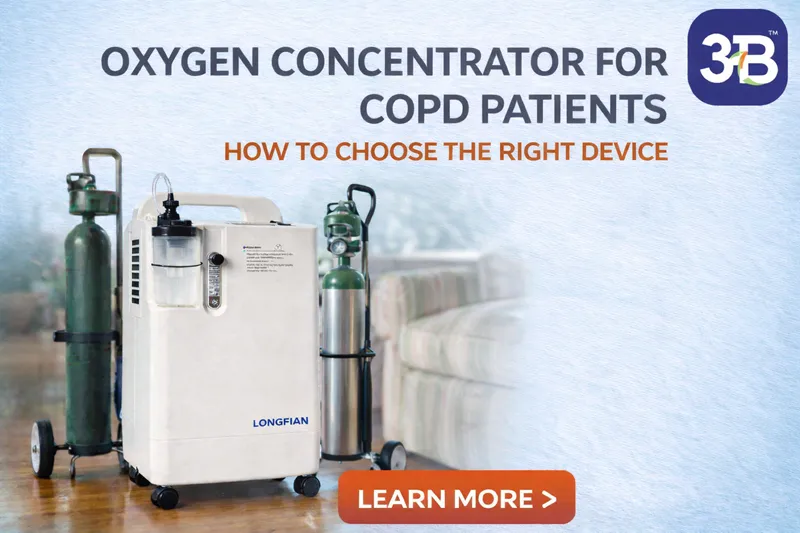
For long-term COPD management, oxygen concentrators are usually more suitable than oxygen cylinders.
Unlike cylinders that store compressed oxygen, concentrators generate oxygen continuously from room air using advanced filtration technology. This makes them safer, more practical, and more economical for daily home use.
Key Benefits of Oxygen Concentrators for COPD Patients
-
Unlimited Oxygen Supply
No need for refills or delivery scheduling. -
Improved Safety
No high-pressure gas storage or explosion risk. -
Lower Long-Term Cost
Higher upfront cost but significantly cheaper over time. -
User-Friendly Operation
Simple controls suitable for elderly patients. -
Continuous Oxygen Delivery
Ideal for patients needing long hours of therapy.
For most COPD patients requiring regular oxygen therapy, concentrators provide peace of mind and consistent medical support.
What to Look for in an Oxygen Concentrator for COPD Patients
Not all oxygen concentrators are suitable for COPD care. Choosing the wrong device can result in poor therapy outcomes and unnecessary discomfort.
Here are the most important factors to consider.
1. Oxygen Flow Rate (LPM Capacity)
Oxygen flow is measured in litres per minute (LPM). Most COPD patients require between 1 and 5 LPM, depending on disease severity and activity level.
A 5 LPM oxygen concentrator is ideal for most home-based COPD patients because:
- It supports common oxygen prescriptions
- It allows flexibility if oxygen needs increase temporarily
- It operates efficiently without overheating
- It is widely supported by service providers
Higher-capacity machines (8–10 LPM) should only be used if specifically prescribed by a pulmonologist.
2. Continuous Flow vs Pulse Dose
COPD patients generally need continuous flow oxygen, especially:
- During sleep
- While resting
- During shallow breathing
-
During exacerbations
Pulse-dose portable concentrators may not deliver enough oxygen during shallow breathing or sleep and are not recommended for most moderate-to-severe COPD patients unless approved by a doctor.
3. Oxygen Purity Level
Medical-grade concentrators should consistently deliver 90–95% oxygen purity.
Stable oxygen purity is critical for COPD patients because:
- Low purity reduces therapy effectiveness
- Inconsistent oxygen levels worsen breathlessness
- Poor oxygen delivery increases heart strain
Always choose a concentrator from a trusted supplier with verified quality standards.
4. Noise Level and Comfort
COPD patients often use oxygen therapy for many hours a day, including overnight. A noisy machine can disturb sleep and increase anxiety.
Choose a concentrator that offers:
- Quiet motor operation
- Low vibration
- Smooth airflow
Comfort plays a major role in long-term therapy compliance.
5. Safety Features
Safety is especially important for COPD patients who may live alone or have limited mobility.
Look for a concentrator that includes:
- Power failure alarm
- Low oxygen purity alarm
- Overheating protection
- Flow obstruction alert
- Stable caster wheels
These features protect both the patient and caregiver from emergency situations.
6. Ease of Use for Elderly COPD Patients
Many COPD patients are elderly and may struggle with complex digital controls.
A good home concentrator should have:
- Simple on/off switch
- Easy-to-read flow meter
- Clear indicator lights
- Minimal buttons and menus
User-friendly design reduces dependency and anxiety.
7. Power Consumption and Backup Planning
Since concentrators run on electricity, power reliability is critical in Indian homes.
Always plan for:
- Inverter or UPS support
- Backup oxygen cylinder for emergencies
- Proper voltage stabilizer
8. Maintenance and After-Sales Support
COPD patients depend on uninterrupted oxygen therapy. A machine breakdown can quickly become a medical emergency.
Choose a supplier that offers:
- Prompt servicing
- Spare parts availability
- Maintenance guidance
- Warranty support
Regular filter cleaning and basic upkeep should be easy and caregiver-friendly.
Common Mistakes Families Make When Buying Oxygen Concentrators for COPD
- Choosing portable concentrators for long-term COPD therapy
- Buying higher LPM machines without medical advice
- Ignoring noise levels
- Skipping backup oxygen planning
- Focusing only on price instead of reliability
- Overlooking service support
Avoiding these mistakes ensures safer, more effective COPD management at home.
Doctor’s Prescription Is Mandatory
Oxygen is a medical therapy, not a lifestyle product. Using incorrect oxygen levels can be harmful, especially for COPD patients.
A doctor’s prescription should define:
- Flow rate (LPM)
- Daily duration of use
- Continuous vs intermittent therapy
- Need for humidifier
- Backup oxygen requirements
Never start oxygen therapy without medical supervision.
Conclusion
For COPD patients, breathing is not just a physical function it is a daily challenge that shapes every aspect of life. Choosing the right oxygen concentrator is not merely a technical decision; it is a decision that affects comfort, dignity, safety, and emotional well-being. A reliable concentrator enables COPD patients to remain at home, reduce hospital visits, sleep better, and regain a sense of control over their daily lives. At Aarogyaa Bharat – Live Healthy, Live Better, we are committed to helping families make informed, medically sound choices rooted in real-world home-care experience .If you need expert guidance in choosing the right oxygen concentrator for COPD care, our team is always here to help.