An oxygen concentrator has therefore emerged as one of the
most critical home medical devices for emergency preparedness because it
provides a continuous, on-demand supply of oxygen without the refill
dependency, heavy physical handling, and explosion risk associated with
traditional oxygen cylinders. For families caring for elderly parents, lung
disease patients, heart patients, post-COVID recovery patients, obese
individuals, smokers, and bedridden patients, having an oxygen concentrator at
home is no longer a luxury or a COVID-era leftover; it is a permanent safety
investment that can stabilize a patient’s breathing while professional medical
help is being arranged.
This ultra-comprehensive guide by Aarogyaa Bharat
explains everything you need to know about using an oxygen concentrator for
home emergency care, including medical triggers for emergency oxygen use,
real-world emergency scenarios, how concentrators work, who should keep one at
home, how to choose the right model, how to set it up safely, how to use it
step-by-step during emergencies, how to maintain it for 24×7 readiness, how to
build a complete home oxygen emergency plan, and how to integrate oxygen therapy
into long-term family health security.
What Is an Oxygen Concentrator and How Does It Work
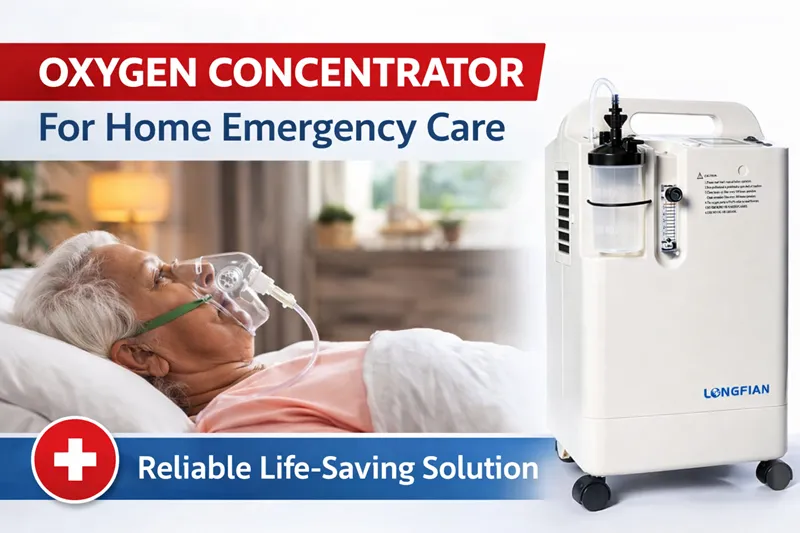
An oxygen concentrator is an electrically powered medical device that extracts oxygen from the surrounding air, filters out nitrogen using molecular sieve technology, and delivers concentrated oxygen to the patient through a nasal cannula or oxygen mask. Instead of storing oxygen like a cylinder, it generates oxygen continuously as long as electricity is available, making it fundamentally safer and more sustainable for home use. The concentrator works in a cyclic process where room air is drawn into the machine, compressed, passed through sieve beds that remove nitrogen molecules, and then released as oxygen-enriched air with purity levels typically ranging from ninety percent to ninety-five percent. Internal sensors continuously monitor oxygen purity, pressure, and airflow, triggering alarms if performance falls outside safe limits. For emergency care, this continuous oxygen generation is a massive advantage because it eliminates the risk of “oxygen exhaustion” in the middle of a crisis, ensures stable oxygen purity throughout prolonged emergencies, and allows families to provide uninterrupted respiratory support until the patient is stabilized or transported to a medical facility.What Is Home Emergency Oxygen Care
Home emergency oxygen care refers to the immediate use of supplemental oxygen in a home setting to stabilize a patient experiencing sudden or worsening breathing difficulties. It is not meant to replace hospital treatment or professional medical care but serves as a life-saving bridge that prevents dangerous oxygen deprivation during the critical window before a doctor or ambulance arrives. Emergency oxygen care is commonly needed in situations such as sudden asthma attacks, COPD exacerbations, pneumonia flare-ups, post-COVID breathlessness, heart failure episodes, allergic reactions, choking incidents, altitude sickness, post-surgical respiratory distress, panic-induced hyperventilation, accidental inhalation of smoke or toxic fumes, and sudden drops in oxygen levels due to infections or dehydration. In all these scenarios, oxygen therapy reduces strain on the heart and brain, improves oxygen delivery to vital organs, calms breathlessness, lowers anxiety, and prevents rapid physiological deterioration, often making the difference between a manageable crisis and a life-threatening emergency.Who Should Keep an Oxygen Concentrator at Home for Emergencies
Not every household requires an oxygen concentrator, but certain families face significantly higher emergency risk and should strongly consider keeping one permanently at home. Elderly individuals experience reduced lung elasticity, weaker immune responses, and slower recovery from infections, making them vulnerable to sudden oxygen drops even during minor illnesses. People with chronic respiratory diseases such as asthma, COPD, pulmonary fibrosis, and bronchiectasis are at constant risk of flare-ups that can cause rapid breathing distress. Heart patients with heart failure, coronary artery disease, arrhythmias, and valve disorders frequently experience breathlessness during acute episodes that require immediate oxygen support. Post-COVID patients with lingering lung inflammation often develop sudden breathlessness weeks or months after apparent recovery. Obese individuals, smokers, and people with sleep apnea are more prone to nighttime hypoxemia. Cancer patients, bedridden patients, individuals recovering from major surgery, and those with neurological disorders are also at higher risk of respiratory emergencies. For these high-risk groups, an oxygen concentrator at home is not a convenience; it is an essential emergency safety device that can save lives and prevent long-term complications.Why an Oxygen Concentrator Is Better Than an Oxygen Cylinder for Emergencies
Traditional oxygen cylinders have long been used for emergency oxygen care, but they come with serious limitations that make them less suitable for modern home use.Cylinders store a fixed amount of compressed oxygen that can run out quickly during prolonged emergencies or overnight episodes, creating panic and forcing families into desperate last-minute refill hunts. They require frequent refilling, which is often impossible during late-night emergencies, lockdowns, strikes, or medical supply shortages. Cylinders are heavy, difficult to move, and pose fire and explosion risks if mishandled. Improper storage and valve damage can lead to catastrophic accidents.
In contrast, an oxygen concentrator provides unlimited oxygen supply as long as power is available, eliminates refill logistics, reduces physical risk, and offers consistent oxygen purity. When combined with a small backup oxygen cylinder or battery-powered concentrator as a safety net, a concentrator-based system becomes the most reliable, cost-effective, and future-proof home emergency oxygen solution.
Medical Triggers That Require Emergency Oxygen Support
An oxygen concentrator should be used during any emergency where a patient shows signs of hypoxemia or respiratory distress. These signs include sudden shortness of breath, rapid or laboured breathing, bluish lips or fingertips, confusion or dizziness, chest tightness, extreme fatigue, persistent coughing, wheezing, irregular heartbeat, oxygen saturation levels below ninety-four percent on a pulse oximeter, or sudden behavioral changes such as agitation or restlessness.In elderly patients and post-COVID patients, even mild breathlessness combined with borderline oxygen levels should be treated seriously. In heart patients, breathlessness combined with chest discomfort, swelling, or irregular pulse is a medical red flag. In children, nasal flaring, chest retractions, and lethargy are emergency signs.
During emergencies, oxygen should be started immediately at the prescribed flow rate or at a low flow rate of one to two liters per minute if no prescription is available, while medical help is contacted. Oxygen therapy should never delay professional treatment but should be used as immediate first aid to stabilize breathing.
Choosing the Right Oxygen Concentrator for Home Emergency Care
Selecting the right oxygen concentrator for emergency use requires careful consideration of medical needs, home environment, safety requirements, and long-term reliability.Flow rate capacity is one of the most important factors. Most emergency situations require one to five liters per minute of oxygen, making five-liter-per-minute concentrators the most practical choice for home use. Continuous flow capability is essential for nighttime emergencies and patients with irregular breathing patterns. Noise level is an important comfort factor, especially for overnight use. Machines below forty-five decibels support better sleep quality. Power backup compatibility is critical in regions with frequent power cuts, so choose a concentrator that can be connected to a voltage stabilizer or UPS system. Portability is useful for moving the device between rooms, but stationary concentrators offer higher reliability and oxygen purity. Warranty coverage, service availability, spare parts access, and local technician support should always be verified, even for emergency-only devices.
How to Set Up an Oxygen Concentrator for 24×7 Emergency Readiness
An oxygen concentrator should always be installed and maintained in a state of constant readiness rather than being kept in storage until an emergency occurs.Place the machine in a well-ventilated area with at least one foot of clearance on all sides. Keep it away from heat sources, open flames, smoking areas, and direct sunlight. Plug it into a dedicated wall socket or voltage stabilizer rather than using extension cords. Keep nasal cannulas, oxygen masks, tubing, and humidifier bottles clean, sealed, and easily accessible. Store a pulse oximeter near the concentrator for real-time oxygen monitoring. Maintain a small backup oxygen cylinder for power outages or machine malfunction.
Test the concentrator at least once a week to ensure it powers on correctly, delivers oxygen smoothly, and does not show alarm warnings.
Step-by-Step Emergency Oxygen Usage Workflow
During an emergency, quick and calm action is essential. Turn on the oxygen concentrator immediately and allow it to warm up for two to five minutes if required. Connect the nasal cannula or oxygen mask securely and place it on the patient. Set the flow rate to the doctor-prescribed level or start with one to two liters per minute if no prescription is available. Monitor oxygen saturation levels using a pulse oximeter and watch for symptom improvement. Keep the patient in a semi-upright position to improve lung expansion. Avoid forcing the patient to lie flat. Loosen tight clothing around the chest and neck. Encourage slow, deep breathing. Continue oxygen therapy while contacting emergency medical services or transporting the patient to a hospital. Never leave the patient unattended during oxygen therapy, and never increase the flow rate excessively without medical guidance.Safety Rules for Home Emergency Oxygen Use
Oxygen is life-saving but also increases fire risk if safety rules are ignored. Never allow smoking or open flames anywhere near the oxygen concentrator. Avoid oil-based creams, petroleum jelly, and aerosol sprays near the patient. Keep electrical equipment and heaters away from the concentrator. Ensure proper ventilation to prevent overheating. Do not cover the machine with cloth or place it inside cabinets. Keep pets away from tubing and filters. Always follow manufacturer instructions and schedule regular servicing to maintain oxygen purity and machine reliability.Maintaining an Oxygen Concentrator for Emergency Readiness
An emergency oxygen device is only useful if it works perfectly when needed. Clean air filters weekly or more frequently in dusty environments. Replace nasal cannulas and tubing every few weeks. Disinfect humidifier bottles regularly. Schedule professional servicing every six to twelve months depending on usage. Keep the machine plugged in occasionally and powered on weekly to prevent internal component failure. Monitor alarm systems and oxygen purity indicators if available.Oxygen Concentrator vs Oxygen Cylinder for Home Emergency Care
|
Feature |
Oxygen
Concentrator |
Oxygen
Cylinder |
|
Oxygen Supply |
Unlimited
with power |
Limited |
|
Refill
Requirement |
None |
Frequent |
|
Safety Risk |
Low |
High
(compressed gas) |
|
Portability |
Moderate |
Low |
|
Noise Level |
Moderate |
Silent |
|
Long-Term
Cost |
Lower |
Higher |
|
Emergency
Readiness |
High |
Moderate |
|
Power
Dependency |
Yes |
No |
|
Maintenance |
Low |
Moderate |
|
Storage Risk |
Low |
High |
|
Usability at
Night |
Excellent |
Limited |
Why Aarogyaa Bharat Recommends Oxygen Concentrators for Home Emergency Care
At Aarogyaa Bharat, we believe that emergency oxygen support should be safe, reliable, and accessible to every family that needs it. We recommend oxygen concentrators for home emergency care because they eliminate refill dependency, reduce safety risks, and provide continuous oxygen supply during critical moments. Our team helps families choose the right machine based on medical needs, home environment, and budget. We provide delivery, installation, training, and service support so that your emergency oxygen system is ready to perform perfectly when it matters most.Conclusion
An oxygen concentrator for home emergency care is not just another medical device; it is a life-saving safety system that can stabilize breathing, prevent complications, and buy precious time during critical health emergencies.Choosing the right concentrator, maintaining it properly, and knowing how to use it during emergencies can mean the difference between life and death in high-risk households.
With expert guidance, proper planning, and consistent readiness, a home oxygen concentrator can provide families with peace of mind, security, and life-saving protection when it is needed most.
Enter your content here...