For these individuals, recovery is not just about taking medicines or waiting for lungs to heal naturally. True recovery requires structured rehabilitation that gradually retrains the lungs, heart, muscles, and nervous system to work together efficiently again. This is where respiratory rehabilitation programs play a life-changing role by combining breathing exercises, physical conditioning, posture correction, nutrition, mental health support, and oxygen therapy into a single integrated recovery pathway. An oxygen concentrator has therefore emerged as one of the most critical rehabilitation tools in modern respiratory medicine because it provides continuous, reliable oxygen support during therapy sessions and daily activities. Unlike emergency oxygen therapy, which focuses on stabilizing dangerously low oxygen levels, rehabilitation oxygen therapy focuses on gradually rebuilding lung efficiency, increasing exercise tolerance, preventing oxygen crashes during exertion, reducing strain on the heart, and restoring patient confidence in their own breathing ability. This ultra-comprehensive guide by Aarogyaa Bharat explains how oxygen concentrators support respiratory rehabilitation at every stage of recovery, who needs them, how they work in rehab settings, how to choose the right concentrator, how to use oxygen safely during therapy, how to design a home rehabilitation plan, how to wean off oxygen gradually, how caregivers should manage therapy at home, and how to achieve long-term respiratory independence with confidence and safety.
What Is Respiratory Rehabilitation and Why It Matters
Respiratory rehabilitation is a structured medical program
designed to improve lung function, physical endurance, breathing efficiency,
and overall quality of life in patients with chronic or temporary respiratory
impairment. It goes far beyond simple breathing exercises and involves a
multi-disciplinary approach that addresses the physical, psychological, and
metabolic consequences of lung disease. A typical respiratory rehabilitation program includes
controlled breathing techniques, inspiratory muscle training, aerobic exercise
such as walking or cycling, strength training for upper and lower body muscles,
posture correction, nutritional counseling, psychological support for anxiety
and depression, and oxygen therapy to maintain safe oxygen levels during
exertion. Rehabilitation is commonly recommended for patients
recovering from pneumonia, COVID-19, lung surgery, chest trauma, prolonged ICU
stays, and severe asthma attacks. It is also a cornerstone of long-term care
for people with COPD, pulmonary fibrosis, bronchiectasis, heart failure,
neuromuscular diseases, and obesity-related breathing disorders. The ultimate goal of respiratory rehabilitation is not just
survival it is independence. Patients learn how to breathe efficiently, manage
breathlessness, build muscle strength, reduce anxiety, prevent flare-ups, and
return to work, travel, social life, and daily activities without constant fear
of suffocation or hospital readmission.
Why Oxygen Therapy Is Essential in Respiratory
Rehabilitation
Oxygen therapy is not merely an optional support tool in
respiratory rehabilitation; it is often the foundation that makes
rehabilitation possible in the first place. When lung function is impaired, the
body struggles to deliver enough oxygen to working muscles during physical
activity, leading to rapid fatigue, dizziness, chest discomfort, muscle cramps,
and dangerous oxygen drops that force patients to stop therapy prematurely. An oxygen concentrator helps overcome this limitation by
enriching inhaled air with additional oxygen, allowing patients to maintain
safe oxygen saturation levels while performing breathing exercises, walking,
cycling, stair climbing, resistance training, and daily self-care activities.
This enables longer therapy sessions, better physical conditioning, and faster
improvement in lung efficiency. From a physiological standpoint, adequate oxygen levels
reduce strain on the heart, prevent lactic acid buildup in muscles, improve
mitochondrial energy production, enhance cognitive focus during therapy, and
accelerate tissue repair. Psychologically, oxygen support reduces fear and
panic associated with breathlessness, giving patients the confidence to push
themselves gently during rehabilitation without emotional breakdown or trauma. In many cases, oxygen therapy acts as a temporary “training
wheel” for the lungs, allowing safe physical conditioning until the lungs
become strong enough to maintain oxygen levels independently.
What Is an Oxygen Concentrator and How It Works in
Rehabilitation
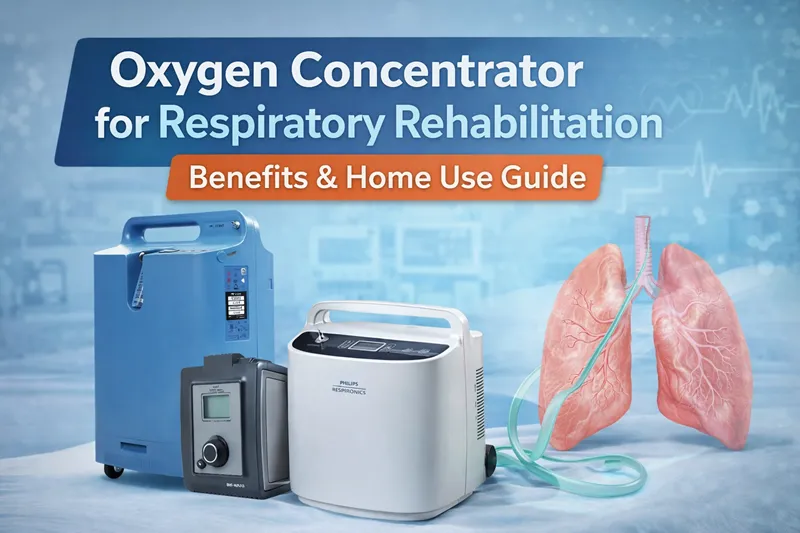
An oxygen concentrator is an electrically powered medical
device that extracts oxygen from the surrounding air, filters out nitrogen
using molecular sieve technology, and delivers concentrated oxygen to the
patient through a nasal cannula or oxygen mask. Instead of storing oxygen like
a cylinder, it generates oxygen continuously as long as electricity is
available, making it safer, more cost-effective, and more practical for
long-term rehabilitation use. The concentrator works in a cyclic process where room air is
drawn into the machine, compressed, passed through sieve beds that remove
nitrogen molecules, and released as oxygen-enriched air with purity levels
typically ranging from ninety percent to ninety-five percent. Internal sensors
monitor oxygen purity, airflow, and pressure, triggering alarms if performance
falls outside safe limits. In rehabilitation settings, this continuous oxygen
generation is a major advantage because it allows uninterrupted therapy
sessions without worrying about oxygen depletion, refilling logistics, or
pressure drops. Patients can perform long exercise sessions, repeated walking
drills, and breathing routines without fear of running out of oxygen
mid-session.
Who Needs an Oxygen Concentrator for Respiratory
Rehabilitation
Not all rehabilitation patients require oxygen therapy, but
many benefit significantly from oxygen concentrator support during recovery. Patients with chronic obstructive pulmonary disease (COPD)
often experience severe breathlessness during even mild exercise and need
supplemental oxygen to participate safely in rehabilitation programs.
Post-COVID patients with lingering lung inflammation, fibrosis, and reduced
diffusion capacity frequently require oxygen during walking, cycling, and
breathing exercises. People recovering from pneumonia, lung surgery, chest
trauma, and prolonged ventilator use often have weakened respiratory muscles
that cannot sustain adequate oxygen levels during activity. Heart failure patients may develop secondary lung congestion
that impairs oxygen exchange, making oxygen therapy essential during
rehabilitation. Obese individuals with hypoventilation syndrome, smokers with
chronic bronchitis, elderly patients with age-related lung decline, and
patients with neuromuscular disorders also benefit from oxygen concentrators
during rehab. For these groups, oxygen concentrators are not permanent
life-support devices but temporary rehabilitation tools that help rebuild lung
function and physical endurance safely.
How Oxygen Concentrators Support Each Stage of
Rehabilitation
Respiratory rehabilitation typically progresses through
multiple stages, and oxygen concentrators play different roles at each stage. In the early stage, oxygen therapy stabilizes resting oxygen
levels and allows patients to perform basic breathing exercises, bed mobility,
sitting movements, posture correction, and short indoor walks without dangerous
oxygen drops. In the intermediate stage, oxygen concentrators support
longer therapy sessions, treadmill walking, cycling, stair training, resistance
exercises, and inspiratory muscle training by preventing exertional hypoxemia
and exercise-induced fatigue. In the advanced stage, oxygen flow rates may be gradually
reduced as lung efficiency improves, allowing patients to transition toward
oxygen independence while still maintaining safety during intense exercise. This gradual weaning process is a critical part of
rehabilitation because it trains the lungs to work harder without sudden oxygen
withdrawal that could cause setbacks, panic attacks, or hospital readmission.
Choosing the Right Oxygen Concentrator for Respiratory
Rehabilitation
Selecting the right oxygen concentrator for rehabilitation
requires careful evaluation of medical needs, therapy intensity, home
environment, and long-term reliability. Flow rate capacity is one of the most important factors.
Most rehabilitation patients require one to five liters per minute of oxygen,
making five-liter-per-minute concentrators the most practical choice. Patients
with more severe lung impairment may need higher flow models under medical
supervision. Noise level matters because rehabilitation sessions may last
for hours. Machines below forty-five decibels support better comfort,
concentration, and sleep quality. Portability is useful for moving between
rooms or attending outpatient rehab sessions, while stationary concentrators
offer higher reliability and oxygen purity. Power backup compatibility is critical in regions with
frequent power cuts, so choose a concentrator that can be connected to a
voltage stabilizer or UPS system. Warranty coverage, service availability,
spare parts access, and local technician support should always be verified to
ensure uninterrupted rehabilitation.
Integrating Oxygen Therapy into a Daily Rehab Routine
Using an oxygen concentrator correctly during rehabilitation
maximizes benefits and prevents complications. Patients should start oxygen therapy five to ten minutes
before beginning exercises to stabilize oxygen levels. The nasal cannula or
mask should be fitted securely but comfortably to avoid air leaks and skin
irritation. Oxygen flow rates should follow doctor-prescribed levels and should
never be increased without medical guidance. During exercise, oxygen saturation should be monitored using
a pulse oximeter to ensure levels remain within safe limits. If oxygen levels
drop below ninety-two percent or if the patient feels dizzy, breathless, or
exhausted, the session should be paused immediately. After therapy, oxygen may be continued for a short recovery
period to normalize breathing and heart rate before discontinuation.
Oxygen Weaning Strategy: How to Reduce Dependency Safely
One of the most important goals of respiratory
rehabilitation is reducing oxygen dependency safely and gradually. Doctors usually recommend reducing oxygen flow rates
step-by-step based on stable oxygen readings during rest and exercise. Patients
may start by reducing flow during rest periods while maintaining full support
during exercise. As lung function improves, oxygen may be reduced during mild
exercise sessions, followed by more intense workouts. This staged weaning approach prevents sudden oxygen crashes,
psychological panic, and physical setbacks. Oxygen should never be discontinued
abruptly without medical guidance
Safety Guidelines for Oxygen Use in Rehabilitation
Oxygen therapy is safe when used correctly, but improper
handling increases fire risk and medical complications. Never allow smoking or open flames near the oxygen
concentrator. Avoid oil-based creams, petroleum jelly, and aerosol sprays near
the patient. Keep electrical equipment and heaters away from the concentrator. Ensure proper ventilation to prevent overheating. Do not
cover the machine with cloth or place it inside cabinets. Keep pets away from
tubing and filters. Always follow manufacturer instructions and schedule regular
servicing to maintain oxygen purity and machine reliability.
Maintaining an Oxygen Concentrator for Long-Term
Rehabilitation
An oxygen concentrator used for rehabilitation must be kept
in optimal working condition to ensure consistent therapy results. Clean air filters weekly or more frequently in dusty
environments. Replace nasal cannulas and tubing every few weeks. Disinfect
humidifier bottles regularly. Schedule professional servicing every six to
twelve months depending on usage. Keep the machine powered on occasionally and test oxygen
delivery weekly to prevent internal component failure. Monitor alarm systems
and oxygen purity indicators if available
Oxygen Concentrator vs Oxygen Cylinder for Rehabilitation
|
Feature |
Oxygen
Concentrator |
Oxygen
Cylinder |
|
Oxygen Supply |
Unlimited
with power |
Limited |
|
Refill
Requirement |
None |
Frequent |
|
Safety Risk |
Low |
High |
|
Portability |
Moderate |
Low |
|
Noise Level |
Moderate |
Silent |
|
Long-Term
Cost |
Lower |
Higher |
|
Therapy
Continuity |
Excellent |
Limited |
|
Power
Dependency |
Yes |
No |
|
Maintenance |
Low |
Moderate |
|
Suitability
for Rehab |
High |
Low |
|
Environmental
Impact |
Low |
High |
|
Emergency
Readiness |
High |
Moderate |
Why Aarogyaa Bharat Recommends Oxygen Concentrators for
Respiratory Rehabilitation
At Aarogyaa Bharat, we believe that respiratory
rehabilitation should be safe, reliable, and accessible to every patient who
needs it. We recommend oxygen concentrators for rehabilitation because
they eliminate refill dependency, reduce safety risks, and provide continuous
oxygen supply during therapy sessions. Our team helps families choose the right
machine based on medical needs, home environment, and budget. We provide delivery, installation, training, and service
support so that your rehabilitation oxygen system is ready to perform perfectly
throughout your recovery journey.
Conclusion
An oxygen concentrator for respiratory rehabilitation is not
just a medical device—it is a recovery partner that empowers patients to
rebuild lung strength, regain independence, and return to a more active life. By providing consistent oxygen support during therapy,
oxygen concentrators make rehabilitation safer, more effective, and less
physically exhausting. They reduce hospital readmissions, improve long-term
outcomes, and restore patient confidence in their own breathing ability. With expert guidance, proper planning, and disciplined
usage, an oxygen concentrator can transform respiratory rehabilitation from a
slow, frustrating struggle into a structured, achievable path toward full
recovery.