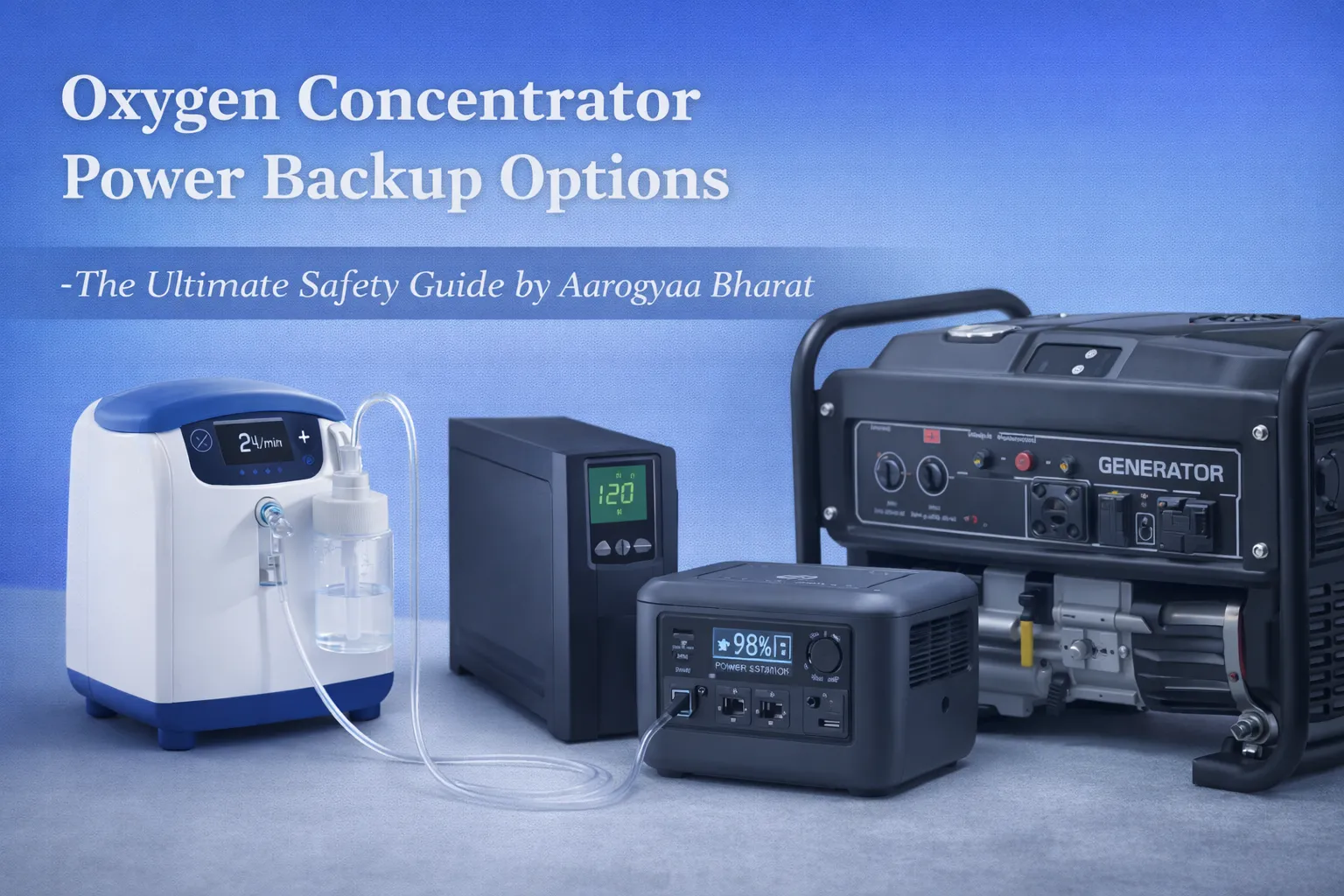
Unlike oxygen cylinders that store compressed oxygen,
concentrators generate oxygen from room air using electricity. This means that
any interruption in power supply immediately stops oxygen delivery. In a
country like India, where power cuts, voltage fluctuations, load shedding, and
electrical faults are still common in many regions, this dependency creates a
serious risk for patients who rely on oxygen therapy for survival. For elderly
patients, critically ill individuals, and people living alone, even a short
power outage can become a life-threatening emergency.
Many families make the mistake of purchasing an oxygen
concentrator without planning for a power backup solution. They assume that
electricity will always be available or that a small inverter will be enough,
only to realize too late that their backup system cannot support the
concentrator’s power load for long. This lack of preparedness has led to
countless emergency hospitalizations and near-miss incidents, especially during
monsoon storms, summer power shortages, and grid failures.
At Aarogyaa Bharat, we regularly help families design
complete oxygen therapy setups that include reliable power backup options
tailored to each patient’s medical needs, location, and lifestyle. This
comprehensive guide explains everything you need to know about oxygen
concentrator power backup options, including why backup is essential, different
types of backup systems, how to calculate power requirements, safety
guidelines, real-world use scenarios, and how to choose the right backup
solution for long-term peace of mind.
Why Power Backup Is Absolutely Essential for Oxygen
Concentrator Users
For patients who require continuous oxygen therapy, power
backup is not a luxury it is a medical necessity. When an oxygen concentrator
stops due to a power outage, oxygen delivery ceases immediately. Unlike many
other medical devices that can tolerate brief interruptions, oxygen therapy
cannot be paused safely for most patients, especially those with low baseline
oxygen saturation levels.
Seniors, post-COVID patients, and individuals with advanced
COPD often experience rapid oxygen desaturation when therapy is interrupted.
This can lead to dizziness, confusion, chest pain, panic attacks, irregular
heartbeat, and in severe cases, loss of consciousness. In patients with heart
disease, even a short drop in oxygen levels can trigger life-threatening
cardiac events.
Another critical factor is that power outages rarely come
with warning. A sudden storm, transformer failure, or local grid overload can
cut electricity without notice. In such moments, families often scramble to
find emergency solutions while the patient’s condition deteriorates rapidly.
Without a pre-installed power backup system, valuable minutes are lost, and the
situation can escalate into a full medical emergency.
Psychological stress is another overlooked aspect. Patients
who know that their oxygen concentrator depends entirely on electricity often
live in constant anxiety, fearing power cuts. A reliable power backup system
eliminates this fear, improves sleep quality, reduces panic episodes, and
provides both patients and caregivers with confidence and peace of mind.
Understanding How Much Power an Oxygen Concentrator Needs
Before choosing a backup solution, it is crucial to
understand how much power your oxygen concentrator actually consumes. Most home
oxygen concentrators have power ratings ranging from 300 watts to 600 watts,
depending on the brand, model, and oxygen flow capacity. Portable oxygen
concentrators typically consume less power but still require consistent voltage
and current stability.
For example, a standard 5-liter-per-minute (5 LPM)
stationary concentrator usually consumes around 350-500 watts during normal
operation. A 10 LPM concentrator, which is used for more severe cases, can
consume 600-900 watts or more. These numbers are important because many small
inverters and UPS systems are not designed to handle such continuous power
loads.
It is also important to consider starting surge power, which
is the extra power required when the concentrator motor starts up. Some
concentrators draw 1.5 to 2 times their normal wattage for a few seconds during
startup. If your backup system cannot handle this surge, the concentrator may
fail to start even if sufficient battery capacity is available.
In addition to wattage, concentrators are sensitive to
voltage fluctuations. Unstable power supply can damage internal components and
reduce oxygen purity. This is why any backup system used with a concentrator
must provide clean, stable, and uninterrupted power output.
Types of Oxygen Concentrator Power Backup Options
There are several types of power backup solutions available
for oxygen concentrator users, each with its own advantages, limitations, and
ideal use cases. Choosing the right option depends on factors such as patient
dependency level, average power outage duration, local electricity reliability,
and budget.
The most common power backup options include battery
inverters, UPS systems, portable power stations, solar backup systems,
generator sets, and built-in battery support in portable concentrators. Each of
these solutions offers a different balance between cost, portability, runtime,
and complexity.
For seniors living alone, critically ill patients, and those
requiring 24/7 oxygen therapy, a multi-layered backup strategy is often the
safest approach. This may involve combining a battery inverter with a backup
oxygen cylinder and a portable concentrator for maximum redundancy.
Understanding the strengths and limitations of each backup
option helps families create a customized and reliable oxygen therapy safety
net.
Battery Inverter Systems for Oxygen Concentrators
Battery inverters are one of the most popular and practical
power backup options for oxygen concentrators in India. An inverter converts DC
power stored in batteries into AC power that can run household appliances,
including medical equipment. These systems are commonly used in homes to power
lights, fans, and TVs during power cuts.
For oxygen concentrators, a pure sine wave inverter is
strongly recommended. Pure sine wave output provides clean and stable power
that is safe for sensitive medical devices. Modified sine wave inverters, which
are cheaper, can damage concentrator components and cause operational issues
over time.
The runtime of an inverter system depends on battery
capacity. For example, a single 150Ah battery may provide around 2-3 hours of
backup for a 5 LPM concentrator. Using two or more batteries in parallel can
extend runtime to 6-12 hours or more, depending on usage.
While inverter systems are cost-effective and scalable, they
require proper installation, ventilation, and regular battery maintenance. They
are best suited for homes with frequent short-to-medium-duration power cuts.
Uninterruptible Power Supply (UPS) Systems
UPS systems are designed to provide immediate backup power
without any switching delay, making them ideal for sensitive medical devices.
Unlike traditional inverters, a UPS switches to battery mode instantly when
power fails, ensuring zero interruption in oxygen delivery.
Medical-grade UPS systems offer high-quality power output
and built-in surge protection. However, they are typically more expensive and
provide shorter backup runtimes compared to inverter systems unless multiple
batteries are added.
For patients who experience brief but frequent power
fluctuations, a UPS is an excellent solution to prevent concentrator shutdowns
and internal damage. It is especially useful in urban areas where micro power
cuts and voltage drops are common.
UPS systems are often used as a secondary backup layer in
combination with a larger inverter or generator for long-duration outages.
Portable Power Stations
Portable power stations are modern, all-in-one battery
backup solutions that include built-in inverters, lithium batteries, and
multiple output ports. These compact units are increasingly popular among
oxygen concentrator users because they are easy to use, silent, and require no
installation.
High-capacity portable power stations can run a 5 LPM oxygen
concentrator for 3-10 hours, depending on battery size. They are ideal for
travel, emergencies, and short-term backup needs.
However, portable power stations are relatively expensive
and may not be practical for continuous long-term backup unless multiple units
are used. They are best suited for users who want a plug-and-play solution
without complex wiring or installation.
Solar Power Backup Systems
Solar backup systems combine solar panels, charge
controllers, batteries, and inverters to provide renewable power for oxygen
concentrators. These systems are particularly useful in rural areas or
locations with unreliable electricity supply.
A properly sized solar system can provide unlimited oxygen
concentrator backup during daylight hours and store excess energy in batteries
for night time use. This makes solar backup an eco-friendly and long-term
cost-effective solution.
However, solar systems require significant upfront
investment, roof space for panels, and professional installation. They also
depend on weather conditions, making them less reliable during prolonged cloudy
or rainy periods unless paired with a secondary backup option.
Diesel or Petrol Generator Sets
Generator sets provide high-power backup for extended
outages and can run oxygen concentrators continuously as long as fuel is
available. They are commonly used in hospitals, home ICUs, and remote
locations.
Generators offer the advantage of unlimited runtime but come
with major drawbacks, including noise, exhaust fumes, fuel costs, and
maintenance requirements. They also require manual startup unless an automatic
transfer switch is installed.
For home use, generators are best reserved as a last-resort
backup option rather than a primary solution due to their operational
complexity and safety risks.
Built-in Battery Backup in Portable Oxygen Concentrators
Many portable oxygen concentrators come with built-in
lithium battery packs that provide 2-8 hours of runtime per battery. These
devices are designed specifically for mobility and short-term backup use.
While built-in batteries are convenient, they are not
suitable for patients who require high-flow oxygen or 24/7 therapy. They are
best used as emergency backups or for outdoor mobility rather than primary home
oxygen solutions.
Power Backup Comparison Table
|
Backup
Option |
Runtime
Potential |
Cost Level |
Noise |
Best Use
Case |
|
Battery
Inverter |
2-12+ hours |
Medium |
Silent |
Frequent
short power cuts |
|
UPS System |
1-4 hours |
High |
Silent |
Instant
switch, voltage stability |
|
Portable
Power Station |
3-10 hours |
High |
Silent |
Travel &
emergency backup |
|
Solar Backup
System |
Unlimited
(daytime) |
Very High |
Silent |
Long-term eco
backup |
|
Generator Set |
Unlimited
(fuel) |
Medium |
Loud |
Long-duration
outages |
|
Portable
Concentrator |
2-8 hours |
High |
Silent |
Mobility
& emergency |
How to Calculate the Right Backup Capacity
- To calculate backup needs, multiply your concentrator’s wattage by the number of hours of backup required. For example, a 400-watt concentrator running for 6 hours needs 2.4 kWh of battery capacity.
- Convert this into battery size using inverter efficiency and battery voltage. For a 12V system, you may need two 200Ah batteries or more depending on losses.
- Always add a 20-30% safety margin to account for surge power and battery degradation.
Safety Guidelines for Oxygen Concentrator Power Backup
- Always use pure sine wave inverters and certified backup equipment. Never connect concentrators to low-quality or unstable power sources.
- Ensure proper ventilation for inverters and batteries to prevent overheating.
- Never overload your backup system by connecting non-essential appliances.
- Regularly test backup systems to ensure readiness during emergencies.
Emergency Preparedness Checklist
- Keep a backup oxygen cylinder at home at all times.
- Display emergency contact numbers near the oxygen setup.
- Train seniors and caregivers to switch to backup power quickly.
- Store spare batteries and extension cords safely.
Conclusion
For oxygen concentrator users, power backup is not optional it
is a life-saving necessity. From battery inverters and UPS systems to solar
backups and portable power stations, there are multiple ways to ensure
uninterrupted oxygen therapy during power outages.
Choosing the right backup solution requires understanding
your concentrator’s power needs, local electricity reliability, and patient
dependency level. A well-designed multi-layered backup strategy provides
maximum safety, independence, and peace of mind.
At Aarogyaa Bharat, we specialize in designing customized
oxygen concentrator backup solutions tailored to each patient’s medical
condition and living environment. Our mission is to ensure that no patient ever
faces a life-threatening oxygen interruption due to a power failure.
If you need help selecting the right power backup option for
your oxygen concentrator, Aarogyaa Bharat is always here to support your
journey toward safer and uninterrupted respiratory care.