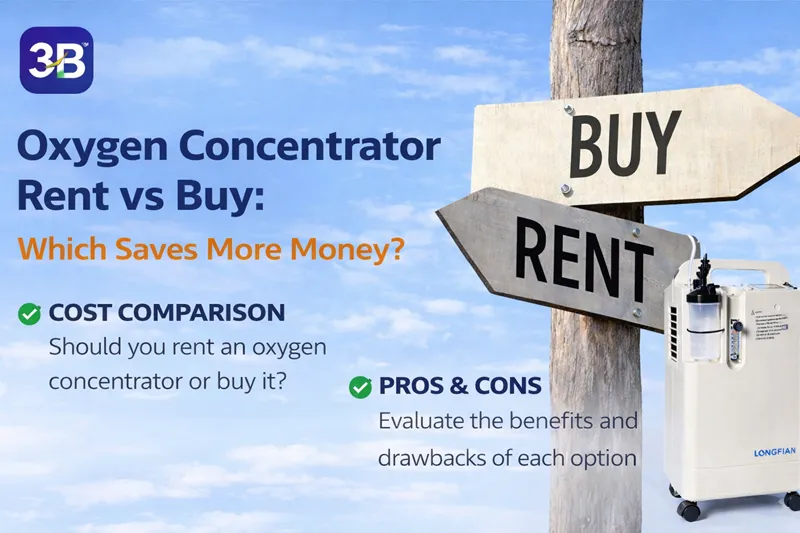
This is not just a cost comparison; it is a long-term healthcare decision that affects patient comfort, family peace of mind, and monthly household budgeting. Choosing the wrong option can result in wasted money, repeated logistical stress, unnecessary anxiety, and even interruptions in life-saving oxygen therapy.
At Aarogyaa Bharat - Live Healthy, Live Better, we have supported thousands of Indian families across post-COVID recovery, COPD care, elderly respiratory support, ICU-to-home transitions, and long-term oxygen therapy. Through real-world experience, we have learned that the best choice between renting and buying depends on several critical factors, including duration of use, medical stability, future oxygen needs, budget flexibility, and emotional security. This detailed guide explains oxygen concentrator rent vs buy in a clear, compassionate, and practical way so you can make a confident, medically sound, and financially smart decision.
What Is an Oxygen Concentrator? (Simple Refresher)
An oxygen concentrator is a medical device that draws in room air, filters out nitrogen, and delivers highly concentrated oxygen—usually between 90% and 96% purity to the patient through a nasal cannula or oxygen mask. Unlike oxygen cylinders, concentrators do not store oxygen and therefore do not require refilling, which makes them far more convenient for continuous home use. As long as electricity is available, a concentrator can operate 24/7 without interruption.
Oxygen concentrators are widely used for post-COVID lung recovery, chronic obstructive pulmonary disease (COPD), severe asthma, pulmonary fibrosis, elderly respiratory weakness, heart failure with hypoxemia, and long-term oxygen therapy. The real decision for most families is not whether to use a concentrator, but whether to rent one for short-term use or buy one for long-term financial stability.
Understanding Renting vs Buying in Practical Terms
Renting an oxygen concentrator means paying a fixed monthly fee to use the machine for a limited period, while the rental provider retains ownership of the equipment. The provider handles servicing, repairs, filter changes, and emergency replacements, which reduces technical stress for families. Buying an oxygen concentrator means making a one-time investment to own the device permanently, after which all maintenance and servicing responsibilities belong to the user.
Each option serves a different medical and financial purpose. Renting offers flexibility and low upfront cost during uncertain or temporary medical situations, while buying offers long-term savings and ownership security for chronic or lifelong oxygen therapy. Understanding these differences clearly is essential before making a decision under emotional pressure.
Option 1: Renting an Oxygen Concentrator
Renting is the most popular choice during medical emergencies and short-term oxygen therapy needs because it allows families to start oxygen support immediately without making a heavy financial investment. It is especially useful when doctors are still monitoring recovery progress and cannot predict how long oxygen therapy will be required.
One of the biggest advantages of renting is the low upfront cost, which is extremely helpful when families are already facing hospital bills, medication expenses, and caregiving costs. Renting is ideal for temporary conditions such as post-COVID lung recovery, pneumonia, or post-surgery respiratory weakness, where oxygen therapy may only be needed for a few weeks or months. Rental providers like Aarogyaa Bharat also handle maintenance, servicing, filter changes, and emergency replacements, which removes technical worries from families during stressful times.
Disadvantages of Renting
While renting feels affordable initially, the total cost increases month after month, and over longer periods it can exceed the actual purchase price of a concentrator. Monthly payments continue indefinitely until the device is returned, which can quietly drain household savings without families realizing it. Availability can also become limited during peak medical demand periods such as winter flu seasons or emergency surges.
Another major drawback is that you never own the machine, which means there is no resale value or long-term return on your spending. Once you stop paying rent, the equipment goes back to the provider, leaving you with no asset despite months of payments.
Typical Rental Costs in India (2026 Estimates)
| Capacity | Monthly Rent | Best For |
|---|---|---|
| 5L Concentrator | ₹4,000 – ₹7,000 | Post-COVID, elderly, mild COPD |
| 10L Concentrator | ₹8,000 – ₹12,000 | Severe lung disease, ICU care |
| Portable POC | ₹7,000 – ₹15,000 | Travel, outdoor mobility |
Prices vary depending on city, brand, service coverage, and rental terms.
Option 2: Buying an Oxygen Concentrator
Buying an oxygen concentrator is best suited for long-term or lifelong oxygen therapy, where recurring rental payments become financially inefficient. Although the upfront cost feels high, ownership quickly becomes cheaper if oxygen therapy continues beyond several months.
One of the biggest advantages of buying is that you gain complete financial control over oxygen therapy without worrying about monthly rental payments. You can use the concentrator 24/7 without usage restrictions, and you are not dependent on rental provider availability during emergencies. You can also resell the machine later or keep it as a backup device for future health needs.
Buying also provides emotional security, as families feel reassured knowing that oxygen support will never be interrupted due to rental contract issues, stock shortages, or rising monthly fees.
Disadvantages of Buying
The biggest drawback of buying is the high upfront cost, which can be financially stressful during sudden medical crises. You also become responsible for annual servicing, filter replacements, and any future repairs, which adds ongoing maintenance responsibility.
If oxygen therapy ends sooner than expected, the investment may feel wasted, especially for families who purchased high-end machines. Additionally, technology upgrades may make older models less efficient or less attractive for resale over time.
Typical Purchase Costs in India (2026 Estimates)
| Capacity | Purchase Price | Best For |
|---|---|---|
| 5L Concentrator | ₹45,000 – ₹85,000 | Long-term home care |
| 10L Concentrator | ₹1,20,000 – ₹2,20,000 | Severe cases, ICU transitions |
| Portable POC | ₹1,50,000 – ₹4,50,000 | Frequent travelers |
Prices depend on brand, oxygen purity, warranty, and service network.
Rent vs Buy: Real-Life Cost Scenarios
For a post-COVID recovery patient needing oxygen for 2–3 months, renting costs roughly ₹10,000–₹20,000, while buying costs ₹60,000 or more. In this case, renting is clearly far cheaper and financially safer.
For a COPD patient needing oxygen for 12 months, renting costs around ₹50,000–₹80,000, while buying costs ₹60,000–₹85,000. Here, buying becomes financially smarter after about 8–10 months.
For lifelong oxygen therapy lasting 2–5 years, renting can cost ₹1,20,000–₹4,00,000 or more, while buying costs only ₹60,000–₹85,000. In this scenario, buying saves massive money long-term.
Break-Even Point: When Buying Becomes Cheaper
For most Indian households, a 5L concentrator becomes cheaper to buy after 7–9 months of use. A 10L concentrator becomes cheaper after 8–12 months, and a portable POC becomes cheaper after 12–18 months.
This break-even point is one of the most important financial indicators when deciding between renting and buying.
Medical Condition-Based Recommendations
For post-COVID or pneumonia recovery, renting first is recommended because oxygen needs often decrease over time. Buying should only be considered if therapy continues beyond six months.
For elderly patients, renting is better initially if the condition is unstable, while buying is more suitable if oxygen therapy becomes permanent and predictable.
For COPD or pulmonary fibrosis, buying is financially smarter for long-term therapy, while renting works only during diagnosis stabilization.
For ICU-to-home care, renting initially allows families to monitor recovery progress, while switching to buying makes sense once the condition stabilizes.
For frequent travelers, buying a portable concentrator is ideal, while renting a stationary home concentrator may still be useful.
Hidden Costs Most Families Forget
Rental hidden costs often include security deposits, delivery charges, installation fees, late return penalties, and damage charges. These can silently increase total spending.
Buying hidden costs include annual servicing (₹2,000–₹5,000), filter replacements, electricity bills, voltage stabilizers, and inverter or UPS backup systems.
Flexibility vs Security: The Emotional Side
Renting offers flexibility during uncertain diagnoses and recovery phases, while buying offers emotional security and independence for permanent therapy needs. Families should consider not just money, but also peace of mind, convenience, and long-term emotional comfort.
Why Aarogyaa Bharat Is India’s Trusted Oxygen Partner
At Aarogyaa Bharat, we offer both rental and purchase options because we believe the right solution depends on the patient not on sales pressure. We provide doctor-guided oxygen planning, genuine certified concentrators, flexible rental plans, affordable purchase pricing, nationwide delivery, installation and demo support, after-sales service, and emergency replacement support.
Conclusion
Rent if oxygen is needed short-term, diagnosis is uncertain, budget is tight, and flexibility is important. Buy if oxygen therapy is long-term, you want long-term savings, you prefer ownership, and you want backup security.