Oxygen concentrators have become an essential part of modern
respiratory care, especially for home use. With rising cases of chronic lung
disease, post-infection recovery, and aging-related breathing issues,
understanding oxygen therapy is more important than ever.
What Is an Oxygen Concentrator?
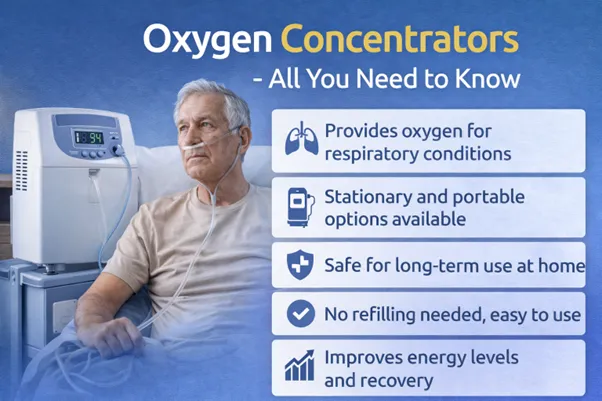
An oxygen concentrator is a medical device that
provides supplemental oxygen to people who cannot get enough oxygen naturally
from the air. Normal room air contains about 21% oxygen. An oxygen concentrator
increases this concentration to around 90-95%, delivering it directly to the
patient.
Unlike oxygen cylinders, concentrators do not store oxygen.
Instead, they continuously produce oxygen from the surrounding air, making them
ideal for long-term and home-based therapy.
Why Oxygen Therapy Is Important
Oxygen is essential for every cell in the body. When oxygen
levels drop, the heart and lungs must work harder, leading to fatigue,
breathlessness, organ stress, and slower recovery.
Oxygen therapy helps by:
- Improving
oxygen saturation in the blood
- Reducing
strain on the heart and lungs
- Enhancing
energy levels and mental clarity
- Supporting
faster healing and better sleep
Who Needs an Oxygen Concentrator?
Doctors commonly prescribe oxygen concentrators for patients
suffering from:
- Chronic
Obstructive Pulmonary Disease (COPD)
- Asthma
with low oxygen saturation
- Pneumonia
and post-COVID lung damage
- Pulmonary
fibrosis
- Heart
failure
- Sleep-related
breathing disorders
- Elderly
patients with low SpO₂ levels
The need may be temporary or long-term, depending on the
medical condition.
How Does an Oxygen Concentrator Work?
An oxygen concentrator works using a scientifically proven
process called Pressure Swing Adsorption (PSA):
- Air
Intake - The machine draws in room air
- Filtration
- Dust and impurities are removed
- Nitrogen
Separation - Nitrogen is filtered out using molecular sieve beds
- Oxygen
Delivery - Highly concentrated oxygen is delivered via nasal cannula or
mask
This cycle runs continuously, ensuring a steady oxygen
supply.
Types of Oxygen Concentrators
1. Stationary (Home) Oxygen Concentrators
These are designed for continuous use at home.
Key features:
- Oxygen
flow: 5-10 liters per minute (LPM)
- Requires
electrical power
- Larger
size, stable performance
- Ideal
for patients needing oxygen for several hours daily
2. Portable Oxygen Concentrators
These are compact devices designed for mobility.
Key features:
- Lightweight
and battery-operated
- Lower
flow rates
- Suitable
for travel and outdoor use
- Offers
independence to active users
Your doctor’s prescription and lifestyle will help determine
the right option.
How to Choose the Right Oxygen Concentrator
Before purchasing, consider the following factors:
- Prescribed
oxygen flow rate (LPM)
- Oxygen
purity level
- Noise
level for home comfort
- Power
consumption and backup options
- Portability
requirements
- Warranty
and service availability
At Aarogyaa Bharat, we help you match medical needs
with the right equipment no guesswork involved.
Oxygen Concentrator vs Oxygen Cylinder
|
Feature |
Oxygen
Concentrator |
Oxygen
Cylinder |
|
Oxygen source |
Generates
from air |
Stored oxygen |
|
Refilling |
Not required |
Required |
|
Safety |
High |
Moderate |
|
Long-term
cost |
Lower |
Higher |
|
Convenience |
Continuous |
Limited |
For long-term therapy, concentrators are generally safer and
more economical.
Benefits of Using an Oxygen Concentrator
Continuous and reliable oxygen supply
No refilling hassles
Safer than cylinders
Cost-effective for long-term use
Easy to operate at home
Improves quality of life
Safety Guidelines for Home Use
To ensure safe and effective oxygen therapy:
- Keep
the device in a well-ventilated area
- Maintain
distance from open flames or smoking
- Clean
filters regularly
- Use
only prescribed oxygen flow rates
- Avoid
using petroleum-based products near oxygen
Proper care extends both patient safety and device life.
Maintenance and Care
Oxygen concentrators require minimal but regular
maintenance:
- Weekly
filter cleaning
- Periodic
professional servicing
- Checking
tubing and cannula for blockages
- Keeping
vents dust-free
Most devices are designed for 24×7 operation with proper
care.
Why Buy Oxygen Concentrators from Aarogyaa Bharat?
At Aarogyaa Bharat, we believe healthcare should be reliable,
accessible, and compassionate. We offer:
- Medical-grade
certified equipment
- Expert
guidance before purchase
- Home
delivery support
- Affordable
pricing and rental options
- Trusted
after-sales service
Your respiratory health is our priority.
Frequently Asked Questions (FAQs)
Q1. Can an oxygen concentrator be used continuously?
Yes. Most home concentrators are designed for continuous
24-hour use.
Q2. Does using an oxygen concentrator cause dependency?
No. It supports oxygen levels but does not weaken lungs or
cause addiction.
Q3. Is an oxygen concentrator safe for elderly patients?
Absolutely. They are commonly used for elderly patients under medical guidance.
Conclusion
Oxygen concentrators have revolutionized respiratory care by
making oxygen therapy safer, simpler, and more accessible especially at home.
Whether you are managing a chronic condition or recovering from illness, the
right oxygen concentrator can significantly improve comfort, recovery, and
overall quality of life.