Understanding Paraplegia and the Role of Walker-Based
Mobility Support
How Paraplegia Walkers Work: Biomechanics and Stability
Principles
Paraplegia walkers’ function by redistributing body weight
through the upper limbs and providing a stable base that prevents falls during
movement. The wide frame design increases balance support, allowing users to
shift weight safely while stepping or transferring. Adjustable height settings
ensure proper posture, which is critical for preventing shoulder strain and
maintaining spinal alignment. Many rehabilitation walkers include forearm
supports or pelvic stabilization systems that assist users who cannot fully
control lower limb movements. Aarogyaa Bharat highlights that the goal of
walker-based mobility is not always independent walking but controlled
therapeutic movement that enhances circulation, strengthens upper-body muscles,
and supports rehabilitation goals.
Types of Walkers Used in Paraplegia Rehabilitation
Different walker designs serve different rehabilitation
needs, and selecting the right type depends on the user’s level of mobility and
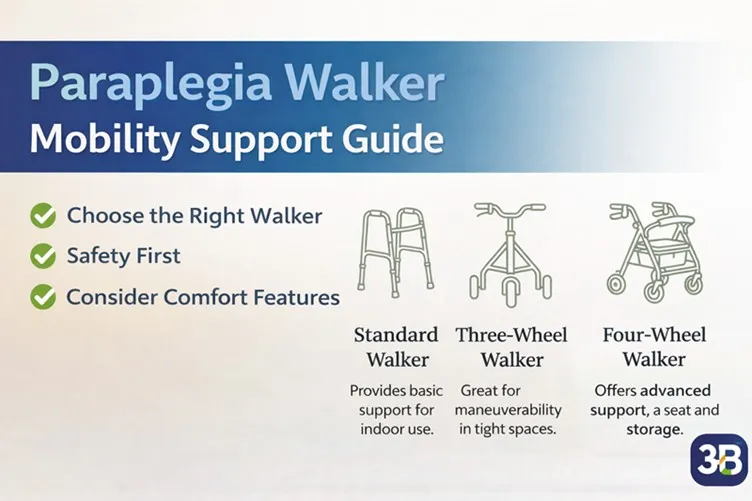
therapy goals. Standard walkers provide basic support for individuals with
partial weight-bearing ability, while reciprocal walkers allow alternating
movement that mimics natural walking patterns. Gait trainers offer additional
harness support for patients undergoing intensive rehabilitation, helping them
practice stepping safely. Posterior walkers, which position the frame behind
the user, encourage upright posture and are often used during advanced
rehabilitation stages. Aarogyaa Bharat recommends consulting physiotherapists
to determine which walker type aligns best with the patient’s functional
abilities.
Table: Types of Paraplegia Walkers and Their
Rehabilitation Uses
|
Walker
Type |
Support
Level |
Ideal
Rehabilitation Stage |
Key
Benefit |
|
Moderate |
Early
mobility |
Stable
balance |
|
|
Reciprocal
Walker |
High |
Gait training |
Natural
stepping motion |
|
Gait Trainer |
Very High |
Intensive
rehab |
Harness
support |
|
Posterior
Walker |
Moderate |
Advanced
rehab |
Upright
posture |
Clinical Benefits of Walker Mobility for Paraplegia
Patients
Using walkers regularly can provide significant clinical
benefits beyond simple mobility. Controlled standing and movement help improve
blood circulation, reducing the risk of pressure sores and deep vein
thrombosis. Weight-bearing exercises supported by walkers stimulate bone
density, which is crucial for preventing osteoporosis in individuals with
limited mobility. Additionally, walker-assisted rehabilitation can enhance
respiratory function by encouraging upright posture and active engagement of
upper body muscles. Aarogyaa Bharat highlights that consistent mobility support
also improves mental health by promoting independence and reducing feelings of
isolation often experienced by individuals with paraplegia.
Proper Walker Setup and Height Adjustment for Safe Use
Correct walker setup plays a vital role in ensuring safety
and preventing strain during rehabilitation. The walker height should allow the
user’s elbows to bend slightly when gripping the handles, enabling efficient
weight distribution and reducing shoulder stress. Foot placement should remain
within the walker frame to maintain balance, and caregivers should ensure that
rubber tips or wheels are in good condition before each use. Aarogyaa Bharat
advises gradual training sessions supervised by physiotherapists to help
patients develop confidence and proper technique.
Indoor Mobility Techniques for Paraplegia Walker Users
Indoor mobility often serves as the first stage of
rehabilitation, as controlled environments allow patients to practice movement
safely. Removing obstacles, securing loose rugs, and ensuring adequate lighting
improve safety during walker use. Slow, deliberate steps help maintain balance,
while regular rest breaks prevent fatigue. Aarogyaa Bharat emphasizes the
importance of creating a supportive home environment that encourages consistent
rehabilitation practice without increasing risk.
Table: Safe Walker Usage Techniques for Paraplegia
Mobility
|
Activity |
Recommended
Technique |
Safety Tip |
Rehabilitation
Benefit |
|
Standing
Practice |
Shift weight
gradually |
Use caregiver
support |
Improves
circulation |
|
Indoor
Walking |
Short
controlled steps |
Avoid rushing |
Builds
confidence |
|
Turning
Corners |
Wide slow
turns |
Maintain grip |
Prevents
falls |
|
Transfer
Practice |
Lock
wheelchair first |
Stable
surface |
Safer
movement |
Outdoor Mobility and Environmental Considerations
Outdoor mobility introduces new challenges such as uneven
surfaces, slopes, and environmental distractions. Paraplegia walkers designed
with wider frames or forearm supports can improve stability during outdoor
movement. Aarogyaa Bharat recommends starting with smooth pavements and
gradually increasing exposure to varied environments as confidence improves.
Protective gloves and supportive footwear can enhance grip and reduce strain
during longer sessions.
Emotional and Psychological Benefits of Walker-Based
Rehabilitation
Regaining mobility after paralysis involves not only
physical effort but also emotional resilience. Walkers help patients
participate in daily activities, interact socially, and rebuild independence,
which significantly improves mental well-being. Caregivers often observe
increased confidence and motivation when patients achieve small mobility
milestones. Aarogyaa Bharat believes that rehabilitation success depends on
consistent encouragement, structured therapy, and the right mobility equipment.
Caregiver Guidance and Safe Assistance Techniques
Caregivers play an essential role in paraplegia
rehabilitation, particularly during early mobility training. Supporting the
patient from the side rather than pulling from behind helps maintain natural
movement patterns. Clear communication during walking practice reduces anxiety
and builds trust between patient and caregiver. Aarogyaa Bharat encourages
caregivers to learn proper lifting and assistance techniques to prevent injury
and maintain long-term sustainability of care.
Maintenance and Long-Term Durability of Paraplegia
Walkers
Regular maintenance ensures that walkers remain safe and
effective for rehabilitation. Checking screws, adjusting height settings, and
inspecting rubber tips or wheels prevent mechanical issues that could lead to
instability. Cleaning the walker regularly maintains hygiene, especially in
home-care environments where devices are used daily. Aarogyaa Bharat recommends
scheduling periodic professional inspections for advanced rehabilitation
equipment.
Common Mistakes to Avoid During Walker-Based
Rehabilitation
Many new users attempt to move too quickly or rely
excessively on upper-body strength, which can lead to fatigue or imbalance.
Leaning forward excessively or using incorrect height settings may also cause
discomfort. Aarogyaa Bharat advises focusing on controlled movement and proper
posture rather than speed, ensuring that rehabilitation remains safe and
sustainable.
Conclusion
Paraplegia walkers play a crucial role in supporting
mobility, rehabilitation, and independence for individuals living with
lower-limb paralysis. By providing stability, improving circulation, and
encouraging controlled movement, these devices help patients regain confidence
and maintain physical health. Choosing the right walker, practicing proper
techniques, and maintaining consistent rehabilitation routines can
significantly enhance long-term outcomes. Aarogyaa Bharat encourages families
and caregivers to approach walker mobility as a holistic rehabilitation
strategy that combines physical therapy, emotional support, and safe mobility
practices to improve quality of life.