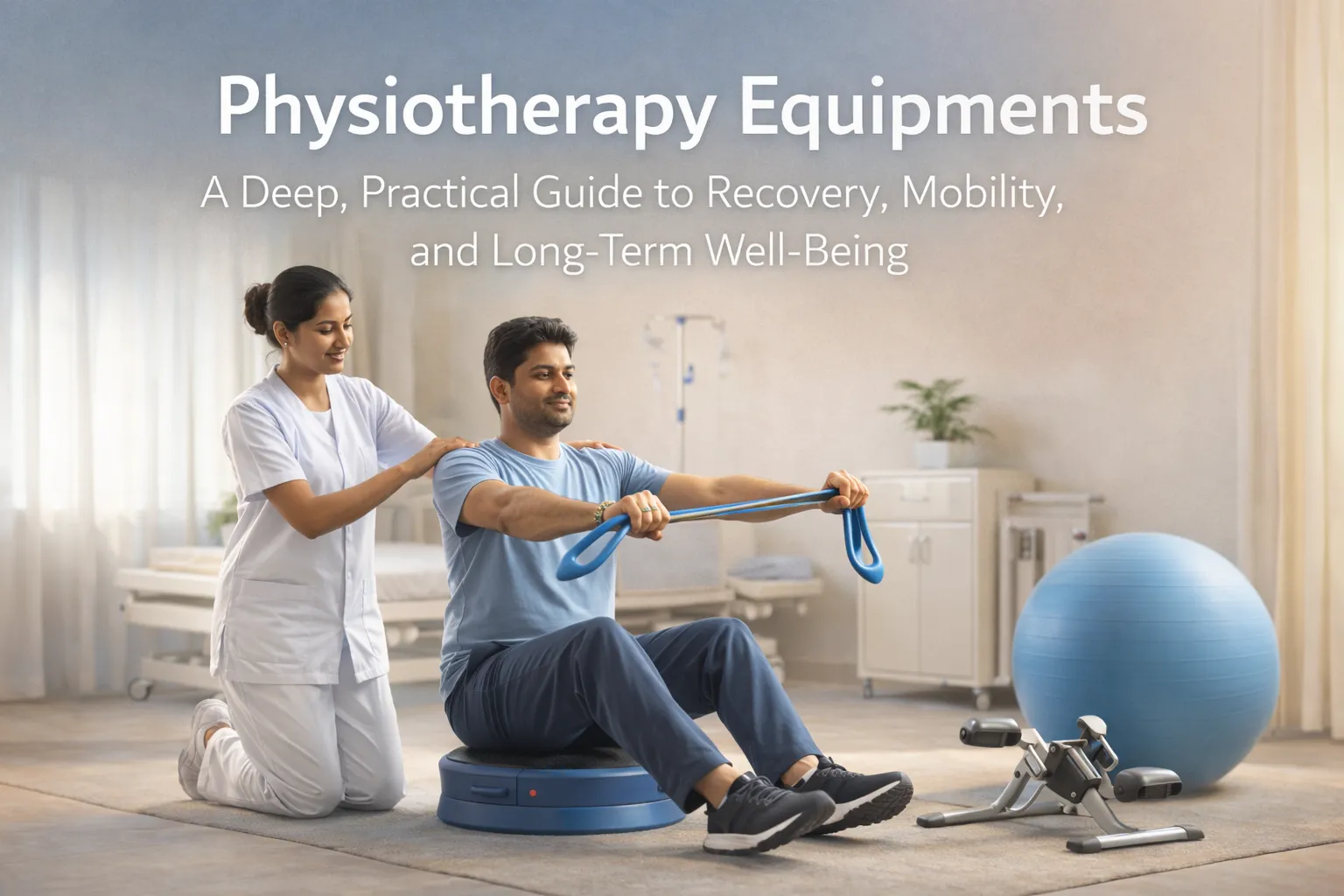
Understanding Physiotherapy Equipments Beyond the Basics
Physiotherapy equipments are specialised medical and
therapeutic tools used to restore physical function. Unlike general fitness
equipment, these tools are designed with medical precision to ensure movements
are controlled, safe, and aligned with a patient’s recovery stage.
They are used to:
- Activate
weakened muscles
- Improve
joint range of motion
- Reduce
stiffness and pain
- Re-train
balance and coordination
- Prevent
long-term disability
Physiotherapy equipments are an extension of a
physiotherapist’s hands helping guide the body back to normal movement
patterns.
Why Physiotherapy Equipments Are Essential in Modern
Healthcare
Medical treatment often addresses the disease or injury, but
physiotherapy addresses life after treatment. Without proper rehabilitation,
patients may experience stiffness, weakness, recurring pain, or permanent
movement limitations.
Physiotherapy equipments help by:
- Making
therapy consistent and measurable
- Reducing
dependency on pain medication
- Preventing
secondary complications
- Supporting
faster and safer recovery
In short, they transform treatment into functional recovery.
Conditions That Commonly Require Physiotherapy Equipments
Physiotherapy equipments are used across a wide range of
medical conditions, including:
- Orthopaedic
conditions (fractures, joint replacement, spine issues)
- Neurological
conditions (stroke, paralysis, nerve injuries)
- Sports
injuries (ligament tears, muscle strains)
- Chronic
pain conditions (arthritis, back pain, neck pain)
- Post-operative
recovery
- Age-related
mobility decline
Each condition requires a different combination of
physiotherapy equipments, chosen based on recovery goals.
Core Categories of Physiotherapy Equipments (Explained in
Depth)
1. Exercise and Strengthening Physiotherapy Equipments
These are the backbone of most physiotherapy programs. Their
primary goal is to rebuild muscle strength and endurance gradually.
They include:
- Resistance
bands and therapy tubes
- Free
weights and ankle/wrist weights
- Pedal
exercisers and mini cycles
- Therapy
and stability balls
These equipments allow controlled resistance, ensuring
muscles strengthen without overload or injury. They are widely used in both
clinics and home physiotherapy programs.
2. Electrotherapy Physiotherapy Equipments
Electrotherapy equipments use electrical or sound-based
energy to assist healing and pain management.
Common electrotherapy equipments include:
- TENS
(Transcutaneous Electrical Nerve Stimulation) units
- Ultrasound
therapy machines
- Interferential
Therapy (IFT) machines
- Muscle
stimulators
These equipments are especially useful in early
rehabilitation stages when pain or muscle weakness limits active movement.
3. Mobility and Gait Training Physiotherapy Equipments
Mobility r
- Gait trainers
estoration is a major goal in rehabilitation.
These equipments help patients relearn walking patterns and balance.
They include:
- Walkers
and rollators
- Parallel
bars
- Gait
trainers
- Balance
boards
Such equipments are essential for stroke patients, elderly
individuals, and patients recovering from fractures or neurological injuries.
4. Upper and Lower Limb Physiotherapy Equipments
Targeted rehabilitation is often required for arms, hands,
legs, and feet—especially after neurological or orthopaedic conditions.
These equipments include:
- Shoulder
wheels for range-of-motion exercises
- Wrist,
finger, and grip exercisers
- Knee
and ankle rehabilitation devices
They help restore fine motor skills, coordination, and joint
flexibility.
Physiotherapy Equipments in Clinics vs Home Settings
In Physiotherapy Clinics
Clinics use advanced, multi-functional physiotherapy
equipments under professional supervision. These setups are ideal for:
- Early-stage
rehabilitation
- Intensive
therapy sessions
- Complex
neurological or post-surgical cases
At Home
Home physiotherapy equipments are simpler, compact, and
designed for daily use. Home therapy:
- Encourages
consistency
- Reduces
travel stress
- Supports
long-term rehabilitation
Most patients achieve the best outcomes by combining
clinic-based therapy with home physiotherapy equipments.
A Crucial Insight: Consistency Is the Real Key to
Recovery
Rehabilitation success does not depend on doing more it
depends on doing it regularly and correctly. Physiotherapy equipments enable
patients to practise movements daily, reinforcing muscle memory and rebuilding
confidence.
Short, consistent sessions often produce better results than
irregular intensive therapy. This is why physiotherapy equipments are so
valuable in long-term recovery plans.
How to Choose the Right Physiotherapy Equipments
Selecting the right physiotherapy equipments requires
thoughtful consideration, not guesswork.
Key factors to evaluate:
- Patient’s
medical condition and diagnosis
- Stage
of recovery (early, mid, or advanced)
- Specific
therapy goals
- Available
space at home or clinic
- Ease
of use and safety features
- Recommendation
from a qualified physiotherapist
The right equipment supports recovery; the wrong one can
delay it.
Safety, Maintenance, and Long-Term Use
To ensure safe and effective use of physiotherapy
equipments:
- Always
follow posture and usage guidelines
- Avoid
overexertion or incorrect techniques
- Clean
and inspect equipments regularly
- Ensure
electrical devices are checked periodically
- Stop
exercises if pain or discomfort increases
Safety and maintenance are essential for sustainable
recovery.
Why Aarogyaa Bharat Focuses on Informed Rehabilitation
At Aarogyaa Bharat, we believe physiotherapy is not just
about tools it’s about empowering people to move again with confidence.
We focus on:
- Clear,
unbiased guidance
- Patient-centric
rehabilitation knowledge
- Support
for families, caregivers, and clinics
- Emphasis
on long-term outcomes, not quick fixes
Conclusion
Physiotherapy equipments are the silent partners in
recovery. They support movement when the body feels weak, guide healing when
pain limits motion, and rebuild confidence step by step.
Whether used in a clinic or at home, the right physiotherapy
equipments turn rehabilitation into a structured, hopeful, and effective
journey. With proper guidance, consistent use, and the right tools, recovery
becomes not just possible but sustainable.
At Aarogyaa Bharat, we are committed to helping patients and
caregivers understand physiotherapy better because healing is not just about
treatment, it’s about regaining life’s movement.