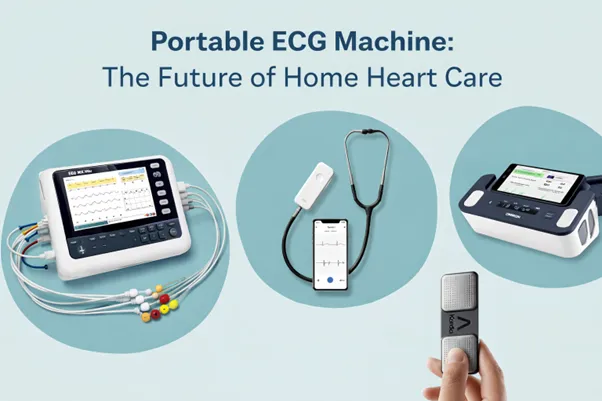
In this changing healthcare landscape, portable ECG machines
are rapidly transforming how heart health is monitored moving it from hospitals
and diagnostic centers directly into homes.
At Aarogyaa Bharat, we believe healthcare should be
accessible, preventive, and patient-friendly. This in-depth guide explains what
a portable ECG machine is, how it works, types, benefits, accuracy, clinical
and home-use applications, buying tips, limitations, and FAQs in simple, human
language.
What Is a Portable ECG Machine?

A portable ECG (Electrocardiogram) machine is a compact,
lightweight medical device designed to record the electrical activity of the
heart outside traditional hospital settings. Unlike bulky conventional ECG
machines, portable ECG devices are:
- Easy
to carry
- Simple
to operate
- Designed
for home use, clinics, ambulances, and field care
These devices record heart rhythm and rate, helping detect
abnormalities such as:
- Arrhythmias
- Bradycardia
and tachycardia
- Atrial
fibrillation (AFib)
- Ischemic
changes (early warning signs)
Why Portable ECG Machines Are the Future of Heart Care
Healthcare is shifting from reactive treatment to preventive
and continuous monitoring. Portable ECG machines support this shift by enabling
early detection and timely medical intervention.
Key Reasons Behind the Growing Demand
- Rising
heart disease prevalence
- Need
for remote patient monitoring
- Aging
population and chronic illness management
- Growth
of home healthcare
- Telemedicine
expansion
Portable ECG machines empower patients to track heart health
regularly, not just during hospital visits.
ECG machine for home use
Home-Based ECG Monitoring

How Does a Portable ECG Machine Work?
Portable ECG machines work on the same fundamental principle
as standard ECG systems.
Working Principle
- Electrodes
or sensors detect electrical signals generated by heartbeats
- Signals
are amplified and filtered
- Data
is converted into ECG waveforms
- Results
are displayed on the device or a connected smartphone
Many modern devices use Bluetooth or Wi-Fi to transmit data
to mobile apps or cloud platforms for doctor review.
how portable ECG works
Types of Portable ECG Machines
Portable ECG machines come in various configurations
depending on usage and complexity.
1. Handheld ECG Devices
- Small,
palm-sized
- Usually
1-lead or 2-lead
- Ideal
for quick checks
- Common
in-home monitoring
Best for: Elderly patients, basic rhythm monitoring
2. Wearable ECG Monitors
- Integrated
into patches, bands, or chest straps
- Continuous
monitoring over hours or days
- Records
intermittent arrhythmias
Best for: Long-term heart rhythm tracking
3. Smartphone-Based ECG Devices
- Use
phone apps for visualization
- Easy
data sharing with doctors
- AI-assisted
analysis
Best for: Tech-savvy users and telemedicine
4. Portable Multi-Lead ECG Machines
- 3-lead
or 6-lead
- Clinical-grade
accuracy
- Used
by home-care providers and ambulances
Best for: Professional home healthcare
types of portable ECG machines
Different Types of Portable ECG Devices


Modern portable ECG machines offer high diagnostic accuracy
when used correctly.
Accuracy Depends On
- Number
of leads
- Sensor
quality
- Signal
processing algorithms
- Proper
electrode placement
Many portable ECG devices are clinically validated and
approved by regulatory bodies, making them suitable for both screening and
follow-up care.
Portable ECG accuracy
Medical & Home Use Applications
Portable ECG machines are widely used across healthcare
settings.
Common Use Cases
- Home
cardiac monitoring
- Post-surgery
recovery
- Hypertension
and diabetes management
- Arrhythmia
detection
- Emergency
first response
- Ambulances
and mobile clinics
They reduce unnecessary hospital visits and enable early
medical intervention.
Advantages of Portable ECG Machines
For Patients
- Convenience
and comfort
- Early
detection of heart problems
- Reduced
hospital dependency
- Peace
of mind
For Doctors
- Continuous
patient data
- Better
treatment decisions
- Remote
monitoring capability
For Healthcare Systems
- Reduced
patient load
- Cost-effective
care
- Improved
chronic disease management
benefits of portable ECG machine
Portable ECG in Home Healthcare

Limitations of Portable ECG Machines
While highly useful, portable ECG machines are not
replacements for full hospital diagnostics.
Limitations
- Limited
leads in basic models
- User-dependent
accuracy
- Not
suitable for complex cardiac diagnostics
- Requires
clinical interpretation
They are best used as screening and monitoring tools, not
definitive diagnostic replacements.
How to Choose the Right Portable ECG Machine
When buying a portable ECG machine, consider:
- Number
of leads required
- Intended
use (home vs clinical)
- Data
storage & sharing features
- Battery
life
- Regulatory
approvals
- Ease
of use
Regulatory & Safety Considerations
Always ensure the device:
- Meets
medical electrical safety standards
- Has
proper regulatory clearance
- Comes
with manufacturer support
Certified devices ensure safe and reliable performance.
Future of Portable ECG Technology
The future looks promising with:
- AI-powered
ECG interpretation
- Integration
with wearable ecosystems
- Predictive
analytics
- Cloud-based
cardiac monitoring
Portable ECG machines are becoming smarter, smaller, and
more powerful.
Conclusion
Portable ECG machines are revolutionizing heart care by
bringing early detection, continuous monitoring, and patient empowerment
directly into homes. As heart disease continues to rise, these devices play a
vital role in preventive and long-term cardiac care.
At Aarogyaa Bharat, we recommend portable ECG machines as a
smart investment in heart health, especially for patients with chronic
conditions, elderly individuals, and those seeking proactive healthcare
solutions.