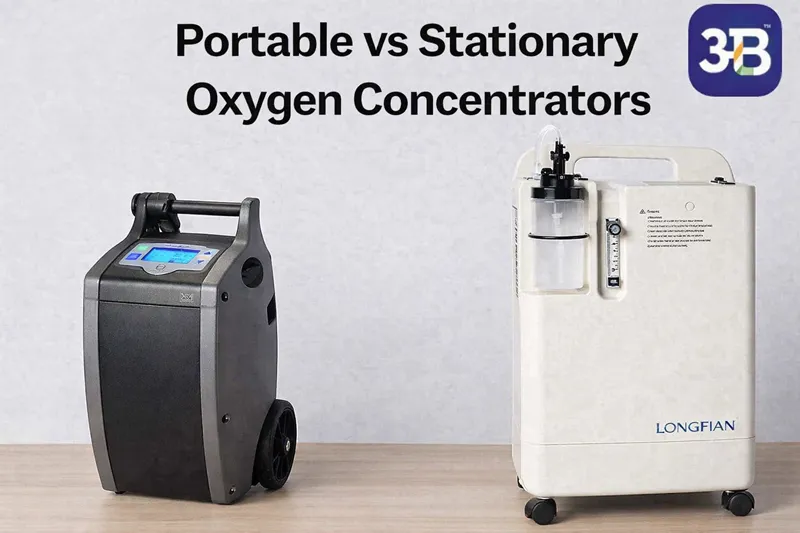
Both devices serve the same fundamental purpose delivering oxygen to patients who cannot maintain adequate oxygen levels on their own. However, the way they function, the lifestyle they support, and the type of patients they suit are very different.
At Aarogyaa Bharat, we regularly guide patients, caregivers, and families through this exact comparison. This in-depth guide explains the real-world differences, advantages, limitations, and ideal use cases of portable vs stationary oxygen concentrators, so you can make an informed and confident decision.
Understanding Oxygen Concentrators: The Basics
An oxygen concentrator is a medical device that extracts oxygen from room air and delivers concentrated oxygen to a patient. Unlike oxygen cylinders, concentrators do not store oxygen and therefore do not require refilling. This makes them safer, more reliable, and more economical for long-term use.
Oxygen concentrators are broadly divided into two categories:
-
Portable Oxygen Concentrators (POCs)
-
Stationary (Home) Oxygen Concentrators
Although both deliver oxygen, their design, oxygen output, and intended usage differ significantly.
What Is a Stationary Oxygen Concentrator?
A stationary oxygen concentrator, also called a home oxygen concentrator, is designed for continuous use in one fixed location, usually inside the home. These machines typically provide higher oxygen flow rates, most commonly 5 LPM or 10 LPM, making them suitable for patients with moderate to high oxygen needs.
Stationary concentrators are powered directly by electricity and are built to run 24 hours a day, making them ideal for long-term and overnight oxygen therapy. They are larger, heavier, and not meant to be carried outside the home regularly.
What Is a Portable Oxygen Concentrator?
A portable oxygen concentrator (POC) is a compact, lightweight device designed to support mobility. It runs on rechargeable batteries and is meant for patients who need oxygen while walking, traveling, or performing daily activities outside the home.
Most portable concentrators deliver oxygen using pulse dose technology, meaning oxygen is supplied only when the patient inhales. Due to size and battery limitations, portable units usually deliver lower oxygen output compared to stationary models.
Key Differences Between Portable and Stationary Oxygen Concentrators
1. Oxygen Output Capacity
One of the most important differences lies in how much oxygen the device can deliver.
Stationary oxygen concentrators typically deliver continuous flow oxygen, ranging from 1 to 5 litres per minute, and some models even go up to 10 LPM. This makes them suitable for patients with higher or constant oxygen requirements.
Portable oxygen concentrators, on the other hand, usually provide pulse dose oxygen, which may not be sufficient for patients who require continuous oxygen flow or higher flow rates, especially during sleep or severe breathlessness.
2. Mobility and Lifestyle Support
Portable oxygen concentrators are designed for active and mobile patients. They allow users to move freely within the house, step outside, travel short distances, or even fly on approved airlines. This independence can significantly improve mental well-being and quality of life for suitable patients.
Stationary concentrators are designed for home-based care. While they can be moved within a room or between rooms using wheels, they are not suitable for outdoor use or travel. They support stability rather than mobility.
3. Power Source and Reliability
Stationary concentrators run directly on electricity and are designed for continuous operation. As long as there is power supply (with inverter or backup), oxygen delivery remains consistent and uninterrupted.
Portable concentrators rely on batteries, which need regular charging and have limited runtime. Battery life typically ranges from 2 to 8 hours, depending on flow setting and model. For patients with continuous oxygen needs, this can be a limitation.
4. Suitability During Sleep
Many patients experience oxygen drops during sleep and require uninterrupted oxygen therapy overnight.
Stationary oxygen concentrators are ideal for night use, as they provide continuous flow oxygen without battery concerns. They are commonly prescribed for nocturnal oxygen therapy.
Most portable concentrators are not recommended for sleep, especially for patients who require continuous flow, because pulse dose delivery may not synchronize well with shallow breathing during sleep.
5. Noise Level and Comfort
Stationary concentrators are generally quieter and designed to operate steadily over long hours, making them suitable for bedroom use.
Portable concentrators, due to compact compressors and pulse delivery systems, may produce more noticeable breathing-synchronized noise, which some users find uncomfortable during prolonged indoor use.
Who Should Choose a Stationary Oxygen Concentrator?
A stationary oxygen concentrator is the better choice for patients who:
-
Require continuous oxygen flow
-
Have moderate to severe respiratory conditions
-
Need oxygen therapy for long hours or overnight
-
Are elderly or bedridden
-
Receive long-term home care
-
Have COPD, pulmonary fibrosis, heart failure, or post-COVID lung damage
For such patients, reliability, oxygen purity, and uninterrupted delivery are far more important than portability.
Who Should Choose a Portable Oxygen Concentrator?
A portable oxygen concentrator may be suitable for patients who:
-
Have mild oxygen requirements
-
Use oxygen only during activity
-
Are physically active and mobile
-
Travel frequently
-
Have been prescribed pulse dose oxygen
-
Want independence for short outdoor movement
Portable concentrators are often used in combination with stationary units rather than as a complete replacement.
Portable vs Stationary: A Practical Comparison Table (Narrative)
In real-world home-care settings, stationary concentrators function as the primary oxygen source, while portable concentrators act as support devices for mobility. Many patients use a stationary concentrator at home and a portable unit for short outings or travel.
Choosing one over the other should never be based on convenience alone. It must be guided by doctor-prescribed oxygen flow, patient lifestyle, and safety requirements.
Cost Considerations
Stationary oxygen concentrators are generally more affordable and offer better value for long-term use. Their lower cost per litre of oxygen makes them ideal for chronic therapy.
Portable oxygen concentrators are significantly more expensive due to battery technology, compact design, and mobility features. They are best considered as a lifestyle accessory rather than a primary oxygen source.
At Aarogyaa Bharat, we help families avoid unnecessary expenses by recommending the right combination instead of over-investing in unsuitable equipment.
Safety and Medical Guidance
It is critical to understand that not all patients are suitable for portable oxygen concentrators, even if mobility seems appealing. Inadequate oxygen delivery can lead to serious complications, including breathlessness, fatigue, cardiac strain, and hospitalization.
Oxygen therapy should always be selected based on:
-
Prescribed flow rate
-
Oxygen saturation monitoring
-
Breathing pattern (rest vs exertion vs sleep)
-
Doctor’s recommendation
Conclusion
There is no one-size-fits-all answer.
A stationary oxygen concentrator is better for medical reliability, long-term therapy, and home care.
A portable oxygen concentrator is better for mobility and lifestyle flexibility, but only for selected patients.
At Aarogyaa Bharat – Live Healthy, Live Better, our role is not just to sell equipment, but to help families choose what is medically right, practically useful, and emotionally reassuring.
If you need help deciding which oxygen concentrator is best for your condition, our experts are always here to guide you with honesty and care.