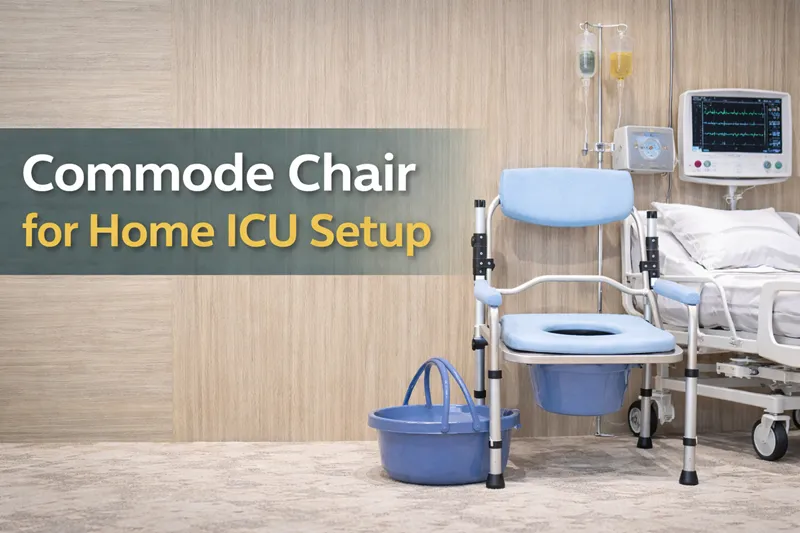
Understanding What a Home ICU Setup Involves
A Home ICU setup is designed for patients who are medically
stable enough to leave the hospital but still require intensive care support.
This may include elderly patients, post-surgery critical cases,
ventilator-dependent patients, neurological patients, stroke survivors, spinal
injury cases, or individuals recovering from severe respiratory or cardiac
conditions. Home ICUs often include hospital beds, suction machines, oxygen
concentrators or cylinders, infusion pumps, monitors, and trained caregivers or
nurses. In such setups, patient movement must be minimized to avoid medical
complications. Toileting becomes a critical challenge because moving a patient
to a bathroom can disrupt monitoring lines, oxygen supply, catheters, and IV
connections. A commode chair allows toileting to happen safely within the
patient care zone without compromising medical stability.
Why Toileting Is a High-Risk Activity in Home ICU Care
In a Home ICU environment, patients are often weak,
partially immobile, sedated, or connected to medical equipment. Simple actions
such as standing, walking, or transferring can lead to sudden drops in blood
pressure, oxygen desaturation, dizziness, or falls. Bathrooms are also
high-risk zones due to slippery floors, tight spaces, and limited access for
caregivers and equipment. Repeated transfers to the bathroom increase the risk
of line dislodgement, infections, pressure injuries, and caregiver strain. A commode
chair reduces these risks by allowing toileting to occur close to the bed,
under supervision, and in a controlled, hygienic manner.
Role of a Commode Chair in a Home ICU Setup
A commode chair in a home ICU setup function as a medical
support device rather than just a toileting aid. It enables safe bowel and
bladder management without unnecessary patient movement. The chair provides
stable seating, armrest support for transfers, and a removable waste collection
system that supports hygiene protocols. For patients who can sit with
assistance, the commode chair allows toileting without disrupting oxygen
therapy, monitoring devices, or caregiver workflows. For caregivers and nurses,
it simplifies care routines while maintaining patient dignity and comfort.
Patients Who Require Commode Chairs in Home ICU Care
Many categories of home ICU patients require commode chairs
as part of daily care. These include ventilator or oxygen-dependent patients,
post-operative ICU discharge patients, stroke patients with hemiplegia, spinal
injury patients, advanced neurological cases, elderly patients with multiple
co-morbidities, and patients recovering from severe infections or trauma. These
patients often lack the strength, balance, or consciousness level needed to use
a regular bathroom safely. A commode chair becomes an essential daily-use
device that supports both patient safety and medical continuity.
Infection Control and Hygiene in Home ICU Toileting
Infection prevention is a top priority in any ICU
environment, including home-based setups. Bathrooms can be a source of
bacterial exposure, moisture, and contamination. Transporting critically ill
patients to shared or household bathrooms increases infection risk. A commode
chair with a dedicated waste bucket allows controlled disposal and cleaning,
reducing exposure to pathogens. Regular disinfection of the chair, bucket,
seat, and armrests helps maintain ICU-level hygiene standards within the home.
This is particularly important for immunocompromised patients or those
recovering from sepsis, surgery, or respiratory failure.
Reducing Physical Strain on Caregivers and Nurses
Home ICU care places significant physical demands on
caregivers and nurses. Repeated lifting, transfers, and bathroom assistance
increase the risk of caregiver back injuries, fatigue, and burnout. A commode
chair reduces the need for long-distance transfers and awkward lifting by
allowing toileting to happen near the bed with proper support. Armrests, stable
frames, and appropriate height help caregivers assist patients safely with
minimal physical strain. This makes long-term home ICU care more sustainable
and safer for everyone involved.
Maintaining Patient Dignity in Critical Home Care
Loss of independence and privacy is one of the most
emotionally challenging aspects of critical illness. Toileting assistance can
be deeply uncomfortable for patients, especially when handled in unsafe or
exposed environments. A commode chair allows toileting to be done discreetly,
respectfully, and with minimal exposure. This preservation of dignity has a
powerful psychological impact, helping patients feel human, respected, and
emotionally supported during critical recovery phases. Emotional well-being plays
a vital role in recovery outcomes, especially in long-term home ICU care.
Types of Commode Chairs Suitable for Home ICU Setup
|
Type of
Commode Chair |
Suitable
For |
Key
Benefit |
|
Critically
ill patients |
Maximum
stability |
|
|
Height
Adjustable Commode Chair |
Assisted
sitting and transfers |
Reduced
strain |
|
Fully
dependent patients |
Safe assisted
movement |
|
|
High-weight
patients |
Reinforced
safety |
|
|
Anti-Slip
Commode Chair |
ICU-level
safety needs |
Fall
prevention |
Choosing the Right Commode Chair for Home ICU Use
Selecting a commode chair for a Home ICU requires
medical-level thinking rather than general household considerations. The chair
must be extremely stable, support the patient’s weight comfortably, and allow
safe transfers with or without assistance. Features such as strong armrests,
back support, anti-slip legs, and easy-to-clean surfaces are essential. For ICU
patients, wheeled chairs with locking mechanisms may be required to reposition
patients safely. Aarogyaa Bharat recommends rehabilitation-grade or medical-grade
commode chairs that can withstand continuous use and strict hygiene
requirements.
Steel vs Plastic Commode Chairs in Home ICU Settings
|
Feature |
Steel
Commode Chair |
Plastic
Commode Chair |
|
Structural
strength |
Very high |
Moderate |
|
Stability |
Excellent |
Good |
|
Weight
capacity |
High |
Limited |
|
Hygiene
durability |
Excellent |
Good |
|
Best suited
for |
Long-term
Home ICU |
Short-term
care |
Placement of Commode Chair in a Home ICU Room
The commode chair should be placed within close reach of the
patient’s bed, preferably on a flat, non-slip surface. Adequate space must be
available for caregivers to assist from multiple sides. Lighting should be
sufficient for night-time use, and privacy arrangements should be in place. The
chair should not obstruct medical equipment, oxygen tubing, or monitor cables.
Proper placement ensures safety, efficiency, and dignity during toileting.
Cleaning and Maintenance Protocols for Home ICU Use
In a Home ICU setup, commode chairs must follow strict
cleaning protocols. The waste bucket should be emptied and disinfected after
every use. The seat, armrests, and frame should be cleaned daily with
medical-grade disinfectants. Anti-slip components and joints should be
inspected regularly. Maintaining hygiene prevents infections, odor, and
equipment degradation, ensuring safe long-term use.
Why Aarogyaa Bharat Supports Home ICU Care Solutions
Aarogyaa Bharat understands that home ICU care is a complex
responsibility requiring dependable, hospital-grade solutions adapted for
Indian homes. Our commode chairs are selected with a focus on stability,
hygiene, caregiver safety, and patient dignity. By offering reliable home ICU
support equipment, Aarogyaa Bharat helps families manage critical care
confidently while reducing hospital dependency and improving quality of life.
Conclusion
A commode chair is a critical yet often underestimated
component of a home ICU setup. By enabling safe, hygienic, and dignified
toileting, it protects patients from falls, infections, and emotional distress
while reducing caregiver strain and medical risk. In Home ICU environments
where every movement matters, the right commode chair ensures continuity of
care without compromising safety or dignity. Aarogyaa Bharat remains committed
to supporting home ICU care with thoughtfully designed, reliable healthcare
solutions that bring hospital-level safety into the comfort of home.
Enter your content here...