Understanding Bed Sores (Pressure Ulcers)
What Are Bed Sores?
Bed sores are injuries to the skin and underlying tissue
caused by prolonged pressure, friction, or shear. They typically develop when a
person remains in one position for too long, cutting off blood flow to
vulnerable areas.
Common Areas Where Bed Sores Develop
- Tailbone
and lower back
- Hips
- Heels
and ankles
- Shoulders
and shoulder blades
- Elbows
Who Is at Highest Risk?
High-risk groups include:
- Long-term
bedridden patients
- Elderly
individuals with fragile skin
- Stroke
and paralysis patients
- Patients
with diabetes or poor circulation
- People
recovering from major surgery
Search trends such as “how to prevent bed sores at home,”
“best bed for bedridden patient,” and “pressure sore prevention mattress”
highlight how widespread this concern is.
Why Normal Beds Increase the Risk of Bed Sores
Standard household beds are designed for comfort, not
medical care.
Problems with normal beds include:
- Flat
surface with no pressure redistribution
- Difficulty
changing positions frequently
- Incompatibility
with medical mattresses
- Increased
friction during movement
- Higher
caregiver strain leading to less frequent repositioning
Over time, these factors create constant pressure on the
same body areas, allowing bed sores to develop.
How Hospital Beds Help Prevent Bed Sores
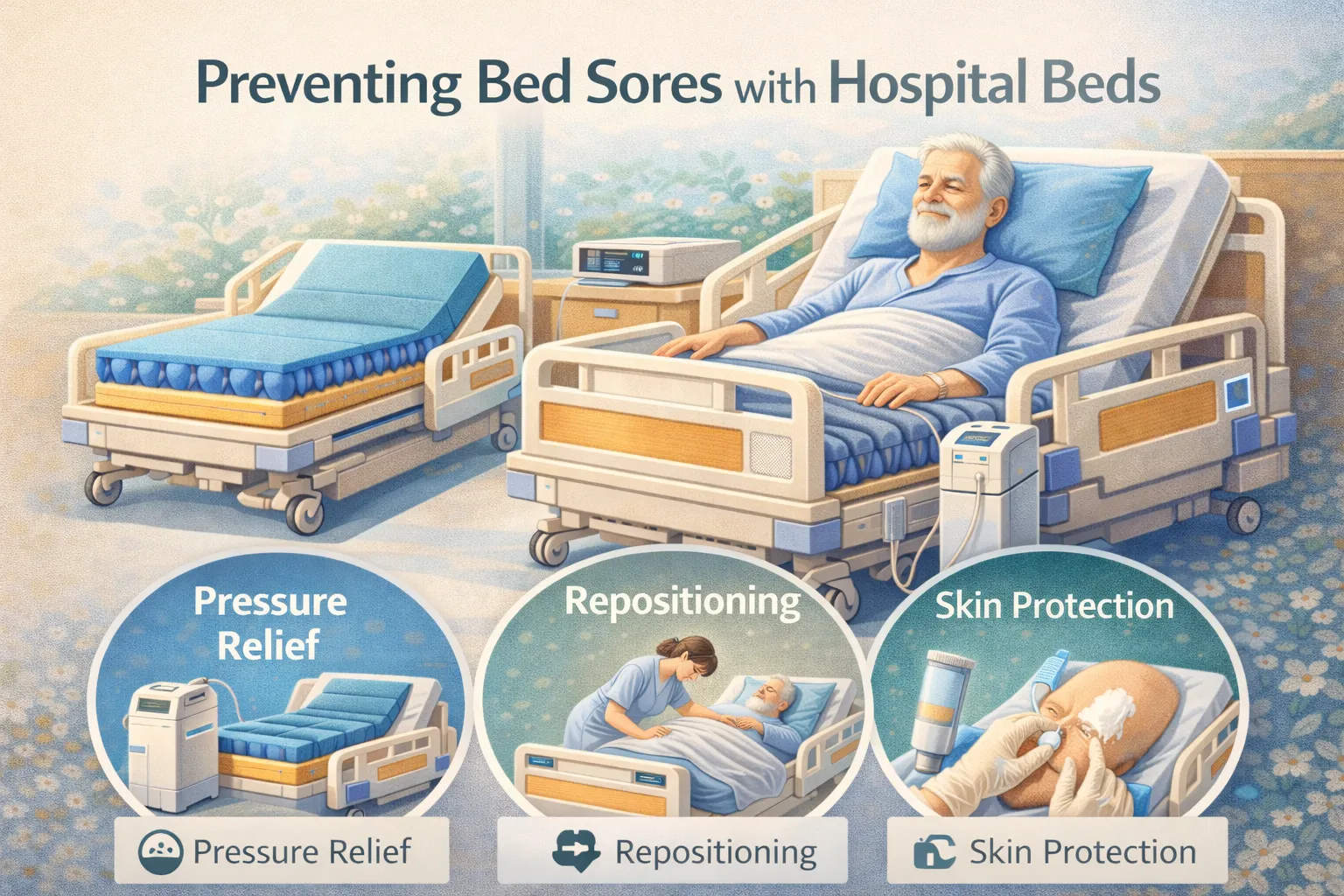
Hospital beds are designed specifically to reduce pressure,
improve circulation, and enable frequent repositioning, which are the three
core principles of bed sore prevention.
Adjustable Head and Leg Positions Reduce Continuous
Pressure
Staying in a single flat position places continuous pressure
on the tailbone, hips, and heels.
Hospital beds allow:
- Head
elevation to shift pressure distribution
- Leg
elevation to relieve pressure on heels
- Multiple
posture options throughout the day
Changing pressure points regularly keeps blood flowing and
prevents tissue damage.
Height Adjustment Enables Safe and Frequent Repositioning
Repositioning is essential for preventing bed sores, but it
is physically demanding.
Height-adjustable hospital beds:
- Reduce
caregiver bending and lifting
- Make
turning and repositioning easier
- Encourage
more frequent position changes
When repositioning becomes easier, it happens more often
significantly reducing bedsore risk.
Compatibility with Anti-Bedsore Mattresses
One of the biggest advantages of hospital beds is their
ability to work effectively with anti-bedsore mattresses.
These mattresses:
- Redistribute
pressure across the body
- Reduce
prolonged contact in high-risk areas
- Improve
blood circulation
Hospital beds enhance their effectiveness by allowing
position changes that normal beds cannot support.
Side Rails Support Safe Movement Without Friction
Friction and shear forces damage skin, especially during
uncontrolled movement.
Side rails help by:
- Allowing
patients to adjust position gradually
- Reducing
sliding during elevation
- Preventing
sudden falls
Controlled movement protects fragile skin and reduces tissue
stress.
Supporting Scheduled Position Changes
Medical guidelines recommend repositioning:
- Every
2 hours for fully bedridden patients
- Every
3-4 hours for partially mobile patients
Hospital beds:
- Make
scheduled repositioning easier
- Reduce
caregiver fatigue
- Enable
consistent care routines
Consistency is critical in preventing pressure ulcers.
Role of Hospital Beds in Skin Hygiene and Inspection
Early detection prevents serious bed sores.
Hospital beds:
- Provide
better access to inspect skin
- Allow
easier cleaning and hygiene care
- Support
drying and ventilation of skin
This reduces moisture-related skin breakdown.
Choosing the Right Hospital Bed Features for Bedsore
Prevention
Fully Electric Adjustment
Enables effortless posture changes and frequent
repositioning.
Stable Bed Frame
Prevents unnecessary movement and friction.
Side Rails
Support safe repositioning and confidence.
Mattress Compatibility
Supports foam, air, and alternating pressure mattresses.
Combining Hospital Beds with Proper Care Practices
Hospital beds work best when combined with:
- Anti-bedsore
mattresses
- Regular
skin checks
- Proper
nutrition and hydration
- Clean,
dry bedding
- Caregiver
education
Together, these measures create a comprehensive
bedsore-prevention system.
Long-Term Cost Benefits of Preventing Bed Sores
Treating bed sores can be expensive and prolonged.
Prevention saves:
- Hospitalisation
costs
- Wound-care
expenses
- Infection-related
complications
- Caregiver
time and emotional stress
A hospital bed helps prevent a problem that is far costlier
to treat than to avoid.
Who Should Prioritise Hospital Beds for Bedsore
Prevention?
Hospital beds are strongly recommended for:
- Long-term
bedridden patients
- Elderly
individuals with limited mobility
- Stroke
and paralysis patients
- Post-surgery
patients with restricted movement
- Chronic
illness and palliative care patients
Conclusion: Prevention Begins with the Right Bed
Bed sores are not just painful they can become
life-threatening if left unmanaged. The foundation of prevention lies in
pressure relief, movement, and consistent care, all of which are significantly
supported by a hospital bed designed for medical use.
For families caring for bedridden or high-risk patients at
home, investing in the right hospital bed is not about comfort alone it is
about protecting skin integrity, preventing infection, and preserving quality
of life.
A hospital bed enables safer positioning, easier caregiving,
better circulation, and early detection turning long-term care into a more
humane, effective, and sustainable experience.
Preventing bed sores is always easier than treating them and
the right hospital bed makes prevention possible every single day.
This guide by Aarogyaa Bharat explains how hospital beds play a vital role in preventing bed sores and improving comfort during long-term home care.