What Is a Pulmonary Function Test (PFT)?
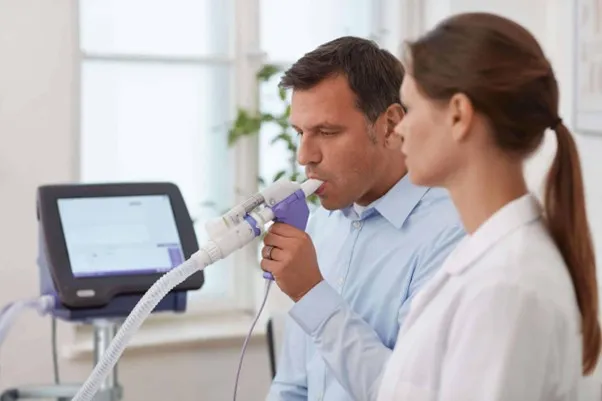
A Pulmonary Function Test (PFT) is a group of specialized
respiratory diagnostic tests that evaluate how well the lungs function.
These tests assess:
- The
amount of air the lungs can hold
- The
speed at which air can be inhaled and exhaled
- The
efficiency of oxygen transfer from lungs to bloodstream
Unlike imaging tests such as chest X-rays or CT scans that show lung structure, PFTs measure lung performance, making them essential for functional assessment of the respiratory system.
Pulmonary Function Tests are:
- Non-invasive
- Painless
- Radiation-free
- Safe
for repeated use
They are routinely performed in hospitals, diagnostic
centers, pulmonology clinics, ICUs, and occupational health facilities.
Why Pulmonary Function Tests Are Clinically Important
Many lung diseases develop slowly and silently,
showing symptoms only when significant lung damage has already occurred. PFTs
allow early detection, accurate diagnosis, and ongoing monitoring of
respiratory disorders.
Key Clinical Benefits of PFT Testing
- Early
identification of lung disease
- Differentiation between obstructive vs restrictive lung disorders
- Monitoring
progression of chronic respiratory conditions
- Assessing
response to inhalers and medications
- Pre-operative
respiratory fitness evaluation
- Occupational
lung disease screening
- Long-term
monitoring in smokers and ex-smokers
In India, PFTs are increasingly recommended due to urban pollution, industrial exposure, biomass fuel usage, and post-COVID respiratory issues.
Who Should Undergo a Pulmonary Function Test?
A Pulmonary Function Test is advised for individuals
experiencing:
- Chronic
cough
- Shortness
of breath (dyspnea)
- Wheezing
- Chest
tightness
- Reduced
exercise tolerance
- Frequent
respiratory infections
High-Risk Groups Who Should Regularly Do PFTs
- Asthma
patients
- COPD
patients
- Smokers
and former smokers
- Industrial
workers (cement, mining, chemicals, textiles)
- Traffic
police and outdoor workers
- Post-COVID
patients with breathlessness
- Pre-surgical
patients
Types of Pulmonary Function Tests
Pulmonary Function Testing is not a single test-it is a set
of complementary tests, each evaluating a specific aspect of lung function.
1. Spirometry Test
Spirometry is the most commonly performed PFT and
forms the foundation of pulmonary diagnostics.
It measures:
- Forced
Vital Capacity (FVC)
- Forced
Expiratory Volume in 1 second (FEV₁)
- FEV₁/FVC
ratio
- Peak
Expiratory Flow Rate (PEFR)
Spirometry is essential for diagnosing:
- Asthma
- Chronic
Obstructive Pulmonary Disease (COPD)
- Chronic
bronchitis
- Emphysema
2. Lung Volume Tests
Lung volume testing measures:
- Total
Lung Capacity (TLC)
- Residual
Volume (RV)
- Functional
Residual Capacity (FRC)
These tests help diagnose restrictive lung diseases.
3. Diffusion Capacity Test (DLCO)
The Diffusing Capacity of the Lung for Carbon Monoxide
(DLCO) test evaluates how efficiently oxygen passes from the lungs into the
blood.
Used in diagnosing:
- Pulmonary
fibrosis
- Interstitial
lung disease
- Pulmonary
hypertension
- Emphysema
4. Bronchodilator Reversibility Test
This test evaluates how lung function improves after
administering a bronchodilator, helping differentiate asthma from COPD.
5. Peak Flow Measurement
A Peak Flow Meter measures maximum airflow during
forced expiration and is commonly used for:
- Home
asthma monitoring
- Daily lung function tracking
Pulmonary Function Test
Equipment Used
Accurate diagnosis depends on high-quality pulmonary
diagnostic equipment.
1. Spirometry Machine
A spirometer is the core device used in PFT testing.
It measures:
- Airflow
rate
- Lung
volume
- Breathing
patterns
Types of Spirometers
- Portable
spirometer
- Desktop
spirometer
- Computer-based
spirometer
- Turbine
spirometer
- Ultrasonic
spirometer
2. Body Plethysmograph
A closed chamber used to measure:
- Lung
volumes
- Airway
resistance
Primarily used in advanced pulmonary laboratories and
tertiary hospitals.
3. DLCO Analyzer
Used for:
- Gas
diffusion assessment
- Advanced
pulmonary diagnostics
4. Peak Flow Meter
A compact handheld device ideal for:
- Asthma
patients
- Home
respiratory care
5. Disposable Mouthpieces & Filters
Essential for:
- Infection
control
- Accurate
test results
- Patient
safety
Pulmonary Function Test Procedure (Step-by-Step)
Before the Test
Patients should:
- Avoid
smoking for 4–6 hours
- Avoid
heavy meals
- Avoid
strenuous exercise
- Wear
loose, comfortable clothing
During the Test
- Patient
sits upright
- Nose
clip is applied
- Mouthpiece
is sealed with lips
- Deep
inhalation followed by forceful exhalation
- Test
repeated 2–3 times for accuracy
- Bronchodilator
administered if required
After the Test
- Patient
resumes normal activity
- Results
interpreted by pulmonologist
Pulmonary Function Test Normal Values
Normal PFT values depend on:
- Age
- Gender
- Height
- Ethnicity
Reference Normal Ranges
|
Parameter |
Normal Value |
|
FVC |
≥ 80% predicted |
|
FEV₁ |
≥ 80% predicted |
|
FEV₁/FVC |
≥ 70–75% |
|
PEFR |
80–120% |
|
TLC |
80–120% |
|
DLCO |
≥ 75% |
Interpretation of PFT Results
Obstructive Lung Disease
Seen in asthma and COPD
- Low
FEV₁
- Reduced
FEV₁/FVC ratio
Restrictive Lung Disease
Seen in pulmonary fibrosis
- Reduced
lung volumes
- Normal
FEV₁/FVC ratio
Mixed Pattern
Combination of both obstructive and restrictive features.
Pulmonary Function Test Cost in India
|
Test Type |
Approx Cost |
|
Spirometry |
₹800 – ₹2,000 |
|
Complete PFT |
₹2,500 – ₹5,000 |
|
DLCO |
₹3,000 – ₹6,000 |
Benefits of Pulmonary Function Tests
- Early
disease detection
- Non-invasive
& painless
- Safe
for children and elderly
- Monitors
treatment effectiveness
- Essential
for occupational health
Pulmonary Function Test in Children
Children above 5 years can safely undergo PFTs using paediatric
spirometers designed for smaller lung volumes.
Home vs Diagnostic Lab PFT Testing
|
Aspect |
Home |
Diagnostic Lab |
|
Accuracy |
Moderate |
High |
|
Equipment |
Peak flow meter |
Spirometer, DLCO |
|
Diagnosis |
No |
Yes |
Conclusion
Pulmonary Function Tests are essential diagnostic tools for evaluating lung health, diagnosing respiratory disorders, and monitoring treatment outcomes. In a country like India, where respiratory risks are increasing, timely PFT testing can significantly improve quality of life and long-term health outcomes. At Aarogyaa Bharat, we support accurate respiratory diagnostics by promoting reliable pulmonary equipment, patient education, and evidence-based healthcare solutions.