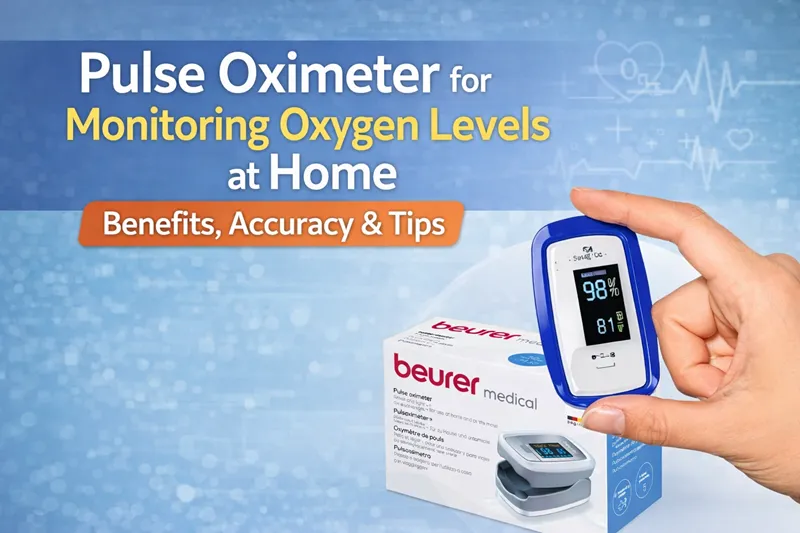
One of the most dangerous realities of respiratory illness is silent hypoxemia, a condition where blood oxygen levels fall to dangerously low levels without producing severe breathlessness or chest discomfort. This phenomenon gained widespread attention during the COVID-19 pandemic, when patients suddenly collapsed at home despite feeling relatively stable just hours earlier. Since then, doctors across the world have emphasized the importance of continuous oxygen monitoring for high-risk individuals. A pulse oximeter has therefore emerged as one of the most critical home medical devices for preventive healthcare, chronic disease management, post-surgical recovery, elderly care, and emergency preparedness. It allows families to measure blood oxygen saturation and heart rate in real time, detect early warning signs of deterioration, and make timely medical decisions that can prevent hospitalization, intensive care admission, and long-term organ damage. This ultra-comprehensive guide by Aarogyaa Bharat explains everything families and caregivers need to know about pulse oximeters for home use, including how they work, who should use them, what oxygen levels mean, how to choose the right device, how to use it correctly, how to interpret readings accurately, how to integrate oxygen monitoring into daily life, how to handle emergencies, and how to build a long-term home oxygen safety plan.
What Is a Pulse Oximeter and How It Works
A pulse oximeter is a small, non-invasive medical device
that measures two vital physiological parameters: blood oxygen saturation
(SpO₂) and heart rate (pulse). It clips onto a fingertip, toe, or earlobe and
shines two types of light red and infrared through the skin. By analyzing how
much light is absorbed by oxygenated and deoxygenated hemoglobin in the blood,
the device calculates the percentage of oxygen in the bloodstream and displays
it digitally within seconds. Although this technology appears simple, it plays a
life-saving role in modern medicine. Oxygen is essential for cellular
metabolism, brain function, heart performance, and tissue repair. Even a short
period of oxygen deprivation can cause irreversible damage to vital organs.
Pulse oximeters allow people to detect oxygen deficiency early, long before
symptoms become severe, enabling timely medical intervention that can prevent
catastrophic outcomes. For home use, fingertip pulse oximeters are the most common
and practical models. They are compact, affordable, easy to operate, and
accurate enough for routine health monitoring when medically certified devices
are used. More advanced models also store historical data, trigger alarms, and
connect to smartphones for long-term tracking.
Why Monitoring Oxygen Levels at Home Is So Important
- Home oxygen monitoring has moved from being a hospital-only practice to a mainstream preventive healthcare habit.
- First, it enables early detection of respiratory decline. Conditions such as pneumonia, asthma, COPD, COVID-19, post-viral lung inflammation, and allergic airway disease can cause oxygen levels to fall before severe symptoms appear. Early detection allows patients to start treatment sooner and avoid complications.
- Second, it helps manage chronic illnesses. Patients with long-term respiratory or cardiac conditions can track daily oxygen trends and detect flare-ups early, preventing emergency hospital visits and long ICU stays.
- Third, it supports post-surgical recovery. After major surgeries, especially chest, heart, abdominal, and orthopaedic procedures, oxygen levels can drop unexpectedly due to pain, immobility, anaesthesia effects, and fluid shifts. Home monitoring ensures safe recovery.
- Fourth, it improves elderly care. Aging lungs lose efficiency, circulation slows down, and seniors often fail to recognize early hypoxemia. A pulse oximeter provides objective data for caregivers to act promptly.
- Fifth, it enhances home emergency preparedness. During sudden breathlessness, chest discomfort, fever spikes, allergic reactions, or infections, a pulse oximeter helps families decide whether immediate medical attention is needed.
- Sixth, it promotes fitness and wellness tracking. Athletes monitor oxygen recovery after workouts, while travellers use pulse oximeters to detect altitude sickness early.
Who Should Use a Pulse Oximeter at Home
- While a pulse oximeter is useful for almost everyone, certain groups benefit far more from owning one.
- Elderly individuals often experience reduced lung capacity and poor circulation, making them vulnerable to silent hypoxemia.
- People with asthma, COPD, pulmonary fibrosis, bronchiectasis, and post-COVID lung damage need regular oxygen monitoring to prevent flare-ups and hospitalizations.
- Heart patients with heart failure, coronary artery disease, arrhythmias, and valve disorders rely on oxygen readings to detect early signs of cardiac strain and fluid overload.
- Children with recurrent wheezing, pneumonia, or congenital lung conditions benefit from oxygen monitoring during illness.
- Obese individuals, smokers, and people with sleep apnea are at higher risk of nighttime oxygen drops that often go undetected.
- Post-surgical patients and individuals recovering from viral infections also benefit greatly from routine oxygen monitoring.
Understanding Normal, Borderline, and Dangerous Oxygen
Levels
- Before using a pulse oximeter, it is essential to understand what oxygen saturation numbers actually mean.
- For healthy adults, normal SpO₂ values typically range between 95 percent and 100 percent.
- Values between 92 percent and 94 percent are considered borderline low and should be monitored closely, especially in people with lung or heart disease.
- Readings consistently below 90 percent are generally considered dangerous and require immediate medical evaluation.
- For patients with chronic lung diseases such as COPD, doctors may set lower acceptable baseline levels depending on individual medical history.
- Heart rate values also matter. Normal resting heart rate ranges from 60 to 100 beats per minute for adults. Abnormally high or low pulse readings in combination with low oxygen levels may indicate cardiac distress, dehydration, infection, or medication side effects.
Types of Pulse Oximeters Available for Home Use
- Several types of pulse oximeters are available in the market; each designed for different use cases.
- Fingertip pulse oximeters are the most common and affordable models for home monitoring. They are compact, easy to use, and suitable for most people.
- Wrist-worn pulse oximeters are used for continuous overnight monitoring, especially for sleep apnea patients. They are more expensive and often prescribed by doctors.
- Handheld medical-grade oximeters are used in hospitals and clinics and offer higher accuracy, alarm systems, and probe attachments, but they are unnecessary for most home users.
- For home use, a medically certified fingertip pulse oximeter is usually the safest and most practical choice.
Key Features to Look for in a Home Pulse Oximeter
- Not all pulse oximeters deliver the same reliability, and certain features matter far more than brand name or price.
- Medical accuracy certification is the most important factor. Buyers should always choose devices that are FDA-approved, CE-certified, or ISO-compliant.
- Display quality matters greatly, especially for elderly users. A bright, rotatable OLED display is far superior to dim LED screens.
- Measurement speed is critical. Reliable oximeters provide stable readings within five to ten seconds without excessive fluctuation.
- Battery type and life should not be ignored. Rechargeable models reduce long-term cost and frequent battery replacement.
- Alarm functions are useful for high-risk patients who need alerts when oxygen drops below preset limits.
- Finger size compatibility is important for children and people with thin fingers.
- Overall build quality determines durability and long-term reliability.
How to Use a Pulse Oximeter Correctly at Home
- Proper usage technique is just as important as buying the right device because even the best pulse oximeter can produce misleading readings if used incorrectly.
- Users should always rest for five minutes before measurement, remove nail polish and artificial nails, warm cold hands before measuring, and place the device firmly on the fingertip.
- The hand should be kept still at heart level, and readings should be taken only after the values stabilize.
- Measurements should be recorded at the same time each day for trend tracking rather than obsessing over single readings.
- For patients under medical care, readings should be shared with doctors regularly.
When to Trust Readings and When to Doubt Them
- Pulse oximeters are highly reliable but not infallible, and users must learn when to trust readings and when to doubt them.
- Stable readings that match physical symptoms can usually be trusted.
- Values that fluctuate wildly, contradict how the patient feels, or change drastically with small finger movements should be rechecked.
- Low readings should always be confirmed by re-measuring on another finger or using a second device if available.
- Persistently low oxygen levels should never be ignored even if the patient feels normal.
Home Emergency Protocol Using a Pulse Oximeter
- A pulse oximeter becomes most valuable during sudden health emergencies.
- If oxygen levels drop below 94 percent, the patient should rest, hydrate, and recheck readings after five minutes.
- If levels remain below 92 percent or are accompanied by breathlessness, chest discomfort, dizziness, confusion, or bluish lips, immediate medical attention is required.
- For patients with known lung disease, prescribed oxygen therapy should be started if levels fall below doctor-recommended limits.
- Emergency services should be contacted immediately if oxygen levels fall below 90 percent or if the patient collapses.
Pulse Oximeter vs Smartwatch Oxygen Tracking
Many people compare pulse oximeters with smartwatches that
offer oxygen tracking, but it is important to understand that while
smartwatches are useful for general wellness trends, they lack medical
certification, have lower accuracy, and should never replace a proper pulse
oximeter for medical monitoring or emergency decision-making. For anyone with heart or lung disease, a medically certified
pulse oximeter remains the gold standard for home oxygen monitoring.
Pulse Oximeter vs Blood Pressure Monitor
Cost and Accessibility of Pulse Oximeters in India
- In India, good quality fingertip pulse oximeters typically range between ₹1,000 and ₹3,000.
- Extremely cheap models under ₹800 often compromise accuracy and durability.
- Hospital-grade models are unnecessary for most home users.
- A mid-range certified device offers the best balance of cost, reliability, and safety.
Why Aarogyaa Bharat Recommends Medical-Grade Pulse
Oximeters
At Aarogyaa Bharat, we believe that home oxygen monitoring
should be medically reliable, easy to use, and stress-free for families. We recommend only medically certified pulse oximeters with
proven accuracy, strong build quality, clear displays, and dependable
after-sales support. Our team helps families choose the right device based on
age, health condition, usage frequency, and budget, ensuring confident health
monitoring without misinformation or unnecessary expense.
Conclusion
A pulse oximeter for monitoring oxygen levels at home is not
just a gadget or a digital toy it is a life-saving health tool when used
correctly. By providing real-time insight into respiratory and
cardiovascular health, pulse oximeters empower families to detect early warning
signs, prevent emergencies, manage chronic conditions more effectively, and
take proactive control of their health journey. Investing in a reliable pulse oximeter is one of the
smartest and most practical health decisions a household can make today.