Why a Rollator Walker is Beneficial for Elderly with
Arthritis?
Arthritis can significantly impact mobility by causing joint
pain, stiffness, and reduced flexibility, making everyday movement challenging
for elderly individuals. A rollator walker is specifically designed to address
these issues by providing continuous support without requiring lifting, which
is particularly important for users experiencing joint discomfort. Unlike
traditional walkers, a rollator comes with wheels that allow smooth movement,
reducing pressure on the wrists, elbows, and shoulders. This helps users
maintain a natural walking pattern while minimizing strain on affected joints.
In home healthcare settings, maintaining independence is crucial, and a
rollator walker enables elderly individuals to move around safely without
constant assistance. It also reduces the risk of falls, which can be more
dangerous for those with weakened joints. With the growing demand for
rehabilitation products and elderly care solutions, rollator walkers have
become an essential category in mobility aids designed for arthritis management
and long-term comfort.
Key Features of Rollator Walkers for Arthritis Support
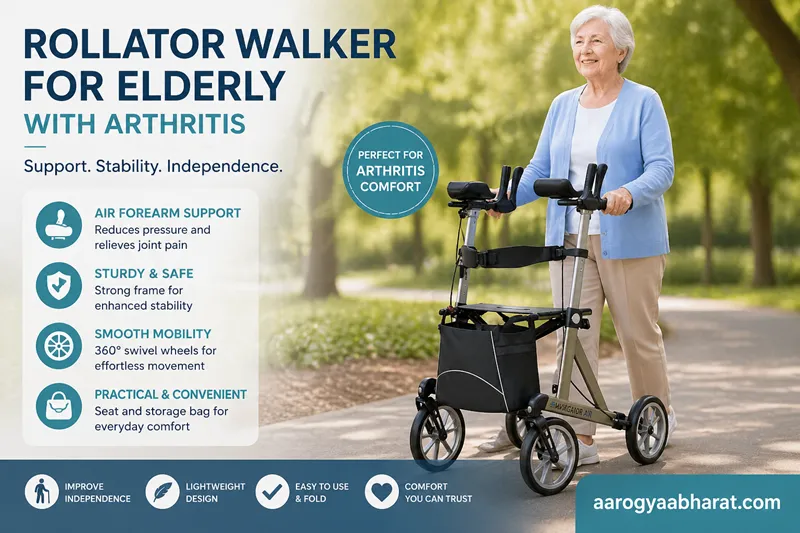
Rollator walkers come equipped with features that are
particularly beneficial for users dealing with arthritis. One of the most
important features is the presence of four wheels, which allow effortless and
smooth movement without the need to lift the device. Ergonomic hand grips are
designed to reduce pressure on sensitive joints, providing comfort during
prolonged use. Adjustable height settings ensure proper posture, preventing
additional strain on the back and shoulders. Many rollators also include hand brakes,
giving users better control and safety while walking or resting. A comfortable
padded seat and backrest are often included, allowing users to take breaks
whenever needed, which is especially helpful for those experiencing joint
fatigue. Storage options such as baskets or pouches add convenience by enabling
users to carry personal items without additional effort. With the availability
of various models under categories like mobility aids, orthopaedic supports,
and rehabilitation equipment, users can choose a rollator that best suits their
comfort and medical needs.
Benefits of Using a Rollator Walker for Arthritis Relief
Using a rollator walker offers multiple benefits for elderly
individuals suffering from arthritis. One of the primary advantages is reduced
joint strain, as the walker supports body weight and eliminates the need for
lifting, which can aggravate joint pain. The smooth rolling motion allows users
to walk more naturally, improving mobility and reducing fatigue. Another key
benefit is enhanced stability, which helps prevent falls and injuries,
especially for users with weakened joints or balance issues. Rollators also
promote independence, allowing elderly individuals to perform daily activities
without relying heavily on caregivers. Regular movement supported by a rollator
can contribute to better joint flexibility and overall health. Additionally,
the presence of a seat allows users to rest whenever needed, preventing
overexertion. In combination with other home healthcare products such as
hospital beds, patient monitoring systems, and healthcare calculators, rollator
walkers play a vital role in creating a supportive and comfortable living
environment for arthritis management.
How to Choose the Best Rollator Walker for Arthritis
Selecting the right rollator walker for arthritis requires
careful consideration of several factors to ensure maximum comfort and
effectiveness. The first aspect to evaluate is the ergonomic design,
particularly the hand grips, which should be comfortable and easy to hold for
users with joint pain. Adjustable height is essential to maintain proper
posture and reduce strain on the back and shoulders. The braking system should
be easy to operate, even for users with limited hand strength. Wheel size is another
important factor, as larger wheels provide smoother movement and better
stability. The presence of a padded seat and backrest can enhance comfort,
allowing users to rest when needed. Weight and material should also be
considered, as a lightweight yet durable frame is ideal for ease of use.
Foldability is another key feature, especially for users who need to store or
transport the rollator. With a wide range of options available under categories
like elderly care products, physiotherapy equipment, and mobility aids, users
can compare different models and choose the one that best meets their needs.
Comparison Table: Rollator Walker vs Standard Walker for
Arthritis
|
Feature |
Rollator
Walker |
Standard
Walker |
|
Movement |
Smooth
rolling |
Requires
lifting |
|
Joint Strain |
Low |
Higher |
|
Wheels |
4 wheels |
None or
limited |
|
Brakes |
Yes |
No |
|
Seat |
Available |
Not available |
|
Best Use |
Arthritis and
long-term comfort |
Basic
mobility support |
Role of Rollator Walkers in Arthritis Management and
Rehabilitation
Rollator walkers play a crucial role in arthritis management
and rehabilitation by providing continuous support and encouraging safe
movement. In physiotherapy programs, they are often used to help patients
regain mobility while minimizing joint strain. The smooth movement offered by
rollators allows users to practice walking exercises without discomfort, which
is essential for maintaining joint flexibility and strength. In home healthcare
settings, rollator walkers enable elderly individuals to stay active and avoid
prolonged inactivity, which can worsen arthritis symptoms. With the expansion
of healthcare services across different city-based platforms and hospital
support systems, rollator walkers have become easily accessible to users in
various locations. They are often used alongside other healthcare equipment
such as orthopaedic supports, exercise therapy tools, and monitoring devices.
This integrated approach ensures comprehensive patient care, focusing on both
pain management and mobility improvement. Rollator walkers are not just
mobility aids but an essential part of a holistic arthritis care plan.
Bullet Points: Key Advantages of Rollator Walkers for
Arthritis
- Reduces
strain on joints and muscles
- Provides
smooth and effortless movement
- Enhances
balance and stability
- Includes
seat for resting during use
- Promotes
independence and confidence
- Lightweight
and easy to handle
- Suitable
for long-term use
- Supports
active and healthy lifestyle
Conclusion
A rollator walker is an excellent mobility solution for elderly individuals dealing with arthritis. Its ergonomic design, smooth movement, and supportive features make it a practical choice for reducing joint pain and improving daily mobility. By providing stability, comfort, and independence, it helps users maintain an active lifestyle while managing arthritis effectively. Whether used for daily activities or rehabilitation purposes, a rollator walker offers the support needed for long-term comfort and safety. As healthcare continues to evolve towards home-based solutions, choosing the right mobility aid can make a significant difference in overall well-being and quality of life.