Understanding Mobility and Rest Requirements in Elderly
Care
As individuals age, mobility challenges increase due to
reduced muscle strength, joint stiffness, and fatigue during walking. A
rollator walker for elderly with seating needs is designed to address both
movement and rest requirements in a single mobility solution. It allows users
to walk safely while providing a built-in seat for resting whenever needed.
This dual functionality is especially important for seniors who cannot walk
long distances without breaks. In modern healthcare systems, mobility aids with
seating support are widely recommended for elderly care. They are used in
hospitals, rehabilitation centers, and home care environments. These devices
help reduce fall risks caused by fatigue and instability. They also improve
confidence in daily movement by ensuring that rest is always available when
required.
Design Structure and Comfort-Oriented Engineering
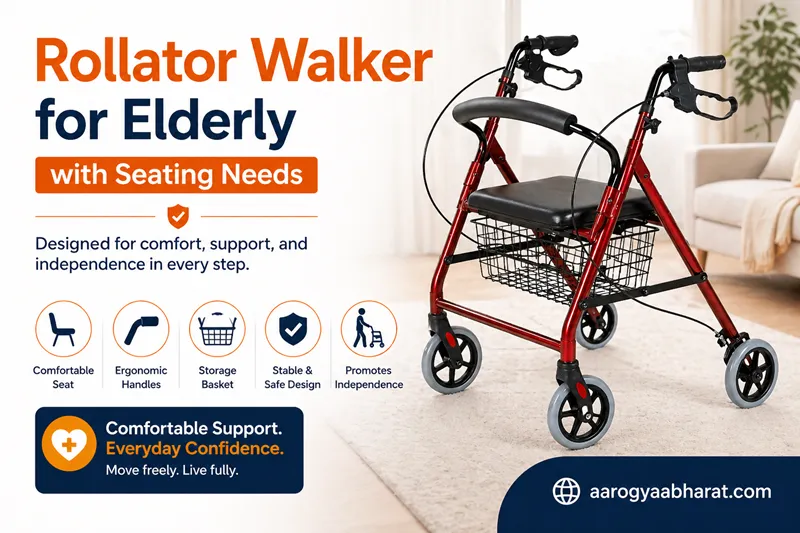
Rollator walkers with seating are engineered with a strong
focus on comfort, safety, and usability. The frame is built using lightweight
yet durable materials such as aluminium, ensuring easy movement without
compromising strength. The integrated seat is designed with ergonomic
cushioning to provide comfort during rest periods. Wheels are designed for
smooth rolling on indoor and outdoor surfaces, ensuring stable movement. Hand
brakes are included to control speed and secure the walker when the user is
seated. Height-adjustable handles ensure proper posture alignment for different
users. Storage baskets are often included for carrying personal items safely.
The overall design prioritizes user comfort and long-term usability in daily
life.
Importance of Seating Support in Elderly Mobility
Seating support in mobility aids is essential for elderly
individuals who experience fatigue during walking. A rollator walker with a
seat allows users to rest immediately without needing to find external seating.
This is particularly useful in public spaces, hospitals, and outdoor
environments. It reduces the risk of overexertion, which can lead to dizziness
or falls. Elderly users gain confidence knowing that rest is always available
during movement. In rehabilitation programs, controlled walking with rest
intervals helps improve endurance gradually. Seating support also encourages
longer periods of safe mobility. It plays a key role in maintaining
independence while ensuring safety and comfort.
Comparison of Mobility Devices with Seating Features
|
Device
Type |
Seating
Support |
Mobility
Level |
Stability |
Ideal Use |
|
Standard
Walker |
No |
Low |
Very High |
Clinical
recovery |
|
Wheeled
Walker |
No |
Medium |
High |
Indoor
mobility |
|
Rollator
Walker with Seat |
Yes |
High |
Medium to
High |
Home &
outdoor use |
|
Wheelchair |
Full sitting |
Full mobility
support |
Maximum |
Limited
walking ability |
Rollator walkers with seating stand out because they combine
walking support with rest functionality. This makes them ideal for elderly
individuals who need both mobility and periodic rest during movement. They
provide a balanced solution for active yet safe lifestyles.
Safety Features for Walking and Sitting Stability
Modern rollator walkers with seating include multiple safety
features to ensure secure usage. Strong braking systems allow users to stop
movement and lock the walker while sitting. Anti-slip wheels provide stability
on smooth surfaces such as tiles and pavements. Reinforced frames ensure the
device remains stable even under seated weight. Ergonomic seating surfaces are
designed to prevent discomfort during resting. Height-adjustable handles
support correct posture and reduce strain. Lightweight construction ensures
easy control without compromising strength. Some models include back support
for added comfort while seated. These features collectively ensure safe walking
and resting experiences.
Role in Rehabilitation and Physical Recovery Programs
Rollator walkers with seating are widely used in
rehabilitation programs for elderly patients recovering from surgery or
illness. Physiotherapists recommend controlled walking combined with rest
periods to improve endurance and strength. The seating feature allows patients
to take breaks during therapy sessions without interruption. In post-surgery
recovery, especially orthopaedic cases, these walkers reduce strain on healing
joints. They support gradual improvement in walking distance and stability.
Neurological rehabilitation also benefits from structured walking and resting
cycles. These devices help patients transition from assisted mobility to
independent walking. They are essential tools in modern rehabilitation care
systems.
Home Care and Elderly Daily Living Support
In home care environments, rollator walkers with seating
provide essential support for elderly individuals managing daily activities.
They allow safe movement between rooms while ensuring rest is always
accessible. Seniors can perform household tasks without worrying about fatigue
or balance loss. Caregivers benefit from reduced physical assistance
requirements. The seating feature is especially useful in homes where chairs
may not always be nearby. In urban apartments and compact living spaces, these
walkers are highly practical. They support independent living while ensuring
safety and comfort. Home-based elder care programs frequently recommend them
for fall prevention and mobility support.
Outdoor Mobility and Urban Lifestyle Integration
Rollator walkers with seating are also suitable for outdoor
use, making them ideal for urban elderly lifestyles. They allow seniors to walk
in parks, visit markets, or attend social gatherings with confidence. The
built-in seat provides immediate rest options during longer walks. This reduces
fatigue and prevents overexertion in outdoor environments. Urban healthcare
systems encourage mobility aids that support active aging. These walkers help
elderly individuals stay socially engaged while maintaining safety. Their
portability and durability make them suitable for various environments. They
are widely used in cities where active senior lifestyles are encouraged.
Maintenance and Long-Term Usability Guidelines
Proper maintenance ensures long-term safety and performance
of rollator walkers with seating. Regular cleaning helps maintain hygiene and
smooth operation. Brake systems should be inspected frequently for proper
functionality. Wheels must be checked for wear and replaced when necessary. The
seating surface should be kept clean and free from damage. All joints and
screws should remain tightly secured for stability. Storage in dry environments
prevents corrosion and material degradation. Users should avoid using the
walker on rough terrain unless specified. Routine inspections ensure continued
safety and reliability. Proper maintenance extends the device’s lifespan
significantly.
Key Benefits of Rollator Walker for Elderly with Seating
Needs
- Provides
safe walking and resting support
- Reduces
fatigue during long movement
- Enhances
elderly independence and confidence
- Supports
rehabilitation and recovery programs
- Improves
safety in indoor and outdoor use
- Easy
to manoeuvre and control
- Lightweight
and portable design
- Encourages
active and social lifestyle
Conclusion
A Rollator Walker for Elderly with Seating Needs is an advanced mobility solution that combines walking support with comfortable resting functionality. It plays a vital role in improving safety, independence, and quality of life for elderly individuals. With its ergonomic design, strong safety features, and dual-purpose functionality, it is widely used in home care, hospitals, rehabilitation centers, and outdoor environments. It helps reduce fatigue, prevent falls, and promote active living. As elderly care continues to evolve, such mobility aids remain essential tools for ensuring comfort, dignity, and independence in daily life.