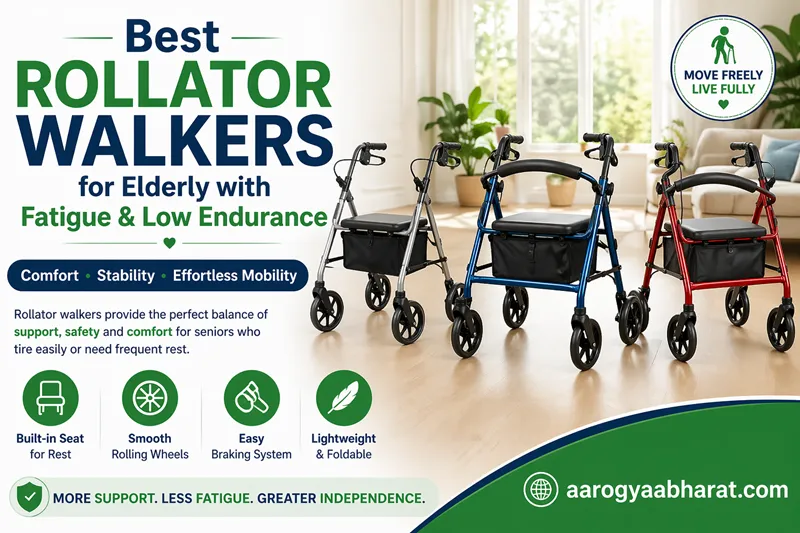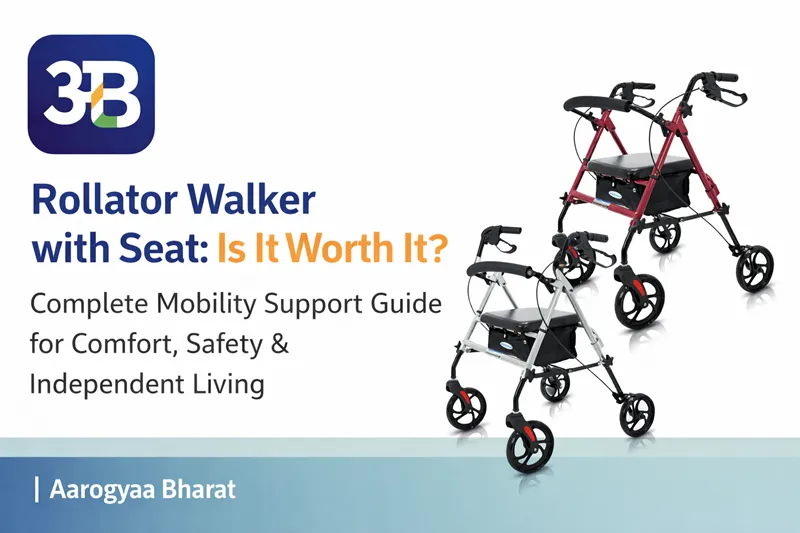
Rollator walkers with seat from Aarogyaa Bharat combine smooth mobility with built-in resting support, making them ideal for seniors who need both safety and convenience. Designed for comfort, stability, and independent living, they help users move confidently at home and outdoors.
What Is a Rollator Walker with Seat and How Does It Work
A rollator walker with seat is an advanced mobility device
that features four wheels, ergonomic handles, hand brakes, and a built-in seat
designed for resting whenever needed. Unlike standard walkers that require
lifting with each step, rollators glide smoothly across surfaces, allowing
seniors to maintain a natural walking rhythm. The integrated seat offers an
additional level of convenience, enabling users to pause and rest without
searching for nearby furniture. Families exploring mobility aid categories
often compare rollator walkers with traditional walkers or foldable walkers to
understand how seating features enhance comfort and long-term usability. When
combined with hospital pages that include bedside commodes, transfer
aids, and patient beds, rollator walkers become part of a comprehensive
mobility support system tailored to elderly needs.
Who Should Consider Using a Rollator Walker with Seat
Rollator walkers with seats are best suited for elderly
individuals who can walk independently but experience fatigue, joint
discomfort, or reduced stamina during longer walks. Seniors recovering from
surgery, managing arthritis, or dealing with mild balance issues often benefit
from the additional rest support provided by the seat. Individuals who enjoy
outdoor walks or need to stand for extended periods indoors may find rollator
walkers especially useful because they provide both mobility and comfort. Caregivers
frequently explore rehabilitation categories to integrate rollator walkers into
physiotherapy routines, helping seniors maintain activity levels while
preventing overexertion.
Key Benefits of a Rollator Walker with Seat
One of the biggest advantages of a rollator walker with seat
is the ability to rest anytime, which reduces fatigue and encourages longer
walking sessions. The wheeled design allows smooth movement across indoor
flooring, while hand brakes provide control and safety during stops or turns.
Many rollator walkers include storage baskets or pouches that make carrying
personal items easier, promoting independence during daily activities. Families
often enhance rollator walker usage by integrating elderly care solutions such
as anti-slip mats, grab bars, and transfer aids found within hospital support
sections, creating a safer and more supportive mobility environment.
Types of Rollator Walkers with Seats
Rollator walkers with seats are available in different
designs to match various mobility needs. Lightweight rollator walkers are easy
to manoeuvre and ideal for indoor use, while heavy-duty models offer stronger
frames for additional support. Foldable rollators are practical for compact
homes because they can be stored easily when not in use. Some rollator walkers
feature larger wheels designed for outdoor mobility, making them versatile for
seniors who move frequently between indoor and outdoor environments. Families
often explore mobility aid categories and hospital pages to compare
rollator models based on durability, comfort, and portability.
Rollator Walker with Seat vs Standard Walker Comparison
|
Feature |
Rollator
Walker with Seat |
Standard
Walker |
|
Mobility
Speed |
Smooth and
continuous |
Slow and
controlled |
|
Rest Support |
Built-in seat
available |
No seating
option |
|
Stability
Level |
Moderate to
high |
Maximum
stability |
|
Indoor Use |
Excellent |
Excellent |
|
Outdoor Use |
Very suitable |
Limited |
|
Effort
Required |
Minimal
lifting |
Requires
lifting each step |
Is a Rollator Walker with Seat Worth It for Daily Use
For many seniors, a rollator walker with seat becomes an
essential part of daily mobility because it combines independence with comfort.
The ability to sit whenever needed reduces anxiety about fatigue and encourages
regular walking, which improves circulation and joint flexibility. Seniors who
feel secure while moving are more likely to maintain active lifestyles, which
contributes to long-term health and well-being. Families exploring hospital pages often pair rollator walkers with rehabilitation equipment and
elderly care accessories to create a comprehensive mobility setup that supports
both safety and convenience.
Important Features to Look for Before Buying a Rollator
Walker with Seat
Selecting the right rollator walker involves evaluating
features that enhance safety and usability. Adjustable height ensures proper
posture alignment and reduces strain on shoulders and back. A strong braking
system provides control during movement and prevents unintended rolling when
seated. Comfortable padded seats improve resting comfort, while durable wheels
ensure smooth indoor mobility. Many caregivers use healthcare calculators and
elderly care planning tools to estimate long-term costs when combining rollator
walkers with beds, wheelchairs, or physiotherapy equipment, ensuring a balanced
and practical mobility solution.
Role of Rollator Walkers in Rehabilitation and Recovery
Rollator walkers with seats play an important role during
rehabilitation by encouraging consistent movement without overexertion.
Physiotherapists often recommend rollators for seniors transitioning from
standard walkers to more independent mobility aids. Combining rollator walkers
with rehabilitation categories such as exercise pedals, balance training
equipment, and physiotherapy accessories helps create structured routines that
improve strength and coordination over time. Consistent use of a rollator walker
promotes gradual recovery while maintaining comfort and safety.
Safety Tips for Using a Rollator Walker with Seat
Proper usage of a rollator walker ensures maximum safety
during daily activities. The walker height should align with wrist level to
maintain natural posture, and seniors should engage brakes before sitting to
prevent movement. Walking at a steady pace and avoiding uneven surfaces
enhances stability, especially indoors. Caregivers should regularly inspect
wheels, brakes, and frame stability to ensure safe performance. Adding hospital
safety accessories such as anti-slip mats and grab bars from elderly care sections
further reduces fall risks and improves overall mobility safety.
Cost and Practical Considerations
Rollator walkers with seats may involve a higher initial
cost compared to standard walkers, but their added comfort and versatility
often provide long-term value. Durable frames and foldable designs reduce
maintenance needs while enhancing usability in small living spaces. Families
frequently use healthcare calculators to evaluate expenses when rollator
walkers are part of a larger home healthcare setup that includes rehabilitation
tools and mobility accessories. Choosing a high-quality rollator walker ensures
reliable support while encouraging independent movement.
Important Feature Checklist Before Final Selection
|
Feature |
Why It
Matters |
What to
Check |
|
Adjustable
Height |
Proper
posture alignment |
Wrist-level
handle position |
|
Brake System |
Safe seating
and movement |
Smooth
locking mechanism |
|
Comfortable
Seat |
Rest during
long walks |
Padded
ergonomic design |
|
Durable
Wheels |
Smooth indoor
mobility |
Anti-slip
construction |
|
Foldable
Frame |
Easy storage |
Secure
folding mechanism |
Emotional and Lifestyle Benefits of Rollator Walkers with
Seats
Mobility aids that combine walking support with rest options
improve emotional confidence by allowing seniors to remain active without fear
of fatigue. The ability to sit comfortably encourages longer walks and social
interaction, enhancing overall quality of life. Seniors who feel secure while
moving are more likely to maintain independence and participate in daily
routines. Families often integrate rollator walkers with elderly care solutions
and rehabilitation equipment to create a supportive environment that promotes
both physical recovery and emotional well-being.
Conclusion
A rollator walker with seat can be a worthwhile investment
for elderly individuals who require mobility support along with comfort during
daily movement. By understanding walker features, evaluating personal mobility
needs, and integrating mobility aids with hospital pages,
rehabilitation categories, elderly care solutions, and healthcare planning
tools, families can create a comprehensive home care setup that enhances
independence and safety. A well-chosen rollator walker not only improves mobility
but also encourages active living, helping seniors move confidently with
dignity and comfort.