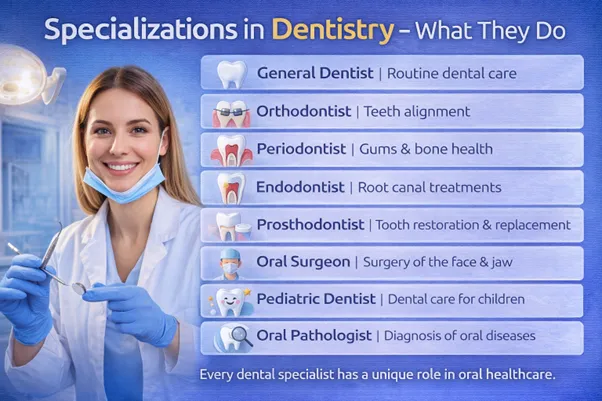
Lack of awareness about dental specializations often leads patients to delay treatment or consult the wrong professional, which can worsen problems and increase costs. Understanding the different specializations in dentistry helps individuals make informed decisions, receive timely care, and protect both oral and overall health. At Aarogyaa Bharat, our goal is to simplify healthcare knowledge so patients, caregivers, and families can choose the right solutions confidently. This detailed guide explains the major dental specializations and the role each one plays.
Why Dentistry Has Specializations
The mouth is a complex system involving:
- Teeth
- Gums
- Jawbones
- Muscles
- Nerves
- Salivary
glands
Problems in any of these areas can affect eating, speaking,
appearance, confidence, and even heart health. Dental specializations exist to
ensure each condition is treated with deep expertise, advanced techniques, and
specialised tools.
1. General Dentistry
The Foundation of Oral Healthcare
A general dentist is usually the first professional you
visit for dental concerns. They focus on preventive and routine care,
including:
- Dental
check-ups and examinations
- Scaling
and polishing
- Cavity
fillings
- Tooth
extractions
- Basic
gum care
- Oral
hygiene education
General dentists also play a critical role in early
diagnosis and referrals to specialists when advanced treatment is needed.
2. Orthodontics
Specialists in Teeth and Jaw Alignment
Orthodontists correct irregularities in teeth and jaw
positioning. Common conditions treated include:
- Crooked
or crowded teeth
- Gaps
between teeth
- Overbite,
underbite, and crossbite
- Jaw
alignment disorders
Treatment options include metal braces, ceramic braces, and
clear aligners. Orthodontic care improves appearance, chewing efficiency,
speech, and long-term dental health.
3. Periodontics
Experts in Gum and Bone Health
Periodontists specialise in diseases affecting the gums and
the bone supporting the teeth. They manage:
- Gingivitis
- Periodontitis
- Gum
recession
- Loose
teeth
- Dental
implants
Healthy gums are essential not only for oral stability but
also for preventing systemic issues like heart disease and diabetes
complications.
4. Endodontics
Saving Natural Teeth from Infection
Endodontists focus on the inner structures of teeth,
including nerves and pulp. They are best known for performing root canal
treatments. Conditions they treat include:
- Deep
tooth decay
- Infected
or inflamed pulp
- Dental
trauma
- Persistent
tooth pain
Their goal is to relieve pain while preserving the natural
tooth whenever possible.
5. Prosthodontics
Restoration and Replacement of Teeth
Prosthodontists restore missing or damaged teeth to improve
function and appearance. Their treatments include:
- Crowns
and bridges
- Dentures
(partial and complete)
- Dental
implants
- Full-mouth
rehabilitation
They are especially important for patients with extensive
tooth loss or complex bite issues.
6. Oral and Maxillofacial Surgery
Advanced Surgical Care of the Face and Jaw
These specialists perform surgical procedures involving the
mouth, jaw, and face, such as:
- Wisdom
tooth extraction
- Jaw
fracture repair
- Facial
trauma treatment
- Oral
cancer surgery
- Cyst
and tumour removal
Their training combines dentistry, medicine, and surgery.
7. Paediatric Dentistry
Dental Care for Children and Adolescents
Paediatric dentists are trained to care for infants,
children, and teenagers. Their focus includes:
- Child-friendly
dental care
- Monitoring
tooth development
- Preventive
treatments like fluoride and sealants
- Managing
dental anxiety
Early dental care helps establish lifelong oral hygiene
habits and prevents future complications.
8. Oral Pathology
Diagnosis of Oral Diseases
Oral pathologists diagnose diseases affecting:
- Oral
tissues
- Salivary
glands
- Jawbones
They play a crucial role in identifying oral cancers,
precancerous lesions, infections, and autoimmune conditions through laboratory
analysis.
9. Public Health Dentistry
Improving Community Oral Health
Public health dentists work at a population level rather
than individual treatment. Their responsibilities include:
- Oral
health awareness programs
- Preventive
dental care initiatives
- Policy
planning
- Research
and education
They help improve access to dental care, especially in
underserved communities.
Choosing the Right Dental Specialist
|
Dental
Issue |
Specialist |
|
Cavities
& cleaning |
General
Dentist |
|
Crooked teeth |
Orthodontist |
|
Bleeding gums |
Periodontist |
|
Severe tooth
pain |
Endodontist |
|
Missing teeth |
Prosthodontist |
|
Wisdom teeth |
Oral Surgeon |
|
Child dental
care |
Paediatric
Dentist |
How Dental Specialization Improves Outcomes
- Accurate
diagnosis
- Advanced
treatment techniques
- Faster
recovery
- Better
long-term results
- Reduced
risk of complications
Modern dentistry also uses digital imaging, lasers,
minimally invasive tools, and implant-guided technologies to enhance safety and
comfort.
The Link Between Oral Health and Overall Health
Poor oral health has been linked to:
- Heart
disease
- Diabetes
- Respiratory
infections
- Pregnancy
complications
Seeking the right dental specialist ensures oral problems are addressed before they impact overall well-being.
Conclusion
Dentistry is a diverse and essential field of healthcare, with each
specialization playing a unique role in maintaining oral and systemic health.
Knowing which dental specialist to consult can save time, reduce discomfort,
and improve treatment outcomes. At Aarogyaa Bharat, we believe awareness is the first step
toward better health. Whether you are a patient, caregiver, or healthcare
professional, understanding dental specializations empowers you to make
informed and confident decisions.