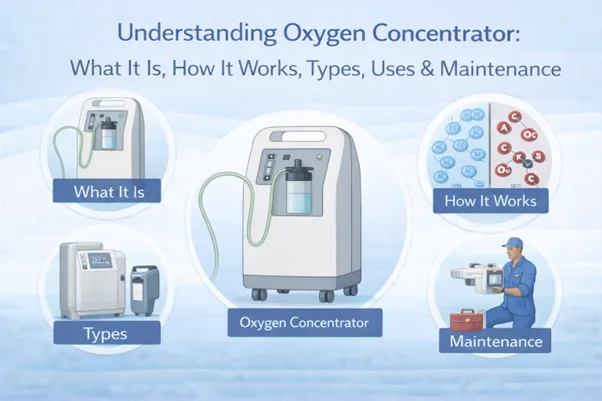
Among all oxygen delivery solutions available today, the oxygen concentrator has emerged as a life-saving, cost-effective, and convenient medical device especially for hospitals, clinics, and home-care patients. At Aarogyaa Bharat, we aim to simplify complex medical equipment knowledge for patients, caregivers, and healthcare providers. This detailed guide explains what an oxygen concentrator is, how it works, types of oxygen concentrators, medical uses, benefits, limitations, maintenance tips, buying considerations, and FAQs in clear, easy-to-understand language.
What Is an Oxygen Concentrator?


An oxygen concentrator is a medical device that provides
supplemental oxygen to patients who have difficulty maintaining adequate oxygen
levels in their blood. Unlike traditional oxygen cylinders that store oxygen,
an oxygen concentrator:
- Draws
in ambient air
- Filters
and removes nitrogen
- Concentrates
oxygen
- Delivers
high-purity oxygen to the patient
Most modern oxygen concentrators deliver oxygen with 90-95%
purity, making them suitable for continuous medical use.
Why Oxygen Therapy Is Important
Oxygen is essential for:
- Cellular
metabolism
- Brain
function
- Heart
performance
- Organ
survival
Low blood oxygen levels (hypoxemia) can cause:
- Shortness
of breath
- Fatigue
and confusion
- Organ
damage
- Medical
emergencies
Oxygen concentrators help maintain stable oxygen saturation
(SpO₂), improving patient comfort and survival.
oxygen therapy medical equipment
Oxygen Therapy in Home & Hospital


How Does an Oxygen Concentrator Work?
Oxygen concentrators operate using a technology called
Pressure Swing Adsorption (PSA).
Step-by-Step Working Process
- Air
Intake - Ambient air is drawn into the machine
- Filtration
- Dust and impurities are removed
- Nitrogen
Separation - Zeolite sieves absorb nitrogen
- Oxygen
Concentration - Oxygen-rich gas remains
- Delivery
- Oxygen is delivered via nasal cannula or mask
This cycle repeats continuously, allowing uninterrupted
oxygen supply.
how oxygen concentrator works
Types of Oxygen Concentrators
Oxygen concentrators are available in different types based
on usage, capacity, and portability.
1. Stationary (Home) Oxygen Concentrators
- Designed
for continuous indoor use
- Higher
oxygen flow rates (5-10 LPM)
- Runs
on electricity
- Durable
and stable
Best for: Long-term home oxygen therapy
2. Portable Oxygen Concentrators (POCs)
- Lightweight
and compact
- Battery-operated
- Approved
for air travel (FAA-approved models)
- Pulse-dose
or continuous flow
Best for: Active patients and travel
3. Continuous Flow Oxygen Concentrators
- Provide
oxygen continuously
- Suitable
for sleep and severe cases
4. Pulse Dose Oxygen Concentrators
- Deliver
oxygen only during inhalation
- Conserves
oxygen and battery
types of oxygen concentrators
Different Types of Oxygen Concentrators


Medical Uses of Oxygen Concentrators
Oxygen concentrators are used across a wide range of medical
conditions.
Common Medical Applications
- Chronic Obstructive Pulmonary Disease (COPD)
- Asthma
and bronchitis
- Post-COVID
lung fibrosis
- Pneumonia
- Pulmonary
hypertension
- Heart
failure
- Sleep-related
breathing disorders
They are also widely used in ICUs, emergency care,
ambulances, and home healthcare.
medical uses of oxygen concentrator
Oxygen Concentrator vs Oxygen Cylinder
|
Feature |
Oxygen
Concentrator |
Oxygen
Cylinder |
|
Oxygen Source |
Ambient air |
Stored oxygen |
|
Refill
Required |
No |
Yes |
|
Portability |
Moderate to
high |
Limited |
|
Cost Over
Time |
Lower |
Higher |
|
Continuous
Use |
Yes |
Limited |
Oxygen concentrators are generally more cost-effective and
convenient for long-term use.
Oxygen Concentrator vs Cylinder Comparison


Benefits of Using an Oxygen Concentrator
For Patients
- Continuous
oxygen supply
- Improved
breathing comfort
- Reduced
hospital visits
- Better
quality of life
For Caregivers
- Easy
operation
- No
refill logistics
- Safer
than cylinders
For Healthcare Systems
- Cost-effective
oxygen delivery
- Reduced
dependency on oxygen plants
Benefits of oxygen concentrator
Limitations of Oxygen Concentrators
Despite many advantages, oxygen concentrators have
limitations.
Key Limitations
- Dependence
on electricity
- Noise
in some models
- Limited
flow for critical care
- Requires
regular maintenance
They are not suitable for extremely high oxygen demand cases
without medical supervision.
Maintenance and Care of Oxygen Concentrators
Proper maintenance ensures safety and long device life.
Basic Maintenance Tips
- Clean
air filters weekly
- Replace
bacterial filters as recommended
- Keep
device in a ventilated area
- Avoid
moisture exposure
- Schedule
periodic servicing
oxygen concentrator maintenance
Oxygen Concentrator Maintenance

How to Choose the Right Oxygen Concentrator
When selecting an oxygen concentrator, consider:
- Prescribed
oxygen flow rate
- Continuous
vs pulse dose
- Portability
needs
- Noise
level
- Power
backup options
- Regulatory
approvals
Consult a healthcare professional before purchase.
buy oxygen concentrator
Safety Precautions While Using Oxygen Concentrators
- Do
not smoke near oxygen
- Keep
away from open flames
- Use
stabilizers for voltage fluctuations
- Follow
prescribed flow rates
Future of Oxygen Concentrator Technology
The future includes:
- Lighter
portable devices
- Smart
monitoring with apps
- Longer
battery life
- Improved
noise control
Oxygen therapy is becoming more patient-centric and mobile.
Conclusion
Oxygen concentrators have transformed respiratory care by offering a safe, reliable, and long-term oxygen delivery solution for both hospital and home settings. As respiratory illnesses continue to rise, these devices play a crucial role in improving survival, comfort, and quality of life. At Aarogyaa Bharat, we recommend oxygen concentrators as an essential part of modern respiratory care especially for patients requiring consistent and controlled oxygen therapy.