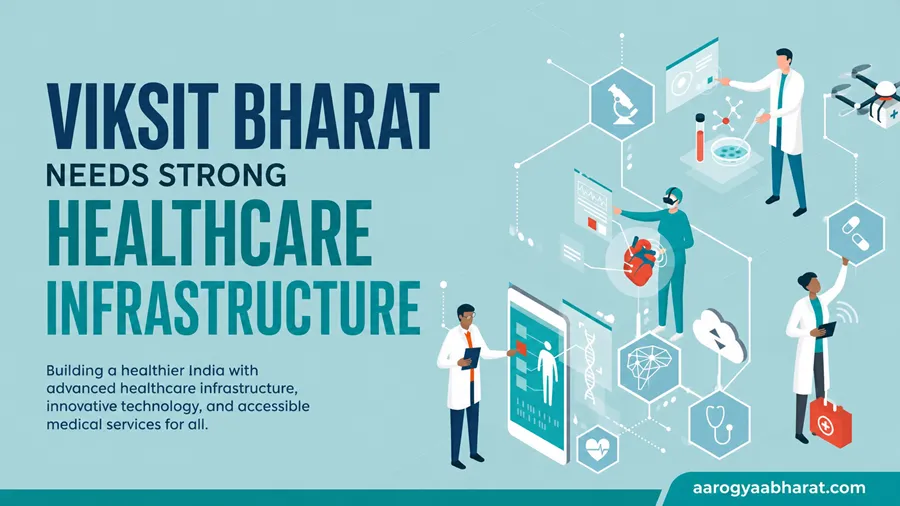
Healthcare Is the Foundation of a Developed Nation
A developed nation is not built only through technology,
industries, and economic growth. A truly developed country also needs healthy
citizens, strong healthcare systems, and equal medical access for everyone.
India is moving toward the vision of Viksit Bharat, where growth and
development reach every part of society. Healthcare infrastructure will play
one of the most important roles in achieving this goal. Strong healthcare
systems improve quality of life, increase productivity, and help people live safer
and healthier lives. Better hospitals, skilled healthcare professionals,
emergency medical support, and advanced treatment facilities are necessary for
national progress. When people receive timely healthcare, they can work better,
study better, and contribute more effectively to the country’s development.
Healthcare is not only a service sector but also an important pillar of
economic and social growth. A healthy population creates stronger communities,
safer families, and long-term national stability. For India to become a truly
developed nation by 2047, healthcare infrastructure must continue growing
across both urban and rural regions.
Why Strong Healthcare Infrastructure Matters
Healthcare infrastructure includes hospitals, clinics,
laboratories, diagnostic centers, rehabilitation facilities, ambulance
services, medical equipment, and digital healthcare systems. Strong healthcare
infrastructure helps people receive treatment quickly and safely during
emergencies and illnesses. In many parts of India, healthcare services have
improved significantly, but there are still regions where medical facilities
remain limited. Some patients travel long distances for specialist treatment or
advanced diagnostic services because nearby healthcare centers may not provide
complete medical support. Delayed treatment can increase health risks and
create financial pressure for families. Better healthcare infrastructure
reduces these problems by bringing treatment closer to communities. It also
improves disease control, emergency care, maternal healthcare, and long-term
recovery support. Strong healthcare systems help reduce mortality rates and
improve public health outcomes. A developed India needs healthcare systems that
are modern, accessible, affordable, and prepared for future healthcare demands.
Investments in healthcare infrastructure today will shape the safety and
well-being of future generations.
Hospitals Play a Major Role in National Growth
Hospitals are one of the most important parts of healthcare
infrastructure because they provide treatment, surgeries, emergency care,
intensive care, and recovery support for patients. Modern hospitals with
advanced technology and trained healthcare professionals can improve treatment
quality and save more lives. India has many excellent hospitals in metro
cities, but smaller towns and rural areas still need better hospital access.
Many people travel to major cities for serious treatment because local healthcare
facilities may not have specialist doctors or advanced equipment. This creates
overcrowding in urban hospitals and delays patient care. Building better
hospitals in Tier 2 and Tier 3 cities can improve healthcare access and reduce
treatment pressure in metro regions. Hospitals also create employment
opportunities for doctors, nurses, technicians, and support staff. A stronger
hospital network improves emergency response, disease management, and public
health safety. For Viksit Bharat, hospitals must continue expanding with better
infrastructure, digital healthcare systems, and affordable treatment services.
Diagnostics Are Important for Early Treatment
Diagnostic services are essential for identifying diseases
early and improving treatment success. Proper diagnosis helps doctors
understand patient conditions and plan effective medical care. Modern
diagnostic centers provide blood tests, imaging services, CT scans, MRI scans,
ultrasound, pathology, and advanced laboratory support. Early disease detection
can reduce complications and improve recovery rates for many health conditions.
In many smaller cities and rural areas, advanced diagnostic facilities are
still limited. Some patients must travel long distances for important tests,
which delays treatment and increases stress. Better diagnostic infrastructure
can improve healthcare access and help patients receive faster medical support.
Preventive screenings and regular health checkups also play an important role
in identifying diseases before they become serious. Strong diagnostic systems
improve healthcare quality and reduce healthcare costs over time. A developed
India needs accessible and affordable diagnostic services in every region of
the country.
Preventive Healthcare Can Build a Healthier India
Preventive healthcare focuses on avoiding diseases before
they become serious and difficult to treat. It includes regular health
checkups, vaccination programs, nutrition awareness, fitness, hygiene, mental
health support, and early disease detection. Preventive healthcare is important
for reducing healthcare costs and improving public health in the long term.
Many diseases such as diabetes, obesity, hypertension, and heart problems are
increasing in India because of changing lifestyles and unhealthy habits. Better
health awareness can help people adopt healthier routines and reduce disease
risks. Schools, workplaces, healthcare organizations, and community programs
can all support preventive healthcare awareness. Preventive healthcare also
reduces pressure on hospitals because fewer people require emergency or
long-term treatment. A healthier population improves productivity, education,
and national growth. For Viksit Bharat, preventive healthcare must become a
major focus area for future healthcare development.
Rehabilitation Services Improve Recovery
Healthcare does not end after surgery or hospital treatment.
Rehabilitation services are equally important because they help patients
recover physically, mentally, and emotionally after illness or injury.
Rehabilitation may include physiotherapy, occupational therapy, speech therapy,
mental health support, and mobility assistance. Patients recovering from
strokes, accidents, surgeries, paralysis, or long-term illnesses often require
rehabilitation support for better recovery. In India, rehabilitation services
are growing, but access is still limited in many regions. Better rehabilitation
centers and trained professionals can improve quality of life for millions of
patients. Rehabilitation helps people regain independence and return to daily
activities more confidently. Home rehabilitation services are also becoming
more popular because many patients prefer recovery support at home. A strong
healthcare infrastructure must include rehabilitation facilities that support
long-term patient care and recovery.
Digital Healthcare Is Transforming Medical Services
Technology is rapidly changing healthcare services across
India. Digital healthcare systems are improving treatment access, patient
management, and healthcare efficiency. Telemedicine allows patients to consult
doctors online without traveling long distances. Digital health records help
hospitals manage patient information more effectively and improve treatment
continuity. Smart monitoring devices and wearable technology can help patients
track their health conditions from home. Artificial intelligence may also
improve diagnostics and treatment planning in the future. Digital healthcare is
especially useful for rural and remote areas where specialist healthcare access
may be limited. Better internet connectivity and healthcare technology can help
bridge medical gaps across the country. Digital healthcare also reduces
treatment delays and improves convenience for patients. By 2047, digital
healthcare may become one of the strongest pillars of India’s healthcare
infrastructure.
Rural Healthcare Needs Stronger Support
A large population in India still lives in villages and
rural areas, where healthcare access remains limited in some regions. Many
rural healthcare centers face shortages of doctors, medicines, medical
equipment, and emergency services. Some villagers travel long distances even
for basic medical treatment. Better rural healthcare infrastructure is
necessary for building a healthier India. Primary healthcare centers need
improved buildings, trained staff, diagnostics, ambulance support, and digital
healthcare systems. Mobile healthcare services and telemedicine can also
improve rural healthcare access. Strong rural healthcare systems help reduce
maternal mortality, child health problems, and infectious diseases. Better
healthcare access in villages also reduces pressure on urban hospitals. Rural
healthcare development is important for creating balanced healthcare growth
across the country. Viksit Bharat cannot become a reality without stronger
rural healthcare support.
Home Healthcare Is Becoming More Important
Home healthcare is becoming an important part of modern
healthcare systems because many patients prefer treatment and recovery support
at home. Home healthcare services may include nursing care, physiotherapy,
oxygen support, patient monitoring, medical equipment rental, elderly care, and
post-surgery care. Patients often recover more comfortably in familiar home
environments. Home healthcare also reduces hospital crowding and improves
patient convenience. Elderly patients and people with chronic diseases benefit
greatly from home-based healthcare support. Technology is also helping improve
home healthcare through smart monitoring systems and digital consultations.
Better home healthcare services can improve treatment access and recovery
quality for millions of people. As India moves toward Viksit Bharat, home
healthcare will continue becoming a valuable part of healthcare infrastructure.
Healthcare Creates Employment and Economic Growth
Healthcare is not only important for public well-being but
also for economic growth and employment generation. Hospitals, diagnostic
centers, rehabilitation facilities, pharmaceutical companies, and medical
technology industries create millions of jobs across India. Doctors, nurses,
technicians, pharmacists, caregivers, and healthcare support staff all
contribute to the healthcare economy. Better healthcare systems also attract
investment and support medical tourism growth. Healthy citizens contribute more
effectively to industries, businesses, and national productivity. Poor health
reduces workforce participation and increases financial pressure on families.
Strong healthcare infrastructure improves both economic stability and social
development. Investments in healthcare create long-term benefits for both
individuals and the nation. A healthier India can become a stronger and more
productive economy.
Public and Private Healthcare Must Work Together
Both government and private healthcare sectors are important
for building strong healthcare infrastructure in India. Government hospitals
provide affordable healthcare for millions of families, while private hospitals
often contribute advanced medical technology and specialist treatment. Better
collaboration between these sectors can improve healthcare access and treatment
quality across the country. Public-private partnerships can support rural
healthcare projects, diagnostics, telemedicine, rehabilitation centers, and
emergency healthcare services. Working together can help reduce healthcare gaps
and improve medical infrastructure in underserved regions. Strong cooperation
between healthcare sectors is necessary for creating a balanced and efficient
healthcare system. Viksit Bharat requires healthcare systems that combine
affordability, quality, and innovation for every citizen.
Challenges India Must Overcome
India has made significant progress in healthcare, but
several challenges still need attention before becoming a fully developed
healthcare nation. Some regions still face hospital shortages, overcrowding,
limited specialist care, and lack of healthcare awareness. Treatment costs
remain high for many families, especially during serious illnesses and
emergencies. Mental health services also need stronger support across the
country. Pollution, unhealthy lifestyles, and population growth may increase
future healthcare demands. Healthcare infrastructure must continue improving to
meet these growing challenges. Better planning, investment, healthcare
education, and digital innovation will help India build stronger healthcare
systems. Solving these challenges is important for creating a healthier future
for all citizens.
The Future of Healthcare in Viksit Bharat
India has the opportunity to build one of the strongest
healthcare systems in the world by 2047. Modern hospitals, affordable
diagnostics, preventive healthcare, rehabilitation services, digital
healthcare, and rural healthcare improvements can transform millions of lives.
Every citizen should receive equal healthcare support regardless of income or
location. Strong healthcare infrastructure improves not only treatment quality
but also public confidence and national development. Future healthcare systems
may become more connected, technology-driven, and patient-focused. Healthcare
accessibility should become a national priority because healthy citizens are
the foundation of a developed nation. Viksit Bharat can become a reality when
healthcare services reach every home, village, town, and city across India.
Conclusion
Strong healthcare infrastructure is essential for building Viksit Bharat and improving the quality of life for every Indian citizen. Hospitals, diagnostics, rehabilitation centers, preventive healthcare programs, and digital healthcare systems all play important roles in national growth and development. A healthier population creates stronger communities, higher productivity, and better economic progress. India must continue investing in healthcare infrastructure so that every person receives safe, affordable, and timely medical support. Government organizations, healthcare providers, businesses, and communities must work together to strengthen healthcare systems across the country. By focusing on healthcare today, India can build a safer, healthier, and stronger future for generations to come.