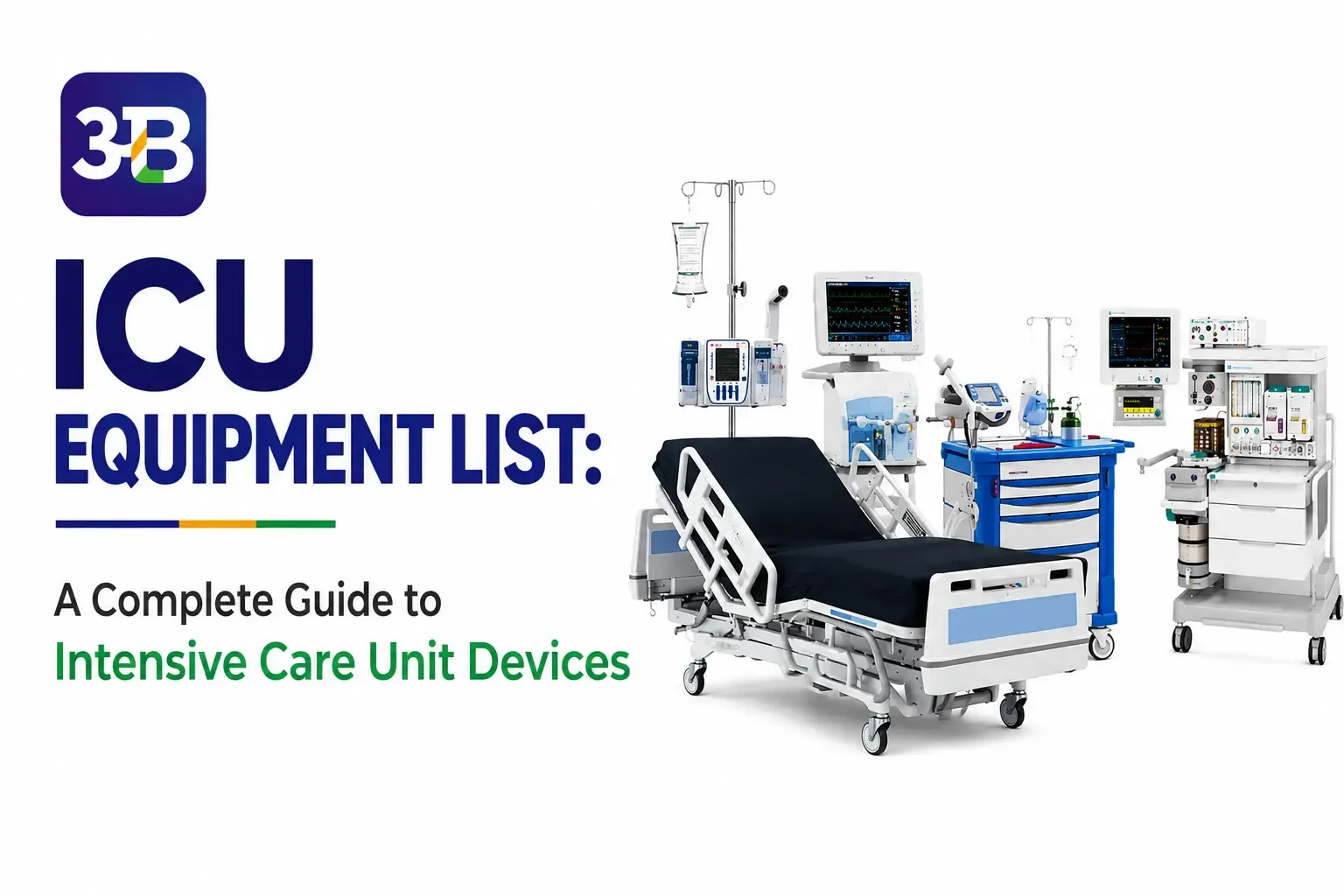
What Is an ICU and Why Is Specialized Equipment Required?
An Intensive Care Unit (ICU) is a specialized hospital department that provides advanced care for critically ill or injured patients. Unlike general hospital wards, the ICU is equipped with sophisticated medical devices that continuously monitor vital signs, support failing organs, and enable healthcare professionals to respond immediately during emergencies.
Patients recovering from major surgery, severe infections, trauma, respiratory failure, heart conditions, or multiple organ dysfunction often require ICU care. Specialized equipment ensures accurate monitoring and timely treatment, improving patient outcomes.
Complete ICU Equipment List
1. Mechanical Ventilators (Vent Machines)
Mechanical ventilators are among the most important devices in an ICU. They help patients who are unable to breathe adequately on their own by supporting or completely replacing normal breathing.
Modern ventilators offer multiple ventilation modes, advanced monitoring features, and built-in alarm systems that notify healthcare providers of any abnormalities.
2. Patient Monitoring Systems
Continuous patient monitoring is essential in intensive care.
ICU patient monitors continuously measure:
- Heart rate and ECG
- Blood pressure (invasive and non-invasive)
- Oxygen saturation (SpO₂)
- Body temperature
- Respiratory rate
- End-tidal Carbon Dioxide (EtCO₂)
These systems provide real-time information, allowing medical teams to detect changes immediately.
3. Infusion Pumps and Syringe Pumps
Infusion and syringe pumps deliver medications, fluids, and nutrients into the bloodstream with exceptional precision.
They are commonly used for administering:
- Antibiotics
- Sedatives
- Vasopressors
- Pain medications
- Intravenous nutrition
Their accuracy helps maintain safe and effective treatment.
4. Defibrillators
Defibrillators restore a normal heart rhythm by delivering controlled electrical shocks during life-threatening cardiac arrhythmias such as ventricular fibrillation or ventricular tachycardia.
Most ICUs are equipped with both:
- Manual Defibrillators
- Automated External Defibrillators (AEDs)
5. Arterial Blood Gas (ABG) Analyzers
ABG analyzers evaluate:
- Oxygen levels
- Carbon dioxide levels
- Blood pH
These measurements help physicians assess respiratory and metabolic function, especially in ventilated patients.
6. Suction Machines
Patients in critical care may be unable to clear airway secretions independently.
Suction machines remove:
- Mucus
- Blood
- Saliva
- Other airway secretions
This helps prevent airway obstruction and lowers the risk of respiratory infections.
7. Feeding Pumps and Nasogastric Tubes
Patients who cannot eat normally receive nutritional support through nasogastric (NG) tubes or feeding tubes.
Feeding pumps deliver liquid nutrition at a controlled rate, ensuring adequate nutritional intake during recovery.
8. Urinary Catheters and Drainage Systems
Monitoring urine output is an important indicator of kidney function and overall fluid balance.
Urinary catheters connected to drainage bags allow healthcare providers to accurately measure urine output throughout the day.
9. Warming and Cooling Blankets
Maintaining body temperature is critical for many ICU patients.
Specialized temperature management systems help:
- Warm hypothermic patients
- Reduce high fever
- Support post-cardiac arrest care
- Assist trauma recovery
10. Hemodynamic Monitoring Devices
Advanced hemodynamic monitoring equipment evaluates blood circulation and heart function.
Common devices include:
- Central Venous Pressure (CVP) lines
- Pulmonary Artery Catheters
- Cardiac Output Monitors
These tools provide detailed information for managing critically ill patients.
ICU Equipment Comparison Table
| Equipment | Primary Function | Used For | Typical Cost Range (₹) |
|---|---|---|---|
| Mechanical Ventilator | Breathing support | Respiratory failure | ₹2,00,000 – ₹15,00,000 |
| Patient Monitor | Vital sign monitoring | All ICU patients | ₹50,000 – ₹5,00,000 |
| Infusion Pump | Accurate medication delivery | Drug administration | ₹15,000 – ₹80,000 |
| Defibrillator | Restores heart rhythm | Cardiac emergencies | ₹40,000 – ₹3,00,000 |
| Suction Machine | Airway secretion removal | Respiratory care | ₹5,000 – ₹30,000 |
| Feeding Pump | Enteral nutrition | Patients unable to eat | ₹8,000 – ₹50,000 |
| ABG Analyzer | Blood gas analysis | Ventilated patients | ₹2,00,000 – ₹10,00,000 |
Additional ICU Equipment You Should Know About
Pulse Oximeters
Pulse oximeters continuously monitor blood oxygen saturation (SpO₂) and pulse rate. Though compact, they play a vital role in ICU monitoring.
Portable X-Ray Machines
Portable X-ray systems allow imaging to be performed at the patient's bedside, eliminating the need to move critically ill patients.
They are commonly used to assess:
- Lung infections
- Catheter placement
- Chest conditions
Ultrasound Machines
Bedside ultrasound enables clinicians to examine the heart, lungs, abdomen, and blood vessels in real time.
It also assists during many ICU procedures.
Dialysis Machines
Continuous Renal Replacement Therapy (CRRT) machines provide continuous dialysis support for critically ill patients experiencing acute kidney failure.
Tips for Families Visiting ICU Patients
- Never touch ICU equipment without permission from hospital staff.
- Ask nurses or doctors to explain the purpose of each machine if you have questions.
- Follow all infection-control guidelines, including hand hygiene and PPE requirements.
- Keep visits short, calm, and quiet to support patient recovery.
- Speak with the medical team regularly to understand the patient's progress.
Can an ICU Be Set Up at Home?
Yes. Patients who are medically stable but require ongoing critical care may be eligible for a home ICU setup.
A typical home ICU may include:
- Portable ventilator
- Pulse oximeter
- Patient monitor
- Suction machine
- Electric hospital bed
- Feeding pump (if required)
Aarogyaa Bharat provides medical equipment for both rental and purchase, helping families establish safe and effective home care environments.
Conclusion
The Intensive Care Unit is equipped with advanced medical technology designed to provide continuous monitoring and life-saving treatment for critically ill patients. Understanding the purpose of each ICU device helps patients and their families feel more informed and confident throughout the treatment journey.
Whether your loved one is receiving care in a hospital ICU or transitioning to a home ICU setup, knowing how these devices work can make the experience less overwhelming.
Why Choose Aarogyaa Bharat?
Aarogyaa Bharat is committed to providing reliable, affordable, and high-quality medical equipment for hospitals and home healthcare. Whether you need to rent or purchase hospital-grade equipment, our extensive product range and expert guidance ensure you receive the right solution for your needs.
Visit Aarogyaa Bharat to explore certified medical equipment, compare products, read expert insights, and place your order with confidence.
Contact Aarogyaa Bharat today because your health deserves trusted care and quality medical solutions.