Why Walker Safety Matters During Rehabilitation
Patients undergoing rehabilitation may be more vulnerable to
falls because they are often recovering from reduced muscle strength, pain,
joint stiffness, surgery, fractures, neurological conditions, or prolonged
periods of inactivity. A person who was able to walk independently before
hospitalization may temporarily have slower reactions, poor balance, reduced
endurance, or difficulty transferring between sitting and standing. A walker
provides a wider base of support, but it cannot compensate for every physical
or environmental risk. MedlinePlus notes that weak muscles and balance problems
are common contributors to falls and recommends physical therapy when patients
have difficulty standing or walking safely. A rehabilitation plan may therefore
include strengthening exercises, balance training, safe transfer practice,
appropriate walking aids, and gradual increases in activity. Patients should
avoid judging progress only by how far they can walk or how quickly they can
stop using the walker. Safe and consistent movement is more important than
progressing to less support before strength and balance are ready.
Choose the Correct Walker for the Patient
Walker safety begins before the patient takes the first step
because different walker designs provide different levels of stability and
mobility. Standard walkers without wheels generally offer a stable support base
but require sufficient upper-body strength to lift and reposition the frame.
Front-wheeled walkers can be easier to advance and may suit patients who have
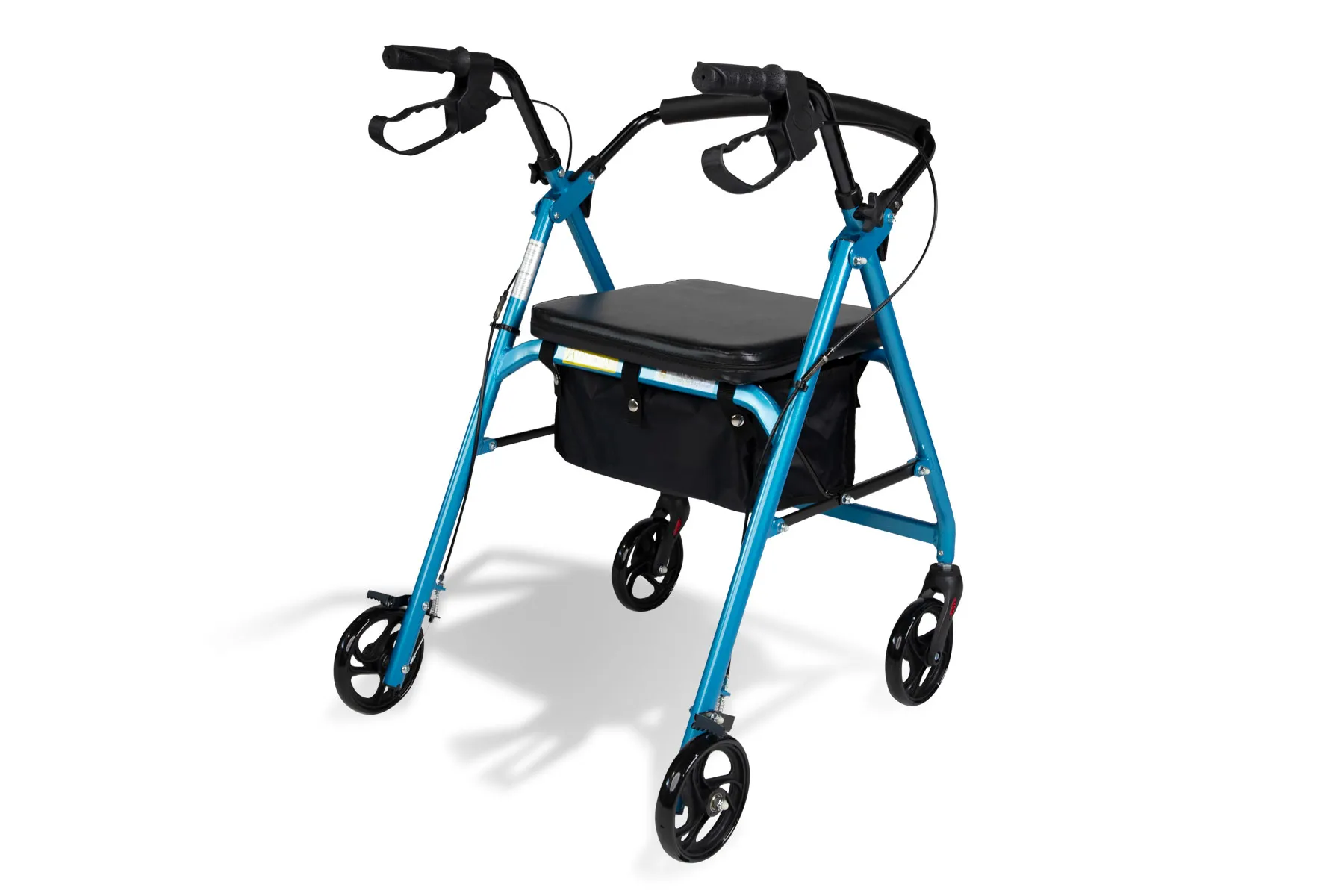
difficulty lifting a standard frame, while four-wheel rollators provide greater
mobility but require the user to safely control wheels and brakes. MedlinePlus
explains that walkers may have no wheels, two wheels, or four wheels and
recommends asking the surgeon or physical therapist to help choose the walker
that best matches the patient's needs. The correct choice depends on balance,
hand strength, coordination, weight-bearing status, home environment,
rehabilitation stage, and the amount of assistance required. An advanced walker
with additional features is not automatically safer than a simpler model if the
patient cannot control it appropriately.
Walker Safety: Important Points to Check
|
Safety
Area |
What to
Check |
Why It
Matters |
Important
Point |
|
Walker
Type |
Wheels or no
wheels |
Different
designs provide different support |
Follow
physiotherapist guidance |
|
Walker
Height |
Handles near
appropriate hip/wrist level |
Incorrect
height can affect posture and control |
Adjust
specifically for the user |
|
Frame
Stability |
No bending,
cracks or looseness |
Structural
problems may cause instability |
Stop use if
frame is damaged |
|
Rubber
Tips |
Good grip and
no excessive wear |
Worn tips can
slip |
Inspect
regularly |
|
Wheels |
Secure and
moving normally |
Loose wheels
reduce control |
Replace
damaged components |
|
Brakes |
Working
properly on rollators |
Required for
control and sitting |
Test before
each outing |
|
Footwear |
Secure and
non-slip |
Poor footwear
increases fall risk |
Avoid loose
slippers |
|
Floor
Condition |
Dry and free
from clutter |
Wet floors
and obstacles increase falls |
Clear walking
routes |
|
Lighting |
Adequate day
and night lighting |
Helps
identify obstacles |
Pay attention
to bathroom routes |
|
Patient
Condition |
No severe
dizziness or instability |
Physical
condition changes fall risk |
Reassess when
mobility changes |
|
Transfer
Technique |
Safe sitting
and standing |
Transfers are
common fall moments |
Do not pull
up using walker alone |
|
Professional
Review |
Regular
rehabilitation assessment |
Walker needs
change during recovery |
Progress
gradually |
Adjust the Walker to the Correct Height
A walker that is too high or too low can make walking
uncomfortable and may reduce the user's ability to control the frame
effectively. MedlinePlus recommends adjusting walker handles to approximately
hip level so that the elbows remain slightly bent while holding the handles.
The patient should be able to stand relatively upright rather than bending
significantly forward, raising the shoulders, or locking the elbows while
walking. Most adjustable walkers use push-button mechanisms on each leg, and
all adjustment points should be securely engaged at the same appropriate height
unless a healthcare professional has specifically configured the walker
differently. Rental walkers should always be readjusted for the current user
instead of being used with the settings left by a previous patient. People with
unusual posture, significant spinal curvature, arm-length differences,
orthopedic restrictions, or neurological conditions may require individualized
fitting by a physiotherapist. Correct fitting improves control but should
always be combined with proper walking technique and an appropriate
rehabilitation program.
Keep All Walker Tips or Wheels on the Floor Before
Stepping
One of the basic principles of walker safety is ensuring
that the walker is stable before transferring body weight toward it.
MedlinePlus advises users to move the walker a short distance forward and
confirm that all four tips or wheels are touching the ground before taking the
next step. If one leg of the walker remains raised, rests on an uneven object,
or is positioned on the edge of a rug, the support base can become unstable
when the patient begins stepping. Patients should avoid pushing the walker excessively
far ahead because this encourages forward leaning and places the support
outside a comfortable working position. The feet should remain within a
controlled distance of the frame rather than repeatedly stepping too close to
the front wheels or tips. During early rehabilitation, supervision from a
physiotherapist, nurse, caregiver, or trained family member may be useful until
the patient can consistently position the walker safely.
Maintain Good Posture While Walking
Patients frequently look continuously at their feet during
rehabilitation because they are worried about balance or where to place the
operated leg, but this can encourage poor posture and reduce awareness of
obstacles ahead. MedlinePlus recommends looking forward while walking and
maintaining good posture rather than constantly looking downward. The walker
should remain close enough that the patient can stand upright with relaxed
shoulders and slightly bent elbows while maintaining a stable grip. Excessive
forward leaning can shift the body's centre of gravity and may make it harder
to recover from a loss of balance. Patients should walk at a controlled pace
and avoid sudden turns or quick changes in direction, especially when strength
and balance are still improving. Where a specific walking sequence has been
prescribed after surgery or injury, the patient should follow the
physiotherapist's instructions rather than using a generic pattern. Good
posture develops gradually as confidence and strength return, so comfort and
safety should take priority over speed.
Follow Weight-Bearing Restrictions After Surgery or
Injury
A walker provides support but does not change the amount of
weight a patient is medically permitted to place on an operated or injured leg.
After fractures, hip surgery, knee procedures, or other orthopedic treatment,
the surgeon or physiotherapist may prescribe full, partial, touch-down, or
restricted weight-bearing depending on healing and the procedure performed.
MedlinePlus specifically recommends involving the surgeon or physical therapist
when using a walker after leg surgery or injury. Patients should not increase
weight-bearing simply because walking begins to feel easier, nor should they
abandon the walker because pain has reduced. Healing tissues may still require
protection even when symptoms improve. The correct walking sequence should be
demonstrated by the rehabilitation team and practiced in a controlled
environment. If the patient's weight-bearing instructions are unclear at
discharge, families should obtain clarification before encouraging independent
walking. Rehabilitation should progress according to healing and clinical
assessment rather than personal guesswork.
Use Safe Footwear While Walking
Footwear can significantly influence fall risk during
walker-assisted rehabilitation. Shoes should fit securely, provide stable
support, and have soles that offer good traction on household surfaces.
MedlinePlus recommends shoes or slippers with rubber or other non-skid soles
and advises avoiding high heels or slippery leather soles when trying to
prevent falls. lose slippers can move independently from the foot, while
oversized footwear can catch on the floor or walker frame. Walking barefoot may
also be unsafe for some patients, particularly on smooth flooring or when
sensation in the feet is reduced. Patients recovering after surgery should
choose footwear that is easy to put on without excessive bending while still
remaining secure during walking. If swelling affects shoe fit, discuss suitable
options with the rehabilitation team. Even the best walker cannot provide
complete protection when footwear has inadequate grip or does not remain firmly
attached to the foot.
Remove Loose Rugs and Walking Hazards
The home environment should be prepared for walker use
because ordinary household objects can become major obstacles when a patient
has reduced balance and is maneuvering a wider mobility aid. MedlinePlus
recommends securing or removing loose rugs, addressing electrical cords,
removing clutter, fixing uneven flooring, and keeping floors clean and dry to
reduce falls. Walking routes between the bedroom, bathroom, kitchen, and living
area should be wide enough for the walker without forcing the patient to turn
sideways or navigate around furniture. Small tables, footwear, toys, storage
boxes, charging cables, and other objects should not remain in frequently used
pathways. Rugs with raised corners can catch walker tips, while wet bathroom or
kitchen floors can reduce traction. Families should assess the home from the
patient's perspective rather than assuming familiar furniture placement remains
practical. Creating clear pathways is often one of the simplest and most
effective modifications during home rehabilitation.
Make Sure the Home Has Good Lighting
Reduced lighting can make it difficult for a patient to
identify rugs, floor-level obstacles, changes in surface height, furniture
edges, or bathroom hazards while using a walker. MedlinePlus recommends good
lighting, especially along routes between the bedroom and bathroom and around
stairs. Nighttime mobility deserves particular attention because patients may
be sleepy, less alert, or taking medications that increase dizziness when they
get out of bed. A bedside light, night-light, or well-positioned switch can
help prevent the patient from beginning to walk in darkness. Glare should also
be considered because extremely bright or reflective surfaces can make depth
perception more difficult for some older adults. Patients with reduced vision
should keep prescribed glasses easily accessible and should receive
professional review if their eyesight has worsened. Walker safety depends on
the user being able to clearly see both the route ahead and potential hazards
before attempting to navigate around them.
Be Extra Careful When Standing Up
Moving from sitting to standing is one of the moments when a
patient may be most vulnerable to losing balance. The walker should be
positioned nearby, but the patient should not generally pull their entire body
weight upward using an unstable walker. MedlinePlus recommends using a chair
with armrests to make sitting and standing easier and provides specific
transfer guidance for walker users. The patient should move toward the front of
the seat according to the technique taught during rehabilitation, place the
feet appropriately, use stable armrests or another recommended support, and
gain balance before taking hold of the walker. Standing too quickly can also
cause dizziness in some people, particularly after illness, prolonged bed rest,
or certain medications. MedlinePlus fall-prevention guidance advises standing
up slowly and seeking professional help when getting up is difficult. Patients
should pause after standing and confirm that they feel stable before beginning
to walk.
Sit Down Safely with a Walker
Sitting down safely requires controlled positioning because
turning too early or reaching for the chair while still several steps away can
cause a loss of balance. The patient should approach the chair slowly, turn
according to the technique taught by the rehabilitation team, and move backward
until they can clearly feel the seat against the back of their legs. Stable
armrests can then be used to control the descent rather than holding the walker
and dropping backward into the chair. MedlinePlus recommends chairs with
armrests because they make standing and sitting easier for walker users. The
walker should remain within reach after the patient is safely seated without
becoming a trip hazard for caregivers or other household members. Very low,
soft, or unstable chairs can make transfers much harder and may be unsuitable
during early rehabilitation. Families may need to temporarily rearrange seating
so that the patient's most frequently used chairs provide adequate height,
stability, and support.
Turn Slowly Instead of Twisting Quickly
Turning can challenge balance more than straight-line
walking because the patient must coordinate the walker, feet, and body while
changing direction. Rapid twisting, pivoting on an injured leg, or turning the
walker too sharply can destabilize the user. During rehabilitation, turns
should generally be completed using several small, controlled steps while
keeping the walker close and maintaining an appropriate base of support. The
exact technique may vary after hip surgery, knee surgery, fractures, or
neurological rehabilitation, so physiotherapy instructions should take priority
over general advice. Patients should avoid turning only the upper body while
the feet remain planted because this can affect balance and may place
unnecessary stress on healing joints. When navigating narrow spaces such as
bathrooms or between furniture, it may be safer to rearrange the room rather
than attempting difficult repeated turns. The goal is smooth, deliberate
movement rather than rapidly changing direction to keep up with another person.
Check Rubber Tips and Wheels Regularly
Walker components wear with repeated use and should be
inspected regularly throughout rehabilitation. MedlinePlus specifically advises
checking walker tips and wheels daily and replacing them when they become worn.
Rubber tips should remain firmly attached and provide adequate grip without
cracks, excessive flattening, or smooth worn surfaces. Wheels should rotate
normally and remain securely connected without excessive wobble, unusual noise,
or damage. Folding walkers should also be checked to ensure that their locking
mechanism engages completely before use. Rollators require additional
inspection of brakes, cables, wheels, seat locks, and any parking-brake
function. A patient should not continue using a damaged walker simply because
rehabilitation is temporary. For rented equipment, structural or mechanical
problems should be reported to the provider rather than repaired using
household bolts, tape, wire, or other improvised components. Regular inspection
helps identify small equipment problems before they become fall hazards.
Keep Both Hands Available for the Walker
Patients sometimes try to carry phones, water bottles, food,
clothing, or other objects while using a walker, leaving only one hand
available for support. This can reduce control and make it difficult to recover
if balance is suddenly lost. MedlinePlus recommends attaching a small bag or
basket to a walker so that personal items can be carried while both hands
remain available for the equipment. Any accessory should be lightweight,
securely attached, and positioned so that it does not interfere with the wheels,
folding mechanism, brakes, or patient's feet. Heavy bags should not be hung on
one side of the frame because uneven weight may affect stability. Patients
should also avoid balancing trays or containers on the walker unless the
equipment is specifically designed for that purpose. When larger items need to
be moved around the home, a caregiver should assist rather than encouraging the
patient to compromise walking safety.
Avoid Wet and Slippery Floors
Wet floors can significantly reduce traction for both the
patient's footwear and the walker tips, increasing the possibility of slipping.
Bathrooms, kitchens, balconies, and entrances during rainy weather deserve
particular attention. MedlinePlus recommends keeping floors clean and dry and
using slip-resistant surfaces in bathrooms as part of fall prevention. Spills
should be cleaned before the patient walks through the area rather than asking
them to navigate around the wet patch. Bathroom floors may require non-slip
mats or other professionally recommended safety modifications, and grab bars
may provide additional support near toilets and bathing areas. Patients should
not attempt to use a walker inside a shower unless the equipment and clinical
plan specifically allow it because many conventional walkers are not designed
for that environment. If the home regularly has smooth polished flooring, the
condition of the walker's rubber tips and the patient's footwear becomes even
more important.
Be Careful on Uneven Surfaces
Rehabilitation often begins indoors on relatively flat
surfaces before progressing to outdoor areas where pavements, ramps, gravel,
curbs, grass, uneven tiles, and slopes require greater balance and walker
control. MedlinePlus notes that walking helps build strength, balance, and
endurance and that more challenging surfaces can be introduced as ability
improves, but progression should match the person's functional level. Patients
should not assume that because they can safely use a walker inside the home,
they are immediately ready to walk independently outdoors. During early
outings, a caregiver or physiotherapist may need to remain close, particularly
on unfamiliar surfaces. Wheels and rubber tips should be checked before outdoor
use, and patients should avoid wet, damaged, or steep routes whenever possible.
Rehabilitation should gradually increase environmental difficulty rather than
suddenly exposing the user to challenging terrain before adequate strength and
balance have developed.
Do Not Use Stairs Without Proper Training
Stairs and curbs require a specific sequence and
significantly greater balance than level walking. MedlinePlus advises patients
not to use stairs or escalators with a walker unless a physical therapist has
trained them to do so. Some walker types are not appropriate for stairs at all,
while specific techniques may be taught for individual curbs or steps under
controlled circumstances. Patients should never attempt to carry a walker while
simultaneously holding a railing unless that exact method has been demonstrated
and approved. Escalators pose particular risks because the moving steps can
interact unpredictably with walker legs or wheels. If the patient's home has
unavoidable stairs, the rehabilitation team should assess how the patient will
safely access essential rooms and whether temporary changes to sleeping,
toileting, or living arrangements are needed. Avoiding unnecessary stairs
during early recovery can be a practical fall-prevention strategy.
Watch for Dizziness and Medication Effects
Falls during rehabilitation are not always caused by poor
walker technique. Dizziness, low blood pressure, dehydration, fatigue, vision
changes, illness, and medication side effects can all affect balance.
MedlinePlus advises patients to discuss medicines that may cause dizziness with
their healthcare provider as part of fall prevention. A patient who becomes
light-headed when standing should not immediately begin walking simply because
the walker is within reach. They should sit or remain supported according to
their care plan and seek professional assessment when symptoms are new,
persistent, or worsening. Caregivers should pay attention to changes after
medication adjustments or periods of illness. The walker can provide physical
support, but it cannot prevent loss of consciousness or compensate for severe
dizziness. A sudden deterioration in balance should therefore trigger clinical
reassessment rather than simply switching to a larger mobility aid.
Use Supervision During Early Rehabilitation
Some patients need another person nearby during the early
stages of walker use even when they can physically move the device themselves.
Supervision allows the caregiver or physiotherapist to observe posture, walking
sequence, fatigue, turning, transfers, and any tendency to place the walker too
far forward. Patients can gradually become more independent as these movements
become consistent and safe. The supervising person should remain close enough
to assist but should not pull the walker, drag the patient forward, or hold
them in a way that changes their natural walking pattern unless specifically
trained to provide physical assistance. MedlinePlus notes that physical therapy
can help build strength and balance and determine whether assistive devices are
appropriate for gait problems. Families should ask the rehabilitation team when
the patient can safely walk alone rather than assuming that one successful
supervised walk means continuous independent mobility is now appropriate.
Do Not Rush to Stop Using the Walker
Patients sometimes want to stop using a walker quickly
because they view the equipment as a sign of weakness or because they feel
better after several rehabilitation sessions. However, pain reduction does not
always mean that balance, strength, coordination, or endurance have returned
sufficiently for unsupported walking. Removing assistance too soon can increase
fall risk and potentially cause another injury that delays recovery. The
physiotherapist may assess gait quality, standing balance, ability to turn,
endurance, transfers, and walking on different surfaces before recommending
progression to a cane or independent walking. MedlinePlus notes that physical
therapists can assess gait problems and determine when assistive devices are
helpful. The aim of rehabilitation is not to eliminate the walker as rapidly as
possible but to restore safe functional mobility. Some patients progress
quickly, while others require additional weeks or months of support. Individual
recovery should guide the timeline.
Quick Walker Fall-Prevention Checklist
Before the patient begins walking, check these important
points:
- Confirm
the walker is the correct type for the patient's mobility level.
- Adjust
the walker to the correct height.
- Make
sure every adjustment button is fully locked.
- Check
that rubber tips are not worn or cracked.
- Inspect
wheels for looseness or damage.
- Test
rollator brakes when applicable.
- Confirm
folding mechanisms are completely locked.
- Make
sure the patient is wearing secure, non-slip footwear.
- Remove
loose rugs from walking routes.
- Move
electrical cables and clutter away from the floor.
- Keep
frequently used floors clean and dry.
- Provide
adequate lighting, especially at night.
- Make
sure the patient feels stable before walking.
- Avoid
walking during severe dizziness or weakness.
- Keep
the walker close rather than pushing it too far forward.
- Ensure
all tips or wheels are on the ground before stepping.
- Keep
both hands available for walker support.
- Use a
basket or bag rather than carrying items by hand.
- Follow
prescribed weight-bearing restrictions.
- Use
supervision when recommended.
- Do not
attempt stairs without physiotherapist training.
- Reassess
the walker as rehabilitation progresses.
What to Do After a Fall or Near-Fall
A fall or repeated near-fall during rehabilitation should
not be dismissed simply because the patient appears uninjured afterward.
MedlinePlus recommends contacting a healthcare provider if a person has fallen
or almost fallen because this may indicate a problem with strength, balance,
vision, medication, equipment, or the home environment. After a fall, do not
immediately pull the person upright without first checking for pain, injury,
dizziness, head impact, or inability to move normally. Follow the patient's
emergency or clinical instructions and obtain urgent medical assistance when
there is suspected fracture, significant head injury, loss of consciousness,
severe pain, bleeding, chest pain, breathing difficulty, new weakness,
confusion, or another serious symptom. A physiotherapist may also need to
reassess walker height, walking technique, transfer ability, and the level of
support required. Understanding why the fall occurred is important for
preventing another event.
Walker Safety for Elderly Patients
Elderly patients may have multiple factors that increase
fall risk, including reduced muscle strength, slower reactions, arthritis,
reduced vision, balance problems, medication effects, and previous falls. A
walker can provide additional stability, but the entire home-care environment
should be assessed rather than relying on the equipment alone. MedlinePlus
recommends improving lighting, removing rugs and cords, maintaining dry floors,
wearing appropriate footwear, reviewing medicines that cause dizziness, and
considering physical therapy for strength and balance problems. Elderly users
should also have the walker adjusted specifically to their height and should
avoid borrowing another person's walker without checking fit and condition. If
memory problems or confusion make it difficult to remember brake use or safe
walking sequences, additional supervision may be necessary. The objective
should be to preserve appropriate independence while providing enough support
to reduce avoidable risk.
Walker Safety After Knee or Hip Surgery
Patients recovering after knee or hip surgery often use
walkers during the early rehabilitation period while movement, strength, and
confidence gradually improve. The walker can help provide additional support,
but the patient must continue following the surgeon's or physiotherapist's
instructions regarding weight-bearing, turning, stair use, exercises, and
progression to another mobility aid. MedlinePlus specifically describes walkers
as useful support when beginning to walk again after leg injury or surgery and
recommends professional help when choosing the appropriate type. Patients
should not take longer steps or increase walking speed simply because the
walker feels stable. Fatigue can also reduce balance near the end of a
rehabilitation session, so walking distances should increase gradually. If
pain, swelling, weakness, dizziness, or instability suddenly worsens, the
rehabilitation team should be informed rather than encouraging the patient to
continue at the same intensity.
Common Walker Safety Mistakes to Avoid
One common mistake is using a walker without adjusting it to
the patient's height, which can encourage excessive bending or make the arms
less effective for support. Another is pushing the frame too far forward before
stepping, leaving the patient leaning toward the walker rather than remaining
within a stable working position. Patients may also try to pull themselves up
from a chair using the walker, carry objects with one hand, walk on wet floors,
use worn rubber tips, or attempt stairs without professional training.
MedlinePlus specifically recommends keeping all walker tips or wheels on the
floor before stepping, securing rugs and cords, wearing non-slip footwear,
checking tips and wheels regularly, and keeping both hands free by using a
walker bag or basket. Other mistakes include rushing to stop using the walker,
ignoring dizziness, walking when extremely fatigued, or using a rollator
without understanding its brakes. Fall prevention depends on consistent safe
habits rather than one feature of the walker.
Why Choose Aarogyaa Bharat for Walker and Mobility
Support?
Aarogyaa Bharat provides walkers and other mobility-support
equipment for patients, elderly adults, caregivers, and families managing
post-surgery recovery, rehabilitation, and home healthcare. Its Pune
walker-rental service includes walkers with and without wheels and states that
rental equipment undergoes physical safety inspection, stability and grip
checks, cleaning, sanitization, and quality verification before delivery.
Walker selection should still be based on the patient's actual mobility level,
height, rehabilitation plan, and professional recommendations rather than
choosing solely according to rental price or immediate availability. Families
can discuss whether the equipment is required temporarily during recovery or
for longer-term mobility and can explore suitable options according to patient
needs. A well-maintained walker, correct fitting, safe walking technique,
appropriate footwear, and a hazard-free home environment together provide
better support than relying on the mobility aid alone.
Conclusion
Walker safety during rehabilitation depends on much more
than placing a walking frame in front of the patient. The correct walker should
match the person's balance, strength, coordination, medical restrictions, and
stage of recovery, while the equipment must be adjusted to the user's height
and inspected regularly for worn tips, damaged wheels, loose joints, or faulty
brakes. Patients should keep the walker close, ensure all tips or wheels are
firmly on the ground before stepping, maintain controlled posture, follow
weight-bearing instructions, and avoid rushing transfers or turns. The home
should also be adapted by removing rugs, clutter, loose cables, slippery
surfaces, and poor lighting that can increase fall risk. MedlinePlus emphasizes
the combined importance of a safe home environment, appropriate walking aids,
strength and balance training, and professional review when falls or near-falls
occur. Rehabilitation should progress gradually, with the aim of restoring
safe, confident, and functional movement rather than simply stopping walker use
as quickly as possible.
Medical Disclaimer
This article is provided for general educational and home-care information only and does not replace medical advice, diagnosis, physiotherapy assessment, rehabilitation planning, post-operative instructions, or individualized mobility training. Walker type, height, walking sequence, weight-bearing status, stair technique, supervision requirements, and progression to another mobility aid should be determined according to the patient's medical condition and recommendations from qualified healthcare professionals. Patients should not increase weight-bearing or discontinue prescribed mobility support based solely on online information. Anyone experiencing repeated falls, severe dizziness, sudden weakness, loss of consciousness, severe pain, new confusion, chest pain, breathing difficulty, suspected fracture, head injury, or another serious symptom should seek appropriate medical attention.