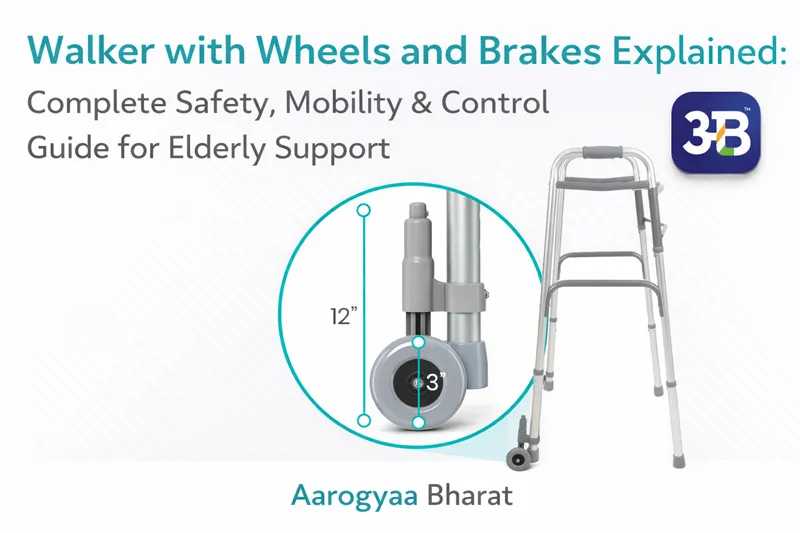
Understanding What a Walker with Wheels and Brakes Is
A walker with wheels and brakes combines the structural
stability of a traditional walker with enhanced manoeuvrability provided by
wheels and controlled stopping mechanisms. This design allows seniors to move
forward naturally without lifting the walker with each step, reducing strain on
arms and shoulders. The braking system ensures that the walker remains stable
during rest breaks or when standing still, preventing accidental movement that
could lead to falls. These walkers are commonly recommended for seniors
recovering from surgery, individuals with moderate mobility limitations, or
elderly users who want smoother walking support during rehabilitation. Families
planning mobility solutions often explore Aarogyaa Bharat Hospital Page alongside Rehabilitation Sections to integrate wheeled walkers with
physiotherapy tools, transfer aids, and safety accessories for a complete home
healthcare setup.
Why Wheels and Brakes Are Important for Elderly Mobility
Traditional walkers provide excellent stability but may feel
tiring during longer walks due to the need for constant lifting. Wheels reduce
physical effort by allowing continuous forward motion, while brakes provide the
control necessary to maintain safety. Seniors with reduced strength or joint
pain often benefit from wheeled walkers because they encourage a natural
walking rhythm without overexertion. The addition of brakes adds confidence,
especially on slopes or uneven surfaces, as users can slow down or stop
instantly when needed. Families frequently explore Aarogyaa Bharat Mobility Aid
Categories and Elderly Care Solutions to find walkers that balance mobility
with safety features.
Types of Walkers with Wheels and Brake Systems
There are several types of walkers equipped with wheels and
brakes, each designed for different mobility needs. Front-wheel walkers
typically include two front wheels and rear rubber tips, offering controlled
movement for indoor use. Four-wheel rollator walkers include full braking
systems and seats, making them suitable for extended mobility and outdoor
walking. Lightweight wheeled walkers are ideal for seniors who require
portability and easy manoeuvrability in compact spaces. Heavy-duty wheeled
walkers provide reinforced frames and larger wheels for increased stability
during longer walks. Families often compare walker options within Aarogyaa
Bharat Product Category Pages and Hospital Page equipment listings to ensure
the selected model aligns with rehabilitation goals and daily lifestyle needs.
Wheel and Brake System Comparison Table
|
Walker
Type |
Wheel
Design |
Brake
Function |
Recommended
Use |
|
Front-Wheel
Walker |
Two front
wheels |
Limited
braking |
Indoor
mobility |
|
Rollator
Walker |
Four wheels |
Hand brakes
& locks |
Indoor &
outdoor use |
|
Lightweight
Wheeled Walker |
Small-medium
wheels |
Basic control |
Compact homes |
|
Heavy-Duty
Rollator |
Large wheels |
Advanced
locking brakes |
Long-distance
walking |
How Brake Systems Improve Safety and Control
Brake systems are one of the most important features of
wheeled walkers because they allow seniors to regulate speed and prevent
unintended movement. Squeeze brakes provide instant slowing power, while
locking brakes keep the walker stationary during rest periods or transfers.
Proper brake adjustment ensures that seniors maintain control even when walking
downhill or navigating crowded areas. Many families use Aarogyaa Bharat
Healthcare Calculator tools and Elderly Care Planning Sections to evaluate long-term
mobility investments when selecting walkers with advanced braking mechanisms.
Key Features to Look for in a Walker with Wheels and
Brakes
Adjustable handle height is essential for maintaining
upright posture and reducing strain on shoulders and back. Ergonomic hand grips
enhance comfort during prolonged use, especially for seniors with reduced hand
strength. Durable wheel materials improve traction on smooth floors or outdoor
pavements, while lightweight frames allow easier maneuverability. Reliable
brake cables and locking mechanisms ensure consistent performance and prevent
sudden rolling during rest breaks. Families exploring Aarogyaa Bharat Mobility
Aid Sections often prioritize walkers that combine strong frames with
user-friendly brake systems.
Benefits of Wheeled Walkers During Rehabilitation and
Recovery
Rehabilitation often involves gradual walking exercises that
improve balance and muscle strength, and wheeled walkers provide a safe
platform for these activities. Reduced lifting effort allows seniors to focus
on posture and coordination rather than physical strain. Physiotherapists
frequently recommend walkers with wheels and brakes during intermediate
recovery stages when balance improves but stability is still required.
Combining walker-assisted movement with Aarogyaa Bharat Rehabilitation
Categories such as physiotherapy accessories and balance training tools helps
seniors rebuild mobility while maintaining safety.
Indoor Mobility Advantages of Walkers with Wheels
Indoor environments often require navigating tight spaces,
smooth flooring, and frequent turning. Wheeled walkers allow seniors to move
between rooms without repeatedly lifting the frame, which reduces fatigue
during daily activities. Brakes provide additional security during transfers
from bed to chair or while standing near the sink or kitchen counter. Families
frequently integrate wheeled walkers with Aarogyaa Bharat Elderly Care
Solutions such as grab bars, bedside supports, and anti-slip mats to create a
safer home environment.
Outdoor Mobility and Extended Walking Benefits
For seniors who enjoy outdoor activity, walkers with wheels
and brakes provide smoother movement across pavements, parks, and residential
walkways. Larger wheels absorb minor surface irregularities, while hand brakes
allow safe navigation on slopes or uneven terrain. Storage pouches attached to
rollator walkers make it easier to carry personal items during longer walks.
Families exploring Aarogyaa Bharat Hospital Page often compare
rollator designs to ensure that mobility aids support both indoor rehabilitation
and outdoor independence.
Common Mistakes to Avoid When Using Wheeled Walkers
Improper height adjustment can cause seniors to lean
forward, reducing stability and increasing fatigue. Forgetting to lock brakes
before sitting on a rollator walker can lead to accidental movement. Using
wheeled walkers on slippery surfaces without anti-slip footwear increases fall
risk. Regular maintenance of brake cables and wheel alignment is essential to
maintain safety. Families often review Aarogyaa Bharat Elderly Care Sections
and Hospital Page safety guidelines to ensure proper walker usage.
Maintenance and Long-Term Care of Wheel and Brake Systems
Regular inspection of wheels and brakes ensures consistent
performance. Brake cables should be tightened periodically to maintain
responsiveness, while wheels should rotate smoothly without obstruction. Frames
should remain free from loose screws or structural wear. Cleaning the walker
after outdoor use prevents dust buildup that may affect wheel performance. Many
families rely on Aarogyaa Bharat Hospital Page safety resources to maintain
walker durability during long-term use.
Cost Planning and Long-Term Mobility Investment
Walkers with wheels and brakes vary in price depending on
frame material, wheel size, and brake complexity. Front-wheel walkers are
generally more affordable, while rollator walkers with advanced braking systems
may involve higher investment. Families often use Aarogyaa Bharat Healthcare
Calculator tools to estimate expenses when mobility aids are part of a broader
home healthcare plan that includes rehabilitation equipment, safety
accessories, and hospital support solutions.
Important Feature Checklist Before Final Selection
|
Feature |
Why It
Matters |
What to
Check |
|
Adjustable
Height |
Maintains
posture |
Wrist-level
handle alignment |
|
Reliable
Brake System |
Prevents
rolling |
Smooth
squeeze & lock function |
|
Durable
Wheels |
Stable
movement |
High-quality
rubber or PU wheels |
|
Lightweight
Frame |
Easy handling |
Aluminum
construction |
|
Foldable
Design |
Storage
convenience |
Secure
locking mechanism |
Conclusion
A walker with wheels and brakes is a practical mobility solution that combines smooth movement with enhanced safety and control for elderly users. By understanding wheel designs, braking systems, and essential features, families can integrate mobility aids with Aarogyaa Bharat Hospital Page solutions, Rehabilitation Categories, Elderly Care Sections, Product Category Pages, and Healthcare Calculator tools to create a structured and reliable mobility plan. The right wheeled walker not only improves stability but also restores independence, confidence, and long-term comfort during daily movement.