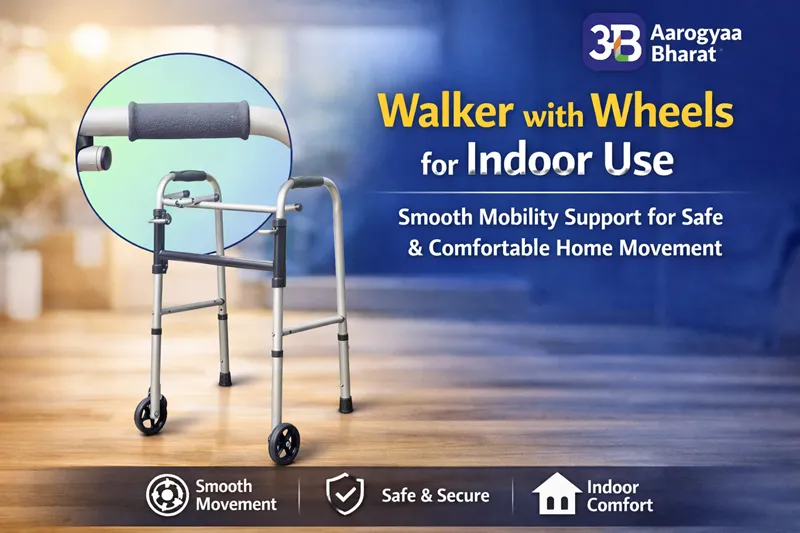
Walker with wheels from Aarogyaa Bharat provide smooth, stable indoor mobility, helping seniors and patients move safely across rooms with ease. Designed for comfort, balance, and effortless maneuverability, they make everyday home movement safer and more independent.
Why Choose a Walker with Wheels for Indoor Mobility
Indoor movement can become challenging for seniors
experiencing balance issues, arthritis, post-surgery weakness, or age-related
muscle loss. Traditional walkers without wheels require lifting with each step,
which can cause fatigue during prolonged use inside the house. A walker with
wheels allows smoother forward motion, reducing strain on arms and shoulders
while maintaining stability. For elderly individuals who move frequently
between rooms, kitchens, or bathrooms, a wheeled walker provides convenience
and comfort without compromising safety. Families often explore hospital pages alongside mobility aid sections to combine wheeled walkers with
bedside commodes, patient beds, and transfer supports, creating a seamless
indoor mobility environment.
Who Should Use a Walker with Wheels Indoors
A walker with wheels is ideal for seniors who have moderate
balance support needs but can still walk independently with assistance. Elderly
individuals recovering from minor surgeries, managing arthritis, or
experiencing mild coordination challenges benefit from wheeled walkers because
they reduce effort and promote smoother walking patterns. Seniors who feel
tired while lifting a standard walker often find wheeled models easier to use
indoors. Caregivers frequently explore rehabilitation categories to integrate
wheeled walkers with physiotherapy exercises that improve strength and
coordination, allowing elderly users to gradually regain mobility and
confidence.
Key Benefits of Using a Wheeled Walker Indoors
Wheeled walkers provide several advantages for indoor use.
They allow continuous movement without lifting, reducing fatigue during longer
walks inside the house. Durable wheels glide smoothly across tiled or marble
flooring, minimizing friction and strain. Adjustable height settings ensure
correct posture, while ergonomic hand grips improve comfort during prolonged
use. Many families enhance indoor safety by combining wheeled walkers with
elderly care solutions such as anti-slip mats, grab bars, and bedside rails
available within hospital support sections, creating a safer and more
supportive environment for independent movement.
Types of Walkers with Wheels for Indoor Use
There are different wheeled walker designs suitable for
indoor mobility. Two-wheel walkers provide forward motion while maintaining
rear stability with rubber tips, making them ideal for moderate support.
Four-wheel rollator walkers offer full mobility and include hand brakes and
seating for added comfort. Lightweight foldable wheeled walkers are practical
for compact homes where storage space is limited. Families often compare walker
types within mobility aid categories and hospital pages to ensure
that the chosen model balances stability, portability, and comfort for everyday
indoor use.
Wheeled Walker Types and Indoor Usage Comparison
|
Wheeled
Walker Type |
Ideal User
Condition |
Main
Advantage |
Recommended
Indoor Use |
|
Two-Wheel
Walker |
Moderate
balance needs |
Smooth
forward motion |
Daily
room-to-room movement |
|
Four-Wheel
Rollator |
Active
seniors |
Full mobility
with seat |
Larger indoor
spaces |
|
Foldable
Wheeled Walker |
Limited
storage space |
Easy folding
& storage |
Small
apartments |
|
Lightweight
Rollator |
Reduced arm
strength |
Easy manoeuvrability |
Continuous
indoor walking |
Important Features to Look for in an Indoor Wheeled
Walker
Selecting the right wheeled walker involves evaluating
features that improve safety and convenience. Adjustable height ensures proper
alignment and prevents strain on knees and hips. Ergonomic hand grips reduce
wrist pressure and enhance control. High-quality wheels with anti-slip
properties provide stability on smooth surfaces. A reliable braking system is
essential for rollator models to prevent unintended movement. Many caregivers
use healthcare calculators and elderly care planning tools to estimate long-term
mobility costs when combining wheeled walkers with hospital beds, physiotherapy
equipment, and rehabilitation accessories, ensuring a well-balanced home care
setup.
How Wheeled Walkers Improve Daily Indoor Independence
A wheeled walker allows seniors to move confidently inside
their homes without feeling restricted by heavy equipment. The smooth gliding
motion makes it easier to carry out daily tasks such as cooking, accessing
storage spaces, or walking to the bathroom. Seniors who feel secure while
moving indoors are more likely to stay active, which improves circulation and
overall well-being. Families often integrate wheeled walkers with
rehabilitation categories and elderly care solutions to create an environment that
encourages both safe movement and emotional confidence.
Role of Wheeled Walkers in Indoor Rehabilitation
During recovery from surgery or illness, indoor walking
practice plays a critical role in regaining strength and balance. Wheeled
walkers allow seniors to move gradually without excessive lifting effort,
making them suitable for early-stage rehabilitation inside the home.
Physiotherapists often recommend wheeled walkers in combination with balance
training equipment found in rehabilitation categories to promote steady
progress. Consistent indoor mobility supported by a wheeled walker helps
seniors rebuild coordination and maintain joint flexibility.
Safety Tips for Using a Wheeled Walker Indoors
Proper usage of a wheeled walker is essential to prevent
accidents. The walker should be adjusted to wrist height to maintain natural
posture and reduce strain. Seniors should engage brakes before sitting or
standing when using rollator models. Walking at a steady pace and avoiding
sudden turns enhances stability, especially on polished flooring. Caregivers
should regularly inspect wheels, brakes, and frame stability to ensure safe
performance. Adding safety accessories such as anti-slip mats and grab bars from
elderly care sections further reduces fall risks and improves overall indoor
safety.
Cost and Practical Considerations
Wheeled walkers may cost more than standard walkers due to
added features such as wheels and braking systems, but they provide enhanced
comfort and convenience for daily indoor mobility. Families often use
healthcare calculators to evaluate expenses when mobility aids are part of a
larger home healthcare plan that includes beds, rehabilitation tools, and
transfer supports. Choosing a durable wheeled walker ensures long-term
usability while maintaining smooth indoor movement and safety
Important Feature Checklist Before Final Selection
|
Feature |
Why It
Matters |
What to
Check |
|
Adjustable
Height |
Proper
posture alignment |
Wrist-level
handle position |
|
Durable
Wheels |
Smooth indoor
movement |
Anti-slip
design |
|
Brake System |
Prevent
unintended rolling |
Reliable
locking mechanism |
|
Lightweight
Frame |
Easy handling |
Aluminium
construction |
|
Foldability |
Easy storage |
Secure
folding mechanism |
Emotional and Lifestyle Benefits of Indoor Wheeled
Walkers
Mobility support enhances emotional confidence by allowing
seniors to move freely within their homes without fear of falling. A wheeled
walker promotes independence, reducing reliance on caregivers for basic tasks.
Seniors who feel secure indoors are more likely to participate in light
exercise and daily routines, which improves mental well-being. Families often
combine wheeled walkers with elderly care solutions and rehabilitation
equipment to create a positive home environment that supports both physical and
emotional health.
Conclusion
A walker with wheels for indoor use provides smooth, stable,
and comfortable mobility support for elderly individuals who need assistance
while maintaining independence. By understanding walker types, evaluating key
features, and integrating mobility aids with hospital pages,
rehabilitation categories, elderly care solutions, and healthcare planning
tools, families can create a comprehensive home mobility setup that enhances
safety and quality of life. A well-chosen wheeled walker encourages active
living, reduces fall risks, and ensures confident indoor movement for seniors.