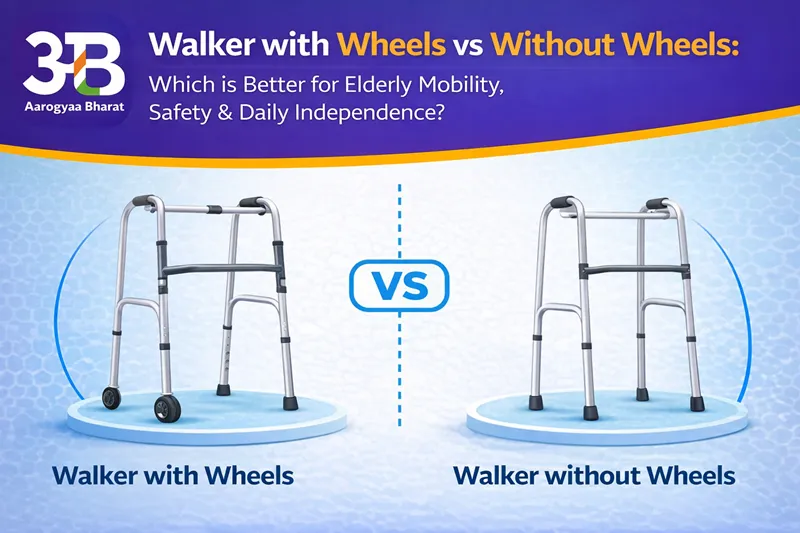
Aarogyaa Bharat (aarogyaabharat.com) offers expert-recommended walkers with and without wheels to ensure safe mobility, better stability, and confident daily independence for seniors across India.
Understanding the Need for Walkers in Elderly Care
Mobility challenges are common among elderly individuals due
to aging, joint pain, surgery recovery, or neurological conditions, and a
walker provides the stability required to move safely during daily activities.
Seniors often reduce movement because of fear of falling, which can lead to
stiffness and slower recovery, but using a properly selected walker encourages
confidence and regular physical activity. Families planning home care
frequently explore hospital pages alongside mobility aid categories
to create a complete support system that includes beds, transfer aids, and
physiotherapy accessories. A walker becomes more than a mobility tool; it acts
as a foundation for safe and independent living when integrated with
rehabilitation routines and supportive home care equipment.
What is a Walker with Wheels and How Does it Work
A walker with wheels is designed to reduce the effort
required to lift the frame during walking, allowing smoother forward movement
and a more natural walking rhythm. These walkers typically feature two or four
wheels, depending on the design, and are ideal for seniors who have moderate
balance but still require support for stability. Rollator-style walkers often
include hand brakes and seats, making them suitable for longer walking
distances or outdoor use. Many caregivers explore mobility aid sections and
rehabilitation categories to compare wheeled walkers with physiotherapy
equipment, ensuring that seniors receive both comfort and functionality during
recovery or daily movement.
What is a Walker Without Wheels and Who Should Use It
Walkers without wheels provide maximum stability because
users must lift the frame slightly with each step, allowing controlled and slow
movement that reduces the risk of sudden slips. These walkers are often
recommended for seniors who experience significant balance issues, post-surgery
weakness, or early rehabilitation stages where strong support is necessary. The
four-point contact with the ground creates a secure walking experience that is
particularly useful indoors. Families exploring hospital pages often
choose non-wheeled walkers for individuals who require firm support while
building strength and confidence during recovery.
Key Differences Between Walkers with Wheels and Without
Wheels
The primary difference between the two types lies in
mobility speed and stability level. Walkers with wheels allow smoother movement
and require less physical effort, while walkers without wheels provide stronger
stability but require more lifting effort during use. Seniors who can walk
independently but need balance assistance often prefer wheeled walkers, whereas
those recovering from major surgery or dealing with severe weakness may benefit
more from non-wheeled models. Caregivers frequently compare options across
rehabilitation categories and mobility aid sections to determine which walker
aligns best with the user’s physical condition and daily routine.
Walker with Wheels vs Without Wheels Comparison Table
|
Feature |
||
|
Stability
Level |
Moderate to
high |
Maximum
stability |
|
Movement
Speed |
Smooth and
faster |
Slow and
controlled |
|
Best For |
Moderate
mobility support |
Weak balance
or early recovery |
|
Indoor Use |
Good |
Excellent |
|
Outdoor Use |
Very suitable |
Limited |
|
Effort
Required |
Less lifting
effort |
More lifting
effort |
Health Conditions That Influence the Choice
Different health conditions require different levels of
support, and understanding these needs helps families make the right decision.
Seniors recovering from knee replacement or stroke may initially require
walkers without wheels because they provide stronger stability during early
rehabilitation. Individuals with arthritis or mild balance challenges may find
wheeled walkers more comfortable because they reduce strain on wrists and
shoulders. Caregivers often explore hospital pages and physiotherapy
sections to align walker selection with medical advice, ensuring that seniors
receive the appropriate level of support during recovery and daily mobility.
Indoor vs Outdoor Usage Considerations
Environment plays a major role in choosing between wheeled
and non-wheeled walkers. Non-wheeled walkers are highly suitable for indoor
environments where stability and controlled movement are essential, especially
on smooth flooring surfaces. Walkers with wheels perform better outdoors
because they allow smoother movement on uneven paths and longer distances.
Families exploring mobility aid categories frequently compare wheel size,
braking systems, and frame design to ensure that the chosen walker suits both
indoor and outdoor usage without compromising safety.
Advantages of Walkers with Wheels for Daily Mobility
Walkers with wheels offer convenience and flexibility for
seniors who want to maintain an active lifestyle. The wheeled design allows
smoother walking motion, reducing fatigue during longer walks and encouraging
physical activity. Many seniors appreciate the added features such as storage
pouches and seats found in rollator walkers, which provide comfort during
outdoor activities. Caregivers often integrate wheeled walkers with elderly
care solutions and rehabilitation categories to create a mobility plan that
balances safety with independence.
Benefits of Walkers Without Wheels for Rehabilitation
Walkers without wheels provide stronger support and
encourage controlled movement, which is essential during early rehabilitation
stages. The need to lift the walker slightly with each step helps users focus
on balance and posture, making it a preferred option for seniors who require
close supervision during recovery. Families frequently combine non-wheeled
walkers with physiotherapy equipment and hospital support accessories to create
structured rehabilitation routines that promote gradual improvement in strength
and coordination.
Safety Tips for Using Walkers with and without Wheels
Regardless of the type chosen, proper usage is essential to
maintain safety. The walker height should align with wrist level to ensure a
natural posture, and seniors should avoid leaning too far forward while
walking. Regular inspection of rubber tips, wheels, and brakes helps prevent
accidents caused by wear and tear. Caregivers often enhance walker safety by
adding accessories such as anti-slip mats, grab bars, and bedside rails from
elderly care sections, creating a comprehensive environment that minimizes fall
risks.
Cost and Practical Considerations
Budget and lifestyle also influence the decision between
wheeled and non-wheeled walkers. Non-wheeled walkers are generally more
affordable and require minimal maintenance, while wheeled walkers may involve a
higher investment due to added features such as brakes or seating. Families
often use healthcare calculators and elderly care planning tools to estimate
long-term costs when mobility aids are part of a broader home healthcare setup
that includes beds, wheelchairs, and rehabilitation equipment. Evaluating both
options carefully helps caregivers choose a solution that balances
affordability with functionality.
Important Feature Checklist Before Final Selection
|
Feature |
Why It
Matters |
What to
Check |
|
Adjustable
Height |
Maintains
correct posture |
Wrist-level
alignment |
|
Frame
Strength |
Ensures
durability |
Aluminum or
steel build |
|
Grip Comfort |
Reduces wrist
strain |
Ergonomic
handles |
|
Wheel Quality |
Smooth
movement |
Durable
anti-slip wheels |
|
Rubber Tips |
Stable
walking |
High-traction
base |
Role of Walkers in Emotional Confidence and Independence
Mobility aids contribute not only to physical safety but
also to emotional well-being. Seniors who feel secure while walking are more
likely to engage in daily activities, social interactions, and light exercise.
Walkers help restore confidence by reducing fear of falls, allowing elderly
individuals to maintain independence and dignity. Combining walkers with
rehabilitation equipment and supportive elderly care accessories creates a
positive environment that encourages active living and improves overall quality
of life.
Conclusion
Choosing between a walker with wheels and a walker without
wheels depends on the senior’s balance level, health condition, and daily
lifestyle needs. Walkers with wheels offer smoother movement and convenience
for active users, while walkers without wheels provide maximum stability for
early recovery and weak balance. By exploring hospital pages,
mobility aid sections, rehabilitation categories, and healthcare planning
tools, families can build a comprehensive mobility solution that enhances safety,
independence, and long-term comfort for elderly loved ones.