At Aarogyaa Bharat, we believe
that understanding medical instruments builds confidence and trust whether you
are a healthcare professional, a student, or a family member seeking reliable
health information. This SEO-focused guide explains what episiotomy scissors
are, how they are used, their types, and why they are clinically important in
obstetrics.
What Are Episiotomy Scissors?
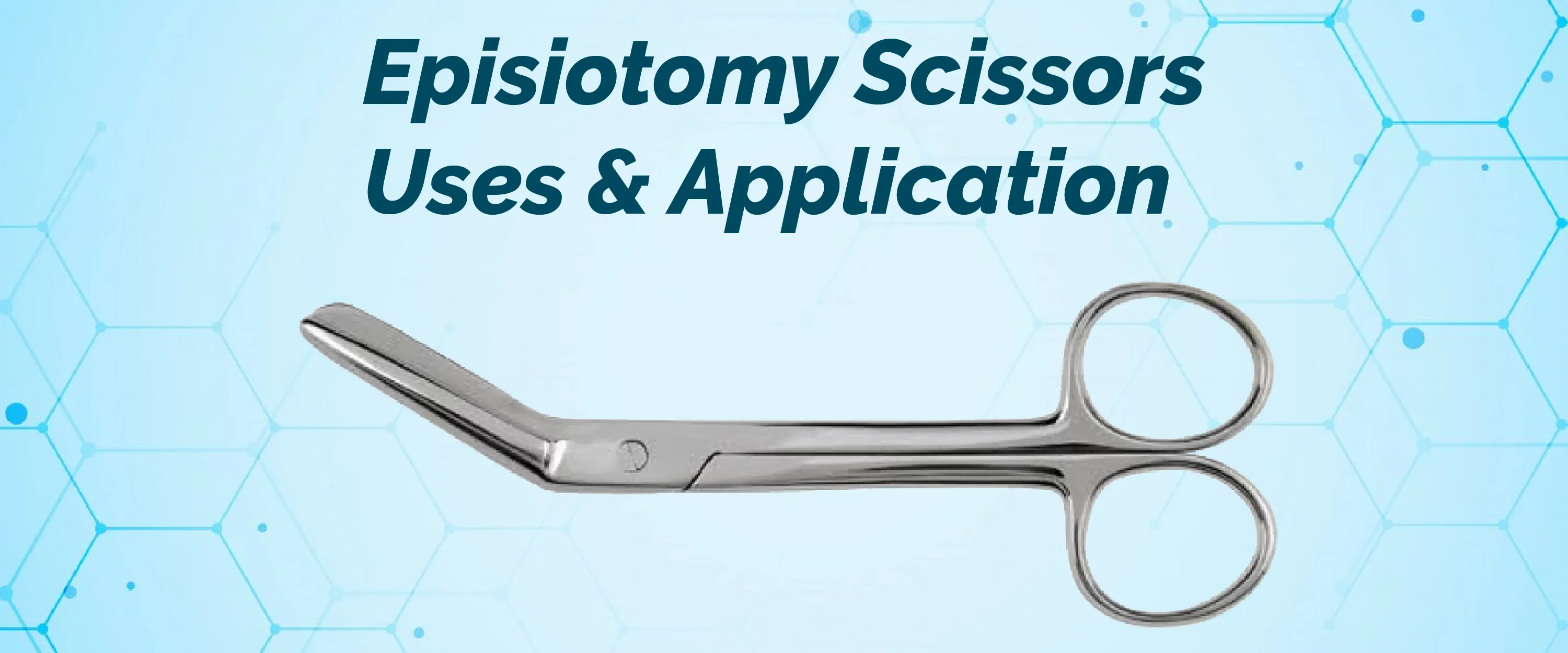
Episiotomy scissors are
specialized surgical scissors used during childbirth to perform an episiotomy a
controlled surgical incision made in the perineum (the area between the vaginal
opening and the anus).
This incision enlarges the
vaginal opening to:
- Facilitate
safe delivery
- Reduce
the risk of uncontrolled perineal tearing
- Protect
maternal tissues during difficult or assisted births
Episiotomy scissors are designed
specifically for precision, control, and safety in obstetric procedures.
Why Is an Episiotomy Performed?
An episiotomy is not done
routinely but may be recommended in certain clinical situations, such as:
- Prolonged
or obstructed labour
- Assisted
deliveries (forceps or vacuum extraction)
- Fetal
distress requiring rapid delivery
- Rigid
or non-stretching perineal tissues
- Risk
of severe natural tears
When required, episiotomy scissors
allow doctors to make a clean, controlled incision that is easier to repair and
heal.
Design & Structure of
Episiotomy Scissors
Episiotomy scissors are engineered
to meet the unique demands of childbirth.
Key Design Features
- Curved
blades to follow the natural anatomy
- Blunt
or angled tips to protect the baby
- Short
blade length for controlled cutting
- Ergonomic
handles for steady grip
They are typically made from high-quality
surgical stainless steel, ensuring durability, corrosion resistance, and
repeated sterilization.
Types of Episiotomy Scissors
Different designs are used based
on clinical preference and delivery conditions.
1. Braun-Stadler Episiotomy
Scissors
- Slightly
angled blades
- Most
commonly used
- Offers
excellent control during incision
2. Mayo Episiotomy Scissors
- Strong,
curved blades
- Suitable
for thicker perineal tissue
3. Straight Episiotomy Scissors
- Less
common
- Used
in specific clinical situations
How Episiotomy Scissors Are
Used
The procedure is always performed
by trained medical professionals.
Basic Steps:
- The
perineal area is cleaned and anesthetized
- The
scissors are positioned carefully
- A
single, controlled incision is made
- After
delivery, the incision is sutured and repaired
Proper technique minimizes blood
loss, tissue trauma, and recovery time.
Clinical Importance of
Episiotomy Scissors
Episiotomy scissors are vital
because they help:
1. Ensure Controlled Incisions
Unlike natural tears, a surgical
cut is cleaner and more predictable.
2. Protect the Baby
Blunt or angled tips reduce the
risk of accidental injury.
3. Improve Healing
Clean incisions are easier to
suture and heal faster.
4. Support Emergency Deliveries
They enable rapid intervention
when every second matters.
Care, Sterilization &
Safety
- Must
be sterilized before and after every use
- Regular
inspection for blade sharpness
- Stored
in sterile obstetric kits
- Should
only be used by trained professionals
Using well-maintained scissors
reduces infection risk and ensures patient safety.
Why Quality Matters in
Episiotomy Scissors
Low-quality instruments can lead
to:
- Irregular
cuts
- Excessive
tissue trauma
- Increased
pain and recovery time
- Higher
infection risk
At Aarogyaa Bharat, we emphasize clinically approved, hospital-grade surgical instruments that meet safety and quality standards for maternal care.
Conclusion
Episiotomy scissors may appear
simple, but they are a critical obstetric instrument designed to ensure safety,
precision, and better outcomes during childbirth. When used appropriately, they
help prevent severe tearing, protect the baby, and support smoother recovery
for the mother.
For more trusted medical equipment
guides, maternal care information, and healthcare insights, rely on Aarogyaa
Bharat - your dependable partner in informed and compassionate healthcare.