This is where the Auto-Mask Detection feature plays a
critical role.
Many users abandon CPAP/BiPAP therapy due to discomfort, air
leaks, or improper mask fitting. Auto-mask detection technology is designed to
solve these real-world problems automatically, improving therapy effectiveness
and patient adherence.
At Aarogyaa Bharat, we focus on practical medical technology
knowledge, not just technical jargon. This guide explains what auto-mask
detection is, how it works, why it matters, which machines support it,
benefits, limitations, and FAQs in a simple yet professional manner.
Understanding CPAP and BiPAP Therapy (Quick Overview)
Before diving into auto-mask detection, let’s briefly
understand the devices.
What Is a CPAP Machine?
A CPAP (Continuous Positive Airway Pressure) machine
delivers a constant airflow to keep the airway open during sleep.
What Is a BiPAP Machine?
A BiPAP (Bilevel Positive Airway Pressure) machine delivers
two pressure levels:
- Higher
pressure during inhalation (IPAP)
- Lower
pressure during exhalation (EPAP)
Why Mask Fit Is Crucial in CPAP/BiPAP Therapy
The mask is the primary interface between the patient and
the machine. Even the best CPAP or BiPAP machine will fail if the mask:
- Is
leaking air
- Is
not worn properly
- Is
removed during sleep
- Causes
discomfort or claustrophobia
Poor mask fit leads to:
- Ineffective
therapy
- Poor
sleep quality
- Skin
irritation
- Patient
non-compliance
This is exactly the problem auto-mask detection is designed
to solve.
What Is Auto-Mask Detection?
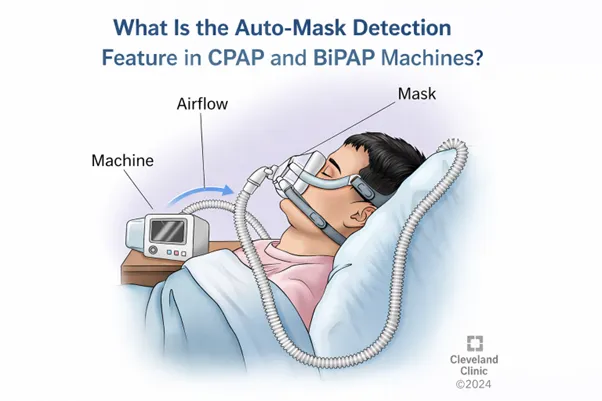
Auto-Mask Detection is an intelligent feature in modern CPAP
and BiPAP machines that automatically detects:
- Whether
the mask is properly worn
- Whether
the mask is removed
- Whether
there is excessive air leakage
- When
the patient puts the mask on or takes it off
Based on this detection, the machine automatically starts,
stops, or adjusts airflow without requiring manual intervention.
auto mask detection CPAP
How Does Auto-Mask Detection Work?
Auto-mask detection works using a combination of flow
sensors, pressure sensors, and intelligent algorithms.
Step-by-Step Working
- Sensors
monitor airflow resistance
- Machine
identifies breathing patterns
- Pressure
feedback confirms mask seal
- Device
determines “mask on” or “mask off” status
- Therapy
starts, stops, or adjusts automatically
The system works in real time and continuously adapts
throughout the night.
CPAP Mask Usage Monitoring
Key Functions of Auto-Mask Detection
1. Auto Start Feature
The machine automatically starts therapy when the user puts
on the mask and begins breathing.
No need to press buttons
Ideal for elderly or weak patients
2. Auto Stop Feature
When the mask is removed, the machine automatically stops
airflow, preventing:
- Loud
air noise
- Unnecessary
power consumption
- Discomfort
3. Mask Leak Detection
The device identifies:
- Poor
mask seal
- Mouth
leaks
- Improper
headgear fitting
Some machines even display leak alerts or reports.
CPAP mask leak detection
4. Therapy Pressure Optimization
In advanced devices, auto-mask detection helps the machine:
- Adjust
pressure delivery
- Maintain
therapy accuracy despite minor leaks
Why Auto-Mask Detection Is Important for Patients
Improves Therapy Compliance
Patients are more likely to continue therapy when:
- The
machine is easy to use
- No
manual controls are required
- Therapy
feels seamless
Enhances Comfort
Automatic airflow control prevents:
- Sudden
air blasts
- Dry
mouth
- Sleep
disturbances
Reduces Therapy Failure
Many CPAP failures are due to mask issues not machine
issues. Auto-mask detection directly addresses this.
Comfortable CPAP Therapy at Home
Auto-Mask Detection in CPAP vs BiPAP Machines
|
Feature |
CPAP |
BiPAP |
|
Auto
Start/Stop |
✔ |
✔ |
|
Leak
Detection |
✔ |
✔ |
|
Pressure
Adjustment |
Limited |
Advanced |
|
Use in Severe
OSA |
Moderate |
High |
|
Patient
Dependency |
Low |
Moderate |
BiPAP machines often combine auto-mask detection with
advanced pressure algorithms.
Who Benefits Most from Auto-Mask Detection?
This feature is especially useful for:
- Elderly
patients
- First-time
CPAP users
- Home-care
patients
- Patients
with limited mobility
- Long-term
sleep apnea therapy users
CPAP machine for home use
Limitations of Auto-Mask Detection
While highly beneficial, it has limitations:
- Cannot
fix severely wrong mask size
- May
misinterpret extreme leaks
- Requires
compatible masks
- Sensor
calibration is important
Auto-mask detection supports therapy but does not replace
proper mask fitting by a clinician.
Does Auto-Mask Detection Work with All Masks?
Most modern machines support:
- Nasal
masks
- Full-face
masks
- Nasal
pillow masks
However, compatibility varies by brand and model.
Always verify mask compatibility before purchase.
Auto-Mask Detection vs Manual Operation
|
Aspect |
Manual |
Auto-Mask
Detection |
|
Ease of Use |
Low |
Very High |
|
User Errors |
Common |
Minimal |
|
Elderly
Friendly |
No |
Yes |
|
Therapy
Consistency |
Variable |
High |
Maintenance & Care Considerations
For accurate detection:
- Keep
mask clean
- Replace
worn cushions
- Check
tubing for leaks
- Perform
periodic machine servicing
Poor maintenance can affect sensor accuracy.
Future Trends in Mask Detection Technology
- AI-based
breathing analysis
- Smartphone
alerts for mask leaks
- Cloud-based
compliance tracking
- Integration
with telemedicine platforms
Sleep therapy is rapidly becoming smart, connected, and patient-centric.
Conclusion
The Auto-Mask Detection feature in CPAP and BiPAP machines
is a major advancement in sleep therapy technology. By automatically detecting
mask usage, leaks, and airflow patterns, it significantly improves comfort,
compliance, and treatment effectiveness.
For patients undergoing long-term sleep apnea therapy,
especially at home, this feature can mean the difference between successful
treatment and therapy abandonment.
At Aarogyaa Bharat, we strongly recommend choosing CPAP or
BiPAP machines with auto-mask detection for better outcomes, easier usage, and
long-term satisfaction.