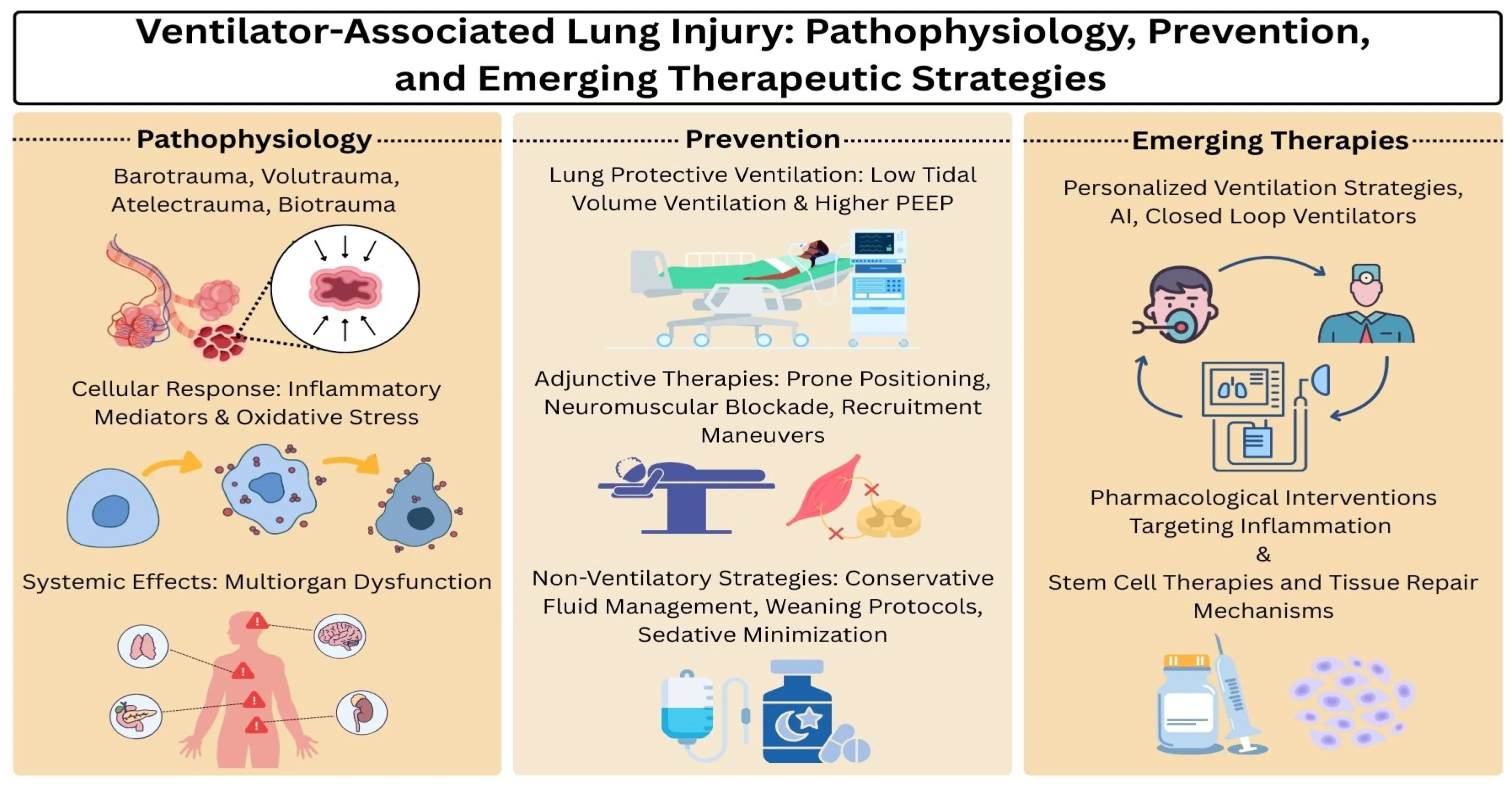
Volutrauma is a critical concern in ICUs, operating
theatres, emergency departments, and neonatal units, particularly when
lung-protective ventilation strategies are not followed.
In this guide by Aarogyaa Bharat, we explain:
- What
volutrauma means
- How
volutrauma occurs
- Difference
between volutrauma, barotrauma, and atelectrauma
- Clinical
causes and risk factors
- Complications
and outcomes
- Evidence-based
prevention strategies
What Is Volutrauma?


Volutrauma refers to lung injury caused by excessive lung
volume, not excessive pressure. Even when airway pressures appear acceptable,
large tidal volumes can overstretch alveoli, especially in diseased or
non-compliant lungs.
At the microscopic level, repetitive over-inflation leads
to:
- Alveolar
wall rupture
- Inflammatory
mediator release
- Increased
capillary permeability
- Loss
of surfactant
This process worsens oxygenation and lung compliance over
time.
How Does Volutrauma Occur?


Volutrauma develops when:
- Tidal
volume (VT) is set too high
- Lung
compliance is reduced
- Ventilation
is not individualized to patient size or lung condition
Step-by-step mechanism:
- Excess
air volume enters lungs
- Alveoli
overstretch beyond safe limits
- Mechanical
stress damages lung tissue
- Inflammatory
cascade worsens lung injury
Key point: Volutrauma can occur even at low airway
pressures, which differentiates it from barotrauma.
Volutrauma vs Barotrauma vs Atelectrauma


|
Injury
Type |
Primary
Cause |
Injury
Mechanism |
|
Volutrauma |
Excess tidal
volume |
Alveolar
overdistension |
|
Barotrauma |
High airway
pressure |
Alveolar
rupture |
|
Atelectrauma |
Repeated
collapse & reopening |
Shear stress
injury |
Volutrauma is volume-driven, not pressure-driven.
Common Clinical Causes of Volutrauma


Volutrauma commonly occurs in:
- Mechanical
ventilation with high VT
- Acute
Respiratory Distress Syndrome (ARDS)
- Poor
ventilator setting adjustment
- Prolonged
ICU ventilation
- Aggressive
manual ventilation (Ambu bagging)
High-risk environments:
- Intensive
Care Units
- Operation
theatres
- Emergency
departments
- Neonatal
ICUs
Patients at Higher Risk of Volutrauma


Patients with reduced lung compliance are particularly
vulnerable:
- ARDS
- Severe
pneumonia
- Pulmonary
fibrosis
- COPD
or asthma exacerbations
- Obesity
- Neonates
and premature infants
In such cases, even normal volumes may become excessive.
Signs and Complications of Volutrauma


Clinical indicators:
- Worsening
oxygenation
- Rising
plateau pressures
- Decreasing
lung compliance
- Increasing
inflammatory markers
Potential complications:
- Acute
lung injury
- Exacerbation
of ARDS
- Pulmonary
edema
- Prolonged
ICU stay
- Increased
mortality
How Is Volutrauma Prevented?

Lung-Protective Ventilation (Gold Standard)
The most effective way to prevent volutrauma is
lung-protective ventilation.
Core principles:
- Low
tidal volume: 6-8 ml/kg predicted body weight
- Plateau
pressure < 30 cm H₂O
- Appropriate
PEEP to keep alveoli open
- Permissive
hypercapnia when necessary
Clinical trials show this approach significantly reduces
mortality, especially in ARDS
Role of PEEP in Preventing Volutrauma


Positive End-Expiratory Pressure (PEEP):
- Prevents
alveolar collapse
- Reduces
atelectrauma
- Allows
lower tidal volumes
Excessive PEEP, however, can worsen overdistension - balance
is essential.
Volutrauma in Neonatal & Paediatric Ventilation


Infants are especially vulnerable because:
- Their
lungs are structurally immature
- Alveoli
are delicate
- Small
volume errors have large impact
This makes precise ventilator control and monitoring
critical.
How Aarogyaa Bharat Supports Safe Ventilation
At Aarogyaa Bharat, we support respiratory and critical care
by providing:
- ICU-grade
ventilators and accessories
- Respiratory
monitoring equipment
- Home
and hospital respiratory care solutions
- Educational
content for clinicians and caregivers
Our focus is on lung safety, ventilation accuracy, and
improved patient outcomes.
Frequently Asked Questions (FAQs)
Q1. Is volutrauma caused by pressure?
No. Volutrauma is caused by excessive lung volume.
Q2. Can volutrauma occur at normal airway pressures?
Yes. Overdistension can occur even with low pressures.
Q3. Is volutrauma reversible?
Early injury may improve; severe injury can cause lasting damage.
How can volutrauma be avoided?
By using lung-protective ventilation strategies.
Conclusion
Volutrauma is a serious yet preventable form of
ventilator-induced lung injury. It occurs when excessive tidal volumes
overstretch alveoli, triggering inflammation and worsening respiratory failure
- especially in vulnerable patients.
With careful ventilator settings, lung-protective
strategies, and proper monitoring, volutrauma can be significantly reduced.
In mechanical ventilation, protecting lung volume is just as
important as controlling pressure.