At Aarogyaa Bharat, we often
hear:
“The wheelchair looks strong,
but it feels unstable.”
This comprehensive guide explains
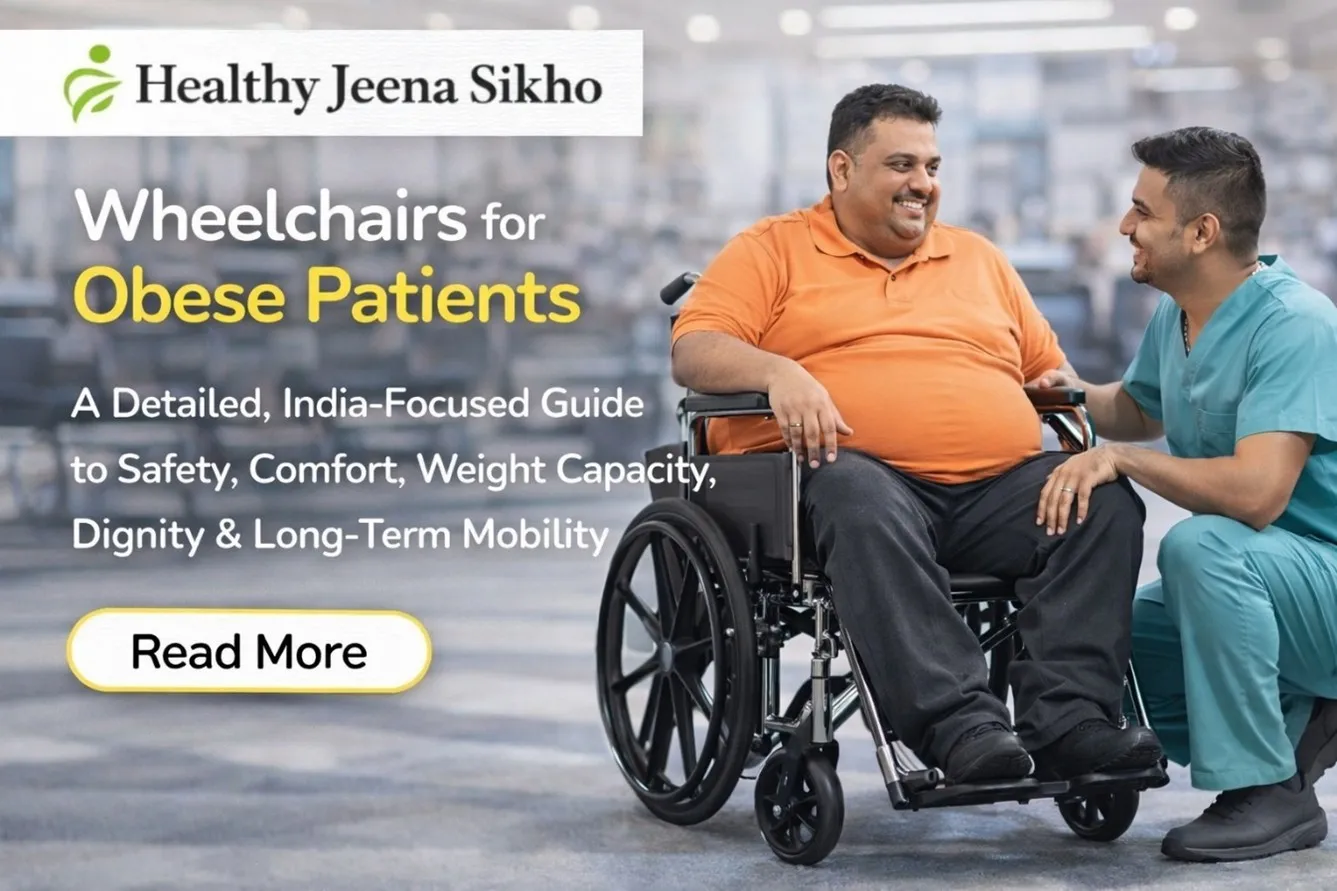
how to choose the right wheelchair for obese patients, what makes bariatric
wheelchairs different, and how to ensure long-term safety and comfort in Indian
homes and outdoor conditions.
Why Obese Patients Need
Special Wheelchairs
Obese users face unique
challenges:
- Higher load on frame, wheels, and joints
- Increased pressure on hips, tailbone, and thighs
- Difficulty with transfers
- Faster wear and tear
- Higher fall risk if stability is poor
A regular wheelchair may:
- Bend over time
- Have brake failure
- Cause hip and back pain
- Tip during transfers
That’s why bariatric (heavy-duty)
wheelchairs are essential.
What Is a Bariatric
Wheelchair?
A bariatric wheelchair is
designed specifically for:
- Higher weight capacity
- Wider seat dimensions
- Reinforced frames
- Extra stability and balance
These wheelchairs are built to
handle both weight and movement stress safely.
Step 1: Understand Weight
Capacity (Most Important Factor)

Typical Weight Categories
- Standard wheelchair: up to 100-120 kg
- Heavy-duty wheelchair: 120-160 kg
- Bariatric wheelchair: 160-250 kg+
Rule: Choose a wheelchair rated
at least 20-30 kg above the user’s current weight.
Never operate at the maximum
limit continuously.
Step 2: Seat Width & Depth
-Comfort + Safety
Why Seat Width Matters
A narrow seat:
- Compresses hips and thighs
- Causes pain and numbness
- Increases pressure sores
A bariatric wheelchair typically
offers:
- 20-24-inch seat width (sometimes more)
Correct sizing rule:
Hip width + 2 inches (not 1 inch, as with standard users)
Seat Depth Considerations
- Too deep → pressure behind knees
- Too shallow → poor thigh support
Proper depth improves circulation
and sitting tolerance.
Step 3: Frame Strength &
Material


Best Frame Choices
- Reinforced steel frames (most common)
- Double cross-brace design
- Thick tubing
Aluminium is lighter but steel is
preferred for bariatric users due to strength and durability.
Step 4: Wheels & Tyres -Stability
Over Speed


Rear Wheels
- Large diameter wheels distribute weight better
- Reduce rolling resistance
- Improve balance
Tyres
- Wider tyres = better ground contact
- Pneumatic tyres improve comfort
- Solid tyres reduce maintenance for heavy loads
Avoid narrow tyres they increase
tipping risk.
Step 5: Cushioning -Pressure
Relief Is Critical


Obese patients are at higher risk
of pressure sores.
Best Cushion Options
- Gel cushions for weight distribution
- Air cushions for very long sitting
- High-density foam (bariatric-rated)
Never use:
- Thin foam pads
- Sofa cushions
Step 6: Armrests, Footrests
& Transfers


Armrests
- Must be strong and padded
- Detachable for transfers
- Proper height to support arms
Footrests
- Reinforced
- Adjustable height
- Stable under load
Transfers must be slow, planned,
and assisted.
Step 7: Braking & Anti-Tip
Safety (Non-Negotiable)


Essential safety features:
- Dual brakes on both wheels
- Anti-tip bars
- Wide wheelbase
Without these, the wheelchair can
tip during:
- Transfers
- Slopes
- Sudden movement
Step 8: Indoor vs Outdoor Use
for Obese Patients
Indoor Use
- Compact but strong design
- Smooth turning
- Reinforced frame
Outdoor Use
- Large wheels
- Shock-absorbing tyres
- Strong brakes
If outdoor use is frequent,
choose a dual-purpose bariatric wheelchair.
Step 9: Storage &
Transport Reality in India


Be realistic:
- Bariatric wheelchairs are heavier
- Folding is possible but bulkier
- SUVs or MPVs are easier for transport
If frequent travel is required,
plan accordingly.
Cost of Bariatric Wheelchairs
in India
|
Type |
Approx
Price |
|
Heavy-Duty
Manual |
₹15,000 -₹25,000 |
|
Bariatric
Comfort Models |
₹25,000 -₹40,000 |
|
Advanced
Bariatric Support |
₹40,000+ |
Cutting costs here often leads to
medical and repair expenses later.
Common Mistakes Families Make
- Using standard wheelchairs
- Ignoring cushion quality
- Choosing narrow seats
- No anti-tip support
- Overloading beyond rating
Health Benefits of the Right
Bariatric Wheelchair
- Reduced joint pain
- Better posture
- Lower pressure sore risk
- Improved confidence
- Safer mobility
A properly fitted bariatric wheelchair restores dignity and independence.
Conclusion
For obese patients, a wheelchair
must offer strength with sensitivity. It should:
- Support weight safely
- Prevent pain and injury
- Allow confident movement
- Respect dignity
A bariatric wheelchair is not a luxury it is a medical necessity for safe, comfortable mobility.