Introduction
Imagine this situation: a loved one has just been discharged from the hospital after surgery. The doctor advises setting up a hospital bed, oxygen support, and mobility aids at home for the next few months. Almost immediately, a big question arises—should you invest in buying expensive medical equipment, or is renting a smarter option?
This dilemma is increasingly common for Indian families. Medical equipment such as hospital beds, oxygen concentrators, wheelchairs, walkers, suction machines, and patient monitors can cost anywhere from a few thousand to several lakhs of rupees. When these items are required only for a short duration, purchasing them often leads to unnecessary financial strain and underutilization.
This is why medical equipment rental in India has emerged as a practical, affordable, and stress-free solution for home healthcare needs.
At Aarogyaa Bharat, we support families by offering both rental and purchase options for a wide range of medical equipment—making quality home care accessible without overwhelming costs.
When Renting Is the Better Option
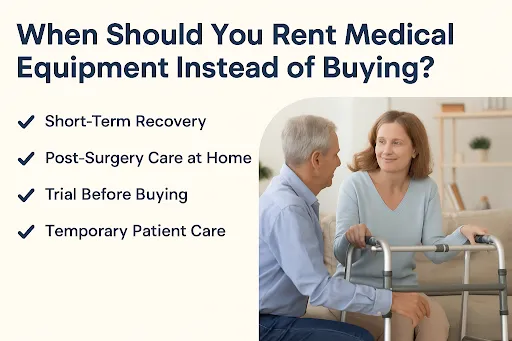
Short-term recovery is one of the most common reasons families choose to rent medical equipment. Patients recovering from fractures, knee replacement surgery, spinal procedures, or minor surgeries often need support only for a few weeks or months. Renting wheelchairs or hospital beds during this period is far more cost-effective than buying.
For example, a hospital bed may cost ₹40,000–₹60,000 to purchase, while the same bed can be rented for approximately ₹1,500–₹2,500 per month—significantly reducing upfront expenses.
Post-surgery home care is another major reason families opt for rentals. With shorter hospital stays becoming common, patients often require ICU-like support at home, including oxygen concentrators, suction machines, and monitoring devices for two to three months. Renting this equipment avoids heavy financial investment while ensuring continuity of care.
Renting also allows families to try equipment before committing to a purchase. Not every wheelchair or bed suits every patient. Renting gives the flexibility to test comfort, usability, and suitability before making a long-term decision.
Medical emergencies already create emotional and financial stress. Renting medical equipment can reduce costs by 60–80%, allowing families to allocate resources toward medicines, physiotherapy, or nursing care instead of expensive equipment purchases.
Temporary elderly care is another scenario where renting makes sense. Whether it’s seasonal illness support or short-term end-of-life care, rentals help provide comfort and dignity without unnecessary expenditure.
When Buying Makes More Sense
While renting is ideal for temporary needs, buying medical equipment is a better option when the patient has a chronic condition such as paralysis or requires lifelong oxygen therapy. If the equipment will be used daily for years, long-term ownership becomes more economical. Buying also suits families who prefer permanent access without worrying about rental renewals.
Why Families Trust Aarogyaa Bharat
Families across India rely on Aarogyaa Bharat because of the wide range of hospital beds, wheelchairs, oxygen concentrators, patient monitors, and mobility aids available under one roof. Flexible rental plans start at just ₹399 per month, with doorstep delivery and installation in major cities. Every product is sanitized, tested, and quality-checked, and pricing remains transparent with no hidden charges.
FAQs
The most commonly rented medical equipment in India includes hospital beds, oxygen concentrators, wheelchairs, and walkers.
Renting medical equipment is safe when done through trusted providers, as all equipment is cleaned, sanitized, and tested before delivery.
Rental periods are flexible and can be extended as needed.
Renting is significantly cheaper than buying for short-term recovery, often saving up to 80%.
A doctor’s prescription is generally not required, except for oxygen-related equipment where medical guidance is recommended.
Conclusion
Choosing between renting and buying medical equipment depends on the patient’s condition, duration of use, and family budget. For short-term recovery and temporary care, renting offers affordability and flexibility. For long-term or chronic conditions, buying provides convenience and continuity. With reliable rental and purchase options,
helps families focus on healing and care—without the added burden of high medical equipment costs.