Families exploring hospital pages and home care resources
often learn that walking walkers are commonly recommended for elderly
individuals who require more support than a walking stick but are not ready to
transition to wheeled rollators. Aarogyaa Bharat’s rehabilitation section
highlights walking walkers as one of the safest mobility aids for individuals
undergoing physiotherapy or recovering from orthopaedic procedures. Healthcare
calculators used to assess fall risk frequently recommend walkers as part of
structured mobility support programs. When used correctly, walking walkers
allow elderly individuals to regain confidence and independence while reducing
the risk of slips and falls during everyday activities.
Understanding What a Walking Walker Is
A walking walker is a mobility aid designed with a sturdy
metal frame that provides stable support while the user walks. Unlike wheeled
walkers or rollators, traditional walking walkers require the user to lift the
frame slightly and place it forward before taking each step. This walking
technique ensures controlled movement and provides strong balance support for
individuals who require maximum stability. Physiotherapists listed on hospital
pages often recommend walking walkers during early rehabilitation stages
because they allow patients to practice safe walking movements while
maintaining correct posture. Aarogyaa Bharat’s home care equipment guides
emphasize that walking walkers are particularly useful for seniors who
experience significant balance challenges or muscle weakness. Healthcare
calculators used to evaluate mobility limitations often identify walking
walkers as the most suitable option for individuals who need reliable
structural support during walking.
Why Walking Walkers Are Ideal for Assisted Mobility
Assisted mobility refers to situations where individuals
require additional support to perform everyday walking activities safely.
Walking walkers provide this support by distributing body weight evenly through
the walker frame, reducing pressure on joints and improving balance control.
Seniors recovering from surgeries such as hip replacement or knee replacement
often rely on walkers during the early stages of recovery. Hospital pages
frequently highlight walkers as essential rehabilitation tools because they
allow patients to gradually rebuild walking strength without risking falls.
Aarogyaa Bharat’s rehabilitation equipment section explains that walking
walkers also support elderly individuals with chronic conditions such as
arthritis, neurological disorders, or muscle weakness. Healthcare calculators
used for mobility planning often recommend walkers as an effective solution for
improving walking confidence and preventing accidents.
Key Features of Walking Walkers for Elderly Support
Walking walkers include several design features that enhance
comfort, stability, and safety during use. Lightweight aluminium frames provide
durability while keeping the walker easy to lift and reposition during walking.
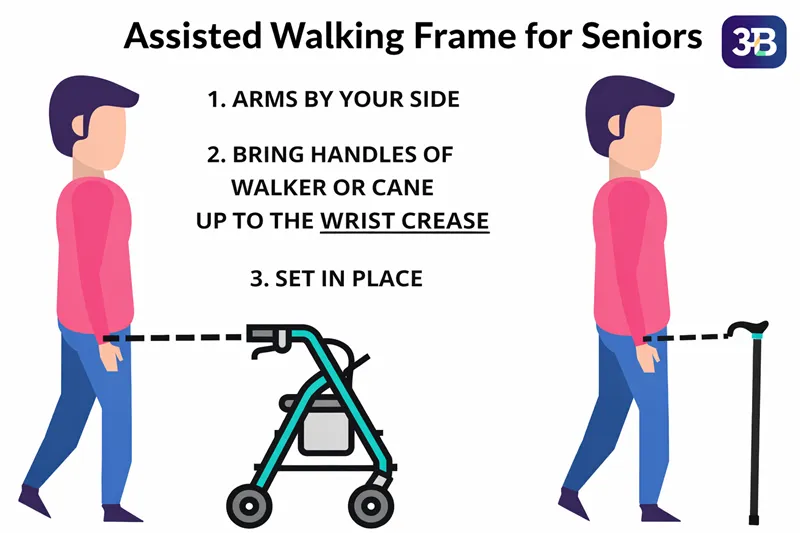
Adjustable handle heights allow the walker to be customized according to the
user’s body height, ensuring proper posture and reducing strain on shoulders
and wrists. Anti-slip rubber tips provide traction on indoor flooring surfaces
such as tiles or wooden floors, preventing accidental slipping. Aarogyaa
Bharat’s rehabilitation section highlights walkers with ergonomic grips because
they improve comfort during prolonged use. Some models also include folding
mechanisms that allow the walker to collapse for easy storage or transport.
Families reviewing hospital pages for mobility solutions often prioritize
walkers that combine stability, lightweight design, and adjustable features.
Typical Features of Walking Walkers
|
Feature |
Description |
|
Frame
Material |
Lightweight aluminium
or steel |
|
Height
Adjustment |
Adjustable
handle levels |
|
Base Support |
Anti-slip
rubber tips |
|
Frame Type |
Four-legged
stable structure |
|
Weight
Capacity |
Typically,
100–150 kg |
|
Folding
Mechanism |
Optional
foldable frame |
How Walking Walkers Improve Daily Mobility
Daily mobility is essential for maintaining physical health
and emotional well-being among elderly individuals. Walking walkers provide
reliable support that allows seniors to move safely inside their homes while
performing routine activities. Seniors can use walkers to move between rooms,
access the bathroom safely, or participate in light physical exercises
recommended by physiotherapists. Aarogyaa Bharat’s home care equipment guides
emphasize that walkers help maintain independence while reducing the risk of
injuries caused by falls. Hospital pages often recommend walkers for elderly
patients who require consistent walking support during recovery. Healthcare
calculators designed to measure fall risk frequently indicate that mobility
aids such as walkers significantly improve safety and confidence for seniors
living independently.
Situations Where Walking Walkers Are Most Useful
Walking walkers are commonly used by elderly individuals who
experience reduced balance or limited muscle strength. Patients recovering from
surgery frequently rely on walkers during the early stages of rehabilitation
when walking stability is essential. Individuals with neurological conditions
such as Parkinson’s disease or stroke recovery may also use walkers to support
controlled walking movements. Aarogyaa Bharat’s rehabilitation equipment guides
explain that walkers are particularly beneficial for seniors who require
structured walking assistance within home care environments. Families reviewing
hospital pages for elderly mobility guidance often discover that walkers play
an important role in rehabilitation therapy and fall prevention strategies.
Healthcare calculators used by caregivers frequently recommend walkers as a
reliable mobility solution for individuals with moderate walking difficulties.
Benefits of Using Walking Walkers for Assisted Mobility
- Provide
strong structural support for walking stability
- Reduce
the risk of falls and injuries
- Help
distribute body weight evenly during movement
- Support
rehabilitation after surgery or injury
- Encourage
safe indoor mobility for seniors
- Lightweight
design allows easy lifting and repositioning
- Suitable
for physiotherapy exercises and recovery programs
- Improve
confidence and independence in daily activities
Walking Walker vs Rollator Walker
Different mobility aids are designed for different levels of
support. Walking walkers provide maximum stability because they include four
legs that remain firmly positioned on the ground. Rollator walkers, on the
other hand, include wheels that allow smoother movement but require better
balance control. Patients consulting hospital pages often begin rehabilitation
with walking walkers before transitioning to rollators later in recovery.
Aarogyaa Bharat’s rehabilitation section explains that walking walkers are
particularly suitable for seniors who require stronger support during assisted
mobility. Healthcare calculators used to track mobility improvement often
indicate that patients may gradually progress from walkers to rollators as
their walking ability improves.
Table: Walking Walker vs Rollator Walker
|
Feature |
Walking
Walker |
Rollator
Walker |
|
Stability |
Very high
stability |
Moderate
stability |
|
Wheels |
Usually, no
wheels |
Four wheels |
|
Movement |
Lift and step
movement |
Continuous
rolling |
|
Best For |
Early
rehabilitation |
Active
elderly mobility |
|
Support Level |
Maximum
support |
Moderate
support |
Choosing the Right Walking Walker for Assisted Mobility
Selecting the right walker requires understanding the user’s
mobility condition, body height, and home environment. Seniors who require
strong balance support should choose walkers with stable frames and anti-slip
rubber tips. Individuals undergoing physiotherapy programs listed on hospital
pages may benefit from walkers that include adjustable handles and ergonomic
grips for comfort. Aarogyaa Bharat recommends reviewing walker specifications
carefully before purchasing mobility equipment. Healthcare calculators designed
to evaluate fall risk and walking stability can help families determine whether
a walking walker or another mobility aid is more appropriate. By selecting the
right walker model, seniors can enjoy improved mobility while maintaining
safety and independence.
Role of Walking Walkers in Rehabilitation Programs
Rehabilitation programs often focus on rebuilding strength,
coordination, and balance after injury or surgery. Walking walkers provide the
stability required for patients to practice safe walking movements during this
recovery process. Physiotherapists listed on hospital pages frequently
incorporate walkers into rehabilitation exercises to ensure patients maintain
correct posture and balance. Aarogyaa Bharat’s rehabilitation section explains
that walkers allow patients to gradually regain mobility while minimizing the
risk of accidents. Healthcare calculators used in rehabilitation planning often
measure improvements in walking stability and endurance over time. As patients
recover strength, they may transition from walkers to lighter mobility aids
such as rollators or walking sticks.
Conclusion
Walking walkers remain one of the most effective mobility aids for elderly individuals and rehabilitation patients who require assisted walking support. Their stable frame, ergonomic design, and reliable balance assistance make them ideal for individuals recovering from surgery or managing mobility challenges. Unlike lighter mobility aids such as walking sticks, walkers provide stronger support that helps seniors move safely within their homes and healthcare environments. Aarogyaa Bharat’s home care and rehabilitation equipment collections emphasize the importance of selecting mobility aids that match both the user’s physical needs and living conditions. By consulting hospital pages, exploring cities pages, and using healthcare calculators to evaluate mobility requirements, families can choose walkers that provide safe and comfortable assisted mobility. With the right walking walker, seniors can regain confidence and independence while maintaining safety during everyday movement.