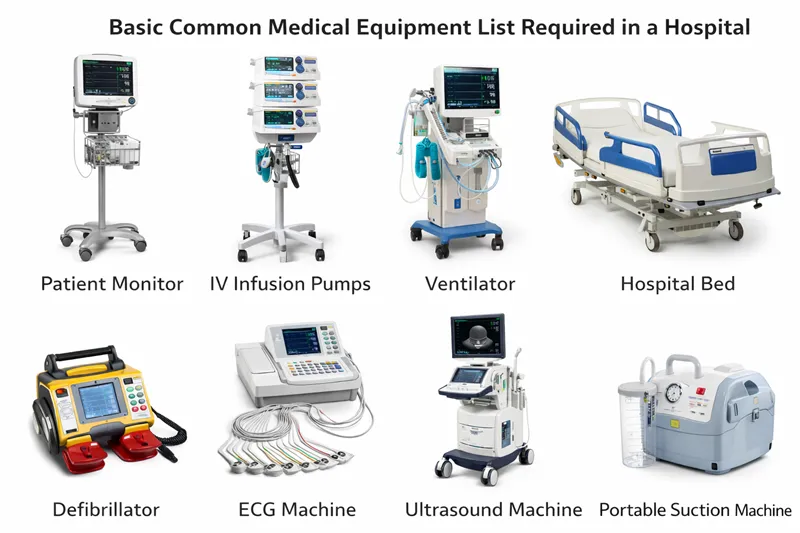
In this comprehensive guide, we outline the essential
medical equipment list required in a hospital, explain their uses, and
highlight key considerations for procurement and safety.
What Is a General or Secondary Care Hospital?
A general hospital provides diagnosis, treatment, and care
for common illnesses, injuries, and medical conditions. It usually offers
outpatient (OPD), inpatient (IPD), emergency services, and basic surgical care.
Common Specialties in a General Hospital
A typical general hospital caters to:
- General
Medicine
- General
Surgery
- Obstetrics
& Gynecology
- Pediatrics
- Orthopedics
- Emergency
& Trauma Care
- Anesthesiology
- Diagnostic
Services
Each specialty requires a core set of medical equipment to
ensure smooth and safe operations.
Importance of Having the Right Medical Equipment
- Ensures
accurate diagnosis and treatment
- Improves
patient safety and outcomes
- Enhances
efficiency of healthcare staff
- Helps
meet regulatory and accreditation standards
- Builds
patient trust and hospital credibility
Even the most skilled doctors rely heavily on properly
functioning medical equipment.
Basic Common Medical Equipment Required in a Hospital
1. Examination and Diagnostic Equipment
These tools are essential for routine patient evaluation.
- Stethoscopes
- Blood
pressure monitors (manual & digital)
- Thermometers
(digital / infrared)
- Pulse
oximeters
- Weighing
scales (adult & paediatric)
- Height
measuring scales
- Examination
lights
2. Patient Care and Monitoring Equipment
Continuous monitoring is critical for inpatients and
emergency cases.
- Multiparameter
patient monitors
- Oxygen
concentrators
- Oxygen
cylinders with regulators
- Nebulizers
- Suction
machines
- Infusion
pumps
- Syringe
pumps
3. Emergency and Trauma Care Equipment
Emergency preparedness saves lives.
- Defibrillator
- Emergency
crash cart
- Ambu
bags (adult & paediatric)
- Airway
management kits
- Cervical
collars
- Splints
and immobilizers
- Stretchers
and wheelchairs
4. Operation Theatre (OT) Equipment
Even basic surgical procedures require a functional OT.
- Operating
table
- Surgical
lights
- Anesthesia
machine
- Patient
monitors for OT
- Electrosurgical
unit (cautery)
- Instrument
trolleys
- Autoclave
for sterilization
5. Obstetrics and Gynecology Equipment
For maternal and women’s healthcare services.
- Delivery
beds
- Fetal
dopplers
- Infant
warmers
- Suction
units
- Neonatal
resuscitation kits
6. Paediatric Care Equipment
Children require specially designed equipment.
- Pediatric
BP cuffs
- Pediatric
nebulizers
- Infant
weighing scales
- Pediatric
oxygen masks
7. Orthopedic Equipment
For fracture and injury management.
- Traction
beds
- Orthopedic
drills
- Plaster
cutting machines
- Walking
aids (crutches, walkers)
8. Hospital Furniture and Support Equipment
Supporting infrastructure is just as important.
- Hospital
beds (manual / semi-electric)
- Bedside
lockers
- Overbed
tables
- IV
stands
- Privacy
screens
- Patient
trolleys
9. Infection Control and Sterilization Equipment
Preventing infections is a top priority.
- Autoclaves
- UV
sterilizers
- Hand
hygiene stations
- Medical
waste bins (color-coded)
- PPE
kits
10. Diagnostic and Laboratory Equipment
Basic diagnostics support accurate treatment.
- ECG
machine
- Glucometers
- Centrifuge
machines
- Microscope
- Hemoglobin
meters
- Rapid
test kits
Factors to Consider While Procuring Hospital Equipment
- Quality
certifications and compliance
- Ease
of use and training requirements
- Maintenance
and service support
- Availability
of spare parts
- Cost-effectiveness
and scalability
Trusted platforms like Aarogyaa Bharat help hospitals source
reliable, certified medical equipment and healthcare supplies tailored to
different hospital needs.
Maintenance and Safety Considerations
- Regular
equipment calibration
- Preventive
maintenance schedules
- Staff
training on equipment use
- Proper
documentation and audits
Well-maintained equipment ensures long-term safety and
performance.
Frequently Asked Questions (FAQs)
Q1. Does every hospital need the same equipment list?
No, equipment requirements vary based on hospital size, services, and
specialties.
Q2. Can hospitals start with basic equipment and expand
later?
Yes, many hospitals begin with essential equipment and scale up gradually.
Q3. Is refurbished medical equipment safe to use?
Refurbished equipment can be used if it meets safety and quality standards.
Q4. How often should hospital equipment be serviced?
As per manufacturer guidelines and hospital maintenance protocols.
Conclusion
A well-equipped hospital is the foundation of effective
healthcare delivery. From basic diagnostic tools to emergency life-saving
equipment, every device plays a vital role in patient care. Careful planning,
responsible procurement, and regular maintenance ensure that hospitals can meet
the everyday healthcare needs of the community safely and efficiently.
By choosing the right equipment and reliable suppliers like
Aarogyaa Bharat, hospitals can build a strong, dependable healthcare ecosystem
that truly serves patients when they need it the most.