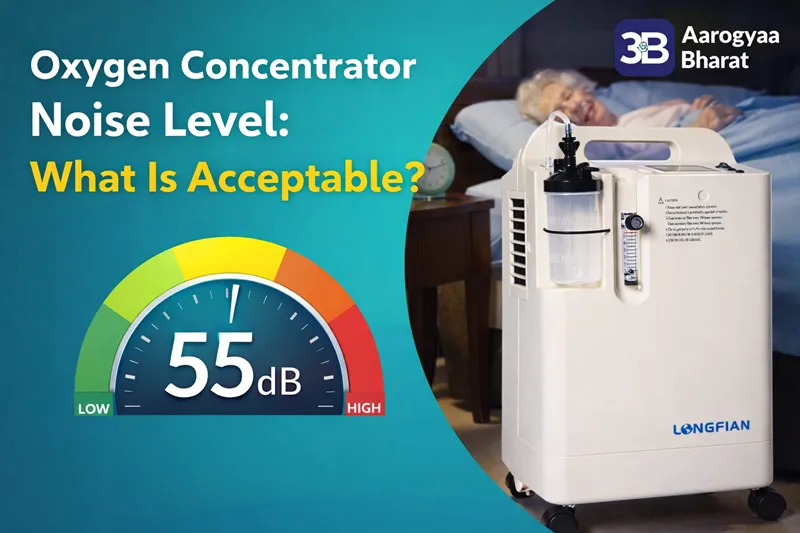
Many families focus only on oxygen purity, flow rate, and brand reputation while ignoring how loud the machine will be inside a quiet bedroom or living space. Over time, excessive noise can disrupt sleep, increase patient anxiety, irritate caregivers, and reduce overall quality of life. This comprehensive guide explains what an acceptable oxygen concentrator noise level is, why it matters, how to compare models, what factors influence sound output, and how to minimize noise in real-world Indian home-care environments.
What Is an Oxygen Concentrator and Why Noise Matters
An oxygen concentrator is a medical device that draws in
ambient air, removes nitrogen, and delivers purified oxygen to patients
suffering from conditions such as:
- COPD
(Chronic Obstructive Pulmonary Disease)
- Asthma
- Pulmonary
fibrosis
- Pneumonia
recovery
- Post-COVID
respiratory weakness
- Heart
failure
- Sleep
apnea (in some cases)
Unlike oxygen cylinders, concentrators run continuously
using an internal compressor and filtration system. This mechanical operation
naturally produces sound and vibration.
For long-term home care, noise becomes more than just an
inconvenience it becomes a health and comfort issue.
What Is Considered an Acceptable Noise Level?
Oxygen concentrator noise levels are measured in decibels
(dB).
To put this into perspective:
- 30
dB → Whisper
- 40
dB → Quiet library
- 50
dB → Soft conversation
- 60
dB → Normal conversation
- 70
dB → Vacuum cleaner
- 80
dB → Busy traffic
Ideal Noise Range for Home Oxygen Concentrators
|
Noise
Level |
Comfort
Rating |
Suitability |
|
35-45 dB |
Excellent |
Best for
bedrooms & night use |
|
46-55 dB |
Good |
Acceptable
for most homes |
|
56-60 dB |
Moderate |
May disturb
light sleepers |
|
60+ dB |
Poor |
Not
recommended for home care |
At Aarogyaa Bharat, we generally recommend concentrators
with ≤ 50 dB noise output for long-term home use, especially for elderly
patients and those requiring nighttime oxygen therapy.
Why Oxygen Concentrator Noise Level Is So Important
1. Sleep Quality and Recovery
Sleep plays a major role in healing and immunity. A loud
concentrator can:
- Interrupt
REM sleep
- Cause
frequent awakenings
- Increase
heart rate
- Lead
to daytime fatigue
- Slow
down recovery
Patients who require oxygen during sleep are especially
sensitive to background noise.
2. Mental Health and Anxiety
Constant machine noise can:
- Increase
anxiety
- Create
stress and irritability
- Make
patients feel dependent or uncomfortable
- Reduce
acceptance of long-term oxygen therapy
For elderly patients and those with cognitive decline, noise
can be disorienting and frightening.
3. Caregiver Comfort
Caregivers often share the same room or nearby space. A loud
concentrator:
- Disrupts
caregiver sleep
- Causes
chronic fatigue
- Reduces
attention span
- Increases
caregiver burnout
4. Social and Lifestyle Impact
A noisy concentrator:
- Interferes
with TV conversations
- Makes
phone calls difficult
- Limits
social interaction
- Creates
embarrassment during visitors
Factors That Influence Oxygen Concentrator Noise Levels
Not all concentrators produce the same noise. Several
technical and design factors affect how loud a unit will be.
1. Compressor Type
- Piston
compressors → Louder, more vibration
- Rotary
compressors → Quieter, smoother
- Oil-free
compressors → Lower maintenance, often quieter
Modern premium concentrators use low-vibration rotary
compressors.
2. Flow Rate
Higher oxygen flow = more noise.
|
Flow Rate |
Typical Noise |
|
1-3 LPM |
40-48 dB |
|
4-5 LPM |
45-55 dB |
|
6-10 LPM |
55-65 dB |
Patients using 5 LPM or more should prioritize ultra-quiet
models.
3. Cabinet Design
- Thicker
casing reduces vibration
- Rubber
footpads absorb floor noise
- Internal
insulation lowers resonance
- Vent
placement affects airflow sound
Cheap concentrators often skip proper sound insulation.
4. Filter Condition
Dirty or clogged filters:
- Increase
motor load
- Create
whistling or rattling sounds
- Reduce
oxygen purity
- Shorten
machine life
Routine filter cleaning can reduce noise by up to 15%.
5. Age and Maintenance
Older machines tend to:
- Develop
louder motors
- Vibrate
more
- Produce
rattling sounds
- Lose
sound-dampening efficiency
Regular servicing keeps noise levels stable.
Portable vs Stationary Concentrators: Noise Comparison
Portable Oxygen Concentrators (POCs)
|
Feature |
Value |
|
Noise Level |
38-50 dB |
|
Best For |
Travel,
outdoor use |
|
Oxygen Mode |
Mostly
pulse-dose |
|
Weight |
2-7 kg |
|
Night Use |
Limited
(model-dependent) |
Stationary Oxygen Concentrators
|
Feature |
Value |
|
Noise Level |
45-60 dB |
|
Best For |
Home
continuous use |
|
Oxygen Mode |
Continuous
flow |
|
Weight |
15-30 kg |
|
Night Use |
Excellent |
How to Check Noise Level Before Buying
When purchasing or renting from Aarogyaa Bharat, always:
- Ask
for official decibel rating
- Request
a demo unit
- Test
noise at night-time silence
- Compare
multiple brands side-by-side
- Read
verified customer reviews
Avoid vendors who refuse to share noise specifications.
Real-World Noise Reduction Tips for Home Use
Even a moderately noisy concentrator can be made quieter
with the right setup.
1. Place the Machine on a Rubber Mat
This reduces vibration transfer to the floor.
2. Maintain 1-2 Feet Clearance from Walls
Improves airflow and reduces echo.
3. Clean Filters Weekly
Prevents airflow strain and whistle noise.
4. Avoid Hard Surface Placement
Place the concentrator on:
- Carpet
- Rubber
base
- Anti-vibration
foam
5. Use Long Oxygen Tubing
Allows placing the machine outside the bedroom or farther
away.
Noise Level Comparison of Popular Oxygen Concentrator
Types
|
Type |
Noise
Level |
Comfort |
|
Budget models |
58-65 dB |
Poor |
|
Mid-range
models |
48-55 dB |
Good |
|
Premium
models |
40-48 dB |
Excellent |
|
Hospital-grade |
50-60 dB |
Moderate |
How Aarogyaa Bharat Helps You Choose the Quietest Oxygen
Concentrator
At Aarogyaa Bharat, we go beyond just selling machines. We
offer:
- Noise-verified
product listings
- In-home
demos
- Expert
consultation
- Rental
trials before purchase
- 24/7
service support
- Maintenance
guidance
- Filter
replacement reminders
We hand-select concentrators that balance oxygen purity,
durability, affordability, and low noise output for Indian home-care
conditions.
Who Should Prioritize Ultra-Quiet Oxygen Concentrators?
You should specifically choose a low-noise concentrator if:
- The
patient is elderly
- Oxygen
is needed overnight
- The
patient has anxiety or insomnia
- The
home has thin walls
- Caregivers
share the same room
- The
patient is bedridden long-term
Conclusion
An oxygen concentrator is not just a medical device it
becomes a part of your daily environment. Ignoring noise level can lead to:
- Poor
sleep
- Increased
stress
- Lower
therapy compliance
- Reduced
recovery speed
At Aarogyaa Bharat, we strongly recommend selecting an
oxygen concentrator with ≤ 50 dB noise output for home use. Comfort, dignity,
and peace are just as important as oxygen purity.
Need Help Choosing a Quiet Oxygen Concentrator?
Contact Aarogyaa Bharat - Live Healthy, Live Better for:
- Expert
recommendations
- Low-noise
model demos
- Flexible
rental plans
- Affordable
pricing
- Doorstep
delivery across India
Your comfort matters. Your health matters. Choose wisely.