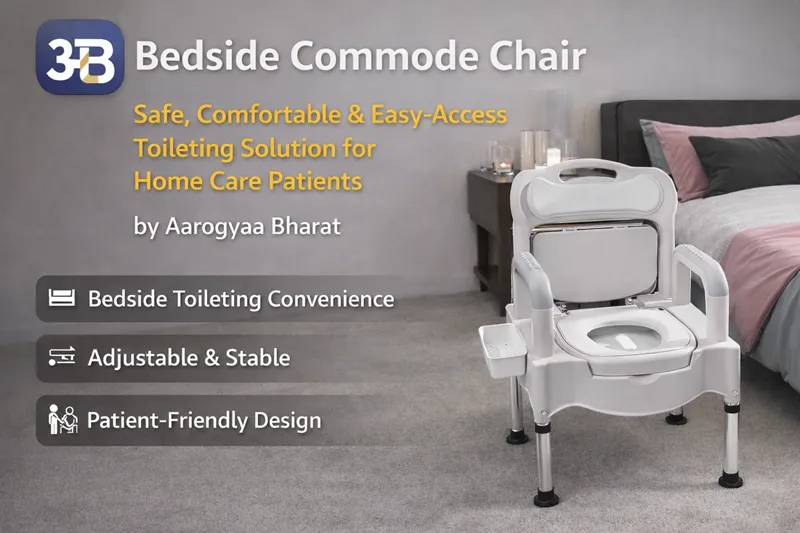
When movement is restricted due to pain, weakness,
dizziness, or medical advice, walking to the bathroom becomes unsafe and
exhausting, turning a basic human need into a source of stress and risk. In
Indian homes, bedrooms are rarely designed for medical care, with limited
space, tiled floors, and furniture arranged for daily living rather than
patient support. Bedside toileting using a commode chair addresses this gap by
bringing a safe, stable, and dignified toileting solution directly next to the
bed, eliminating hazardous transfers and rushed movement. Aarogyaa Bharat
considers bedside toileting not as a temporary workaround but as a structured
care practice that protects safety, preserves dignity, and supports recovery
within real home environments.
What Is Bedside Toileting in Home Care
Bedside toileting refers to the practice of enabling a
person to use the toilet without leaving the immediate area of the bed,
typically using a commode chair placed within arm’s reach. This approach is
used when walking to the bathroom is unsafe, impractical, or medically
discouraged. Bedside toileting prioritises minimal movement, controlled posture
changes, and predictable routines, making it suitable for both short-term
recovery and long-term care scenarios. Understanding bedside toileting as a
care strategy rather than an emergency measure helps families implement it
correctly and confidently.
Why Bedside Toileting Is Often Necessary
Many health conditions temporarily or permanently limit safe
mobility, including surgery recovery, fractures, neurological weakness,
respiratory illness, and advanced age. Even individuals who walk safely during
the day may struggle at night due to fatigue, low blood pressure, or poor
visibility. Forcing bathroom trips during these periods increases fall risk and
delays recovery. Bedside toileting allows essential bodily needs to be met
safely without overexertion, reducing complications and stress.
Risks of Bathroom Trips Without Bedside Support
Bathroom trips involve multiple high-risk movements such as
standing from bed, walking on slippery floors, turning in confined spaces, and
sitting on low toilet seats. These actions place strain on joints, muscles, and
balance systems, particularly in weakened individuals. Without bedside support,
even a short trip can lead to falls, dizziness, or collapse. Bedside toileting
eliminates most of these risks by reducing movement to a controlled
sit-and-stand sequence.
Role of a Commode Chair in Bedside Toileting
A commode chair acts as a stable, height-appropriate
toileting surface positioned near the bed. It provides armrests, back support,
and a secure seat that allows users to transition from bed to chair safely. The
chair’s design supports upright posture and controlled transfers, making
bedside toileting safe, predictable, and repeatable. The commode chair becomes
an extension of the bed rather than a separate destination.
Supporting Safe Transfers from Bed to Chair
Transfers from bed to chair are one of the most critical
moments in bedside toileting. A commode chair placed at the correct height and
distance allows users to sit up, pivot, and lower themselves gradually without
sudden movements. Armrests provide additional support, reducing reliance on leg
strength alone. Safe transfer support prevents falls and protects both users
and caregivers from injury.
Bedside Toileting for Elderly Individuals
Elderly individuals often experience muscle weakness, joint
stiffness, and balance issues that worsen after prolonged bed rest. Bedside
toileting allows them to toilet safely without walking, reducing fear and
preserving confidence. Consistent bedside routines help elderly users feel
secure and independent, even when mobility is limited
Bedside Toileting After Surgery or Hospital Discharge
Post-surgical patients are often advised to limit movement
to protect surgical sites and manage pain. Bedside toileting supports these
instructions by eliminating unnecessary walking and bending. A commode chair
allows patients to meet toileting needs while adhering to medical advice,
supporting faster and safer recovery at home.
Night-Time Bedside Toileting Safety
Night-time is when bedside toileting provides the greatest
benefit. Reduced visibility, sleepiness, and urgency significantly increase
fall risk during night bathroom trips. A bedside commode chair allows toileting
without leaving the bed area, dramatically improving night-time safety and
reducing emergencies.
Reducing Caregiver Strain Through Bedside Toileting
Caregivers often struggle with repeated night-time
assistance and emergency bathroom trips. Bedside toileting reduces the physical
effort required to support users, allowing caregivers to guide rather than
lift. Reduced strain improves caregiver health and sustainability, especially
in long-term care.
Hygiene Management in Bedside Toileting
Maintaining hygiene during bedside toileting is essential to
prevent odor, infection, and discomfort. Commode chair with removable buckets
allow easy waste disposal and cleaning without moving the user. Proper hygiene
routines ensure that bedside toileting remains dignified and acceptable for
both users and family members.
Bedside Toileting in Shared Bedrooms
In many Indian homes, bedrooms may be shared with spouses or
caregivers. Bedside toileting must therefore be discreet and respectful. Quiet
chair placement, privacy screens, and scheduled cleaning routines help maintain
comfort and dignity for everyone in the room.
Psychological Comfort and Dignity at the Bedside
Loss of mobility can cause embarrassment and anxiety,
particularly around toileting. Bedside commode chairs allow users to toilet
calmly and privately without fear of falling or rushing. Preserving dignity
improves emotional well-being and cooperation with care routines.
Bedside Toileting for Long-Term Care
For individuals with long-term disability or chronic
illness, bedside toileting may become a permanent routine. A durable,
comfortable commode chair ensures that long-term use remains safe and
manageable. Consistency reduces stress and supports stable daily routines.
Integration With Other Bedside Care Equipment
Commode chairs integrate easily with hospital beds, side
rails, walkers, and mobility aids. This integration allows caregivers to design
safe bedside care workflows without clutter or confusion, improving overall
care quality.
Types of Commode Chairs Suitable for Bedside Toileting
|
Bedside
Scenario |
Recommended
Chair Type |
Key
Benefit |
|
Night-time
use |
Fall
prevention |
|
|
Weak mobility |
Adjustable-height
chair |
Safer
transfers |
|
Long sitting |
Cushioned
seat chair |
Comfort |
|
Elderly care |
Fixed
anti-slip chair |
Stability |
|
Shared rooms |
Quiet, stable
chair |
Discretion |
Preventing Secondary Injuries at the Bedside
Secondary injuries such as falls, muscle strains, or wound
reopening often occur during rushed or unsafe bedside movements. A commode
chair prevents these injuries by providing a controlled toileting environment
that aligns with limited mobility.
Adapting Bedside Toileting as Recovery Progresses
As mobility improves, bedside toileting routines can be
adjusted gradually, allowing users to regain independence without sudden
changes. The commode chair can be repositioned or removed as appropriate,
supporting a smooth transition back to bathroom use.
Why Aarogyaa Bharat Promotes Bedside Toileting Solutions
Aarogyaa Bharat understands that safe recovery and long-term
care depend on practical solutions that work within real Indian homes. Our
commode chairs are designed to support bedside toileting with stability,
comfort, and ease of cleaning. By focusing on bedside safety, Aarogyaa Bharat
helps families prevent falls, reduce stress, and protect dignity during
vulnerable periods.
Conclusion
A commode chair for bedside toileting transforms one of the most challenging aspects of home care into a safe, dignified, and manageable routine. By eliminating hazardous bathroom trips, supporting controlled transfers, reducing caregiver strain, and preserving emotional comfort, bedside toileting protects users during periods of limited mobility. In Indian homes where space, safety, and family caregiving intersect, a bedside commode chair is not merely a convenience but a cornerstone of responsible home healthcare. Aarogyaa Bharat remains committed to providing solutions that make bedside care safer and more humane every day.