Understanding the Unique Mobility Challenges of Apartment
Living for Seniors
Apartment environments differ significantly from larger
homes because of limited space, tighter doorways, and multi-functional rooms
where furniture may be placed closer together. Seniors living in apartments
often need to navigate compact kitchens, narrow bathrooms, and smaller
hallways, which can create obstacles during walking. Slippery flooring
materials such as tiles or polished marble further increase the risk of
imbalance, especially for elderly individuals with joint stiffness, reduced
strength, or neurological conditions. Many seniors unconsciously slow their
walking pace or avoid movement altogether due to fear of falling, which
gradually reduces muscle strength and independence. A carefully selected walker
becomes an essential tool in such environments because it provides structured
stability while still allowing flexibility in movement. Families planning
apartment-friendly mobility often explore Aarogyaa Bharat Hospital Page alongside Mobility Aid Categories to integrate walkers with supportive
beds, grab bars, and rehabilitation tools that create a safer and more
functional indoor setup.
Why Walker Selection Matters More in Apartments Than
Larger Homes
In apartments, even small design details can affect mobility
safety. A bulky walker may struggle to fit through doorways or around
furniture, increasing frustration and risk of accidents. Choosing a walker with
the right width, weight, and turning ability allows seniors to move freely
without constantly adjusting their surroundings. Walkers designed for apartment
living encourage seniors to remain active because they reduce physical effort
while improving balance. By supporting upright posture and controlled movement,
walkers prevent unnecessary strain on the back and knees, which is particularly
important for seniors managing arthritis or chronic pain. Families frequently
combine walker selection with Aarogyaa Bharat Elderly Care Solutions and
Rehabilitation Sections to build a daily mobility routine that includes safe
transfers, physiotherapy exercises, and structured indoor walking practices
that promote independence.
Types of Walkers Suitable for Apartment Use and Space
Constraints
Standard walkers without wheels are often recommended for
seniors who require maximum stability during early rehabilitation stages or
those with severe balance challenges. However, in apartments where space is
limited, front-wheel walkers may provide better manoeuvrability by allowing
smoother forward motion without the need for constant lifting. Lightweight
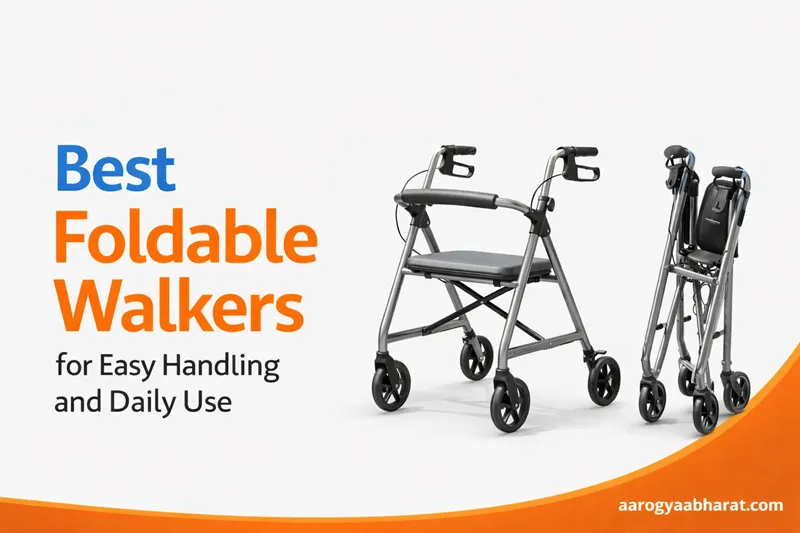
foldable walkers are highly practical because they can be stored easily near
beds, sofas, or closets when not in use, making them ideal for studio apartments
or smaller living areas. Slim rollator walkers with compact frames can also be
used in larger apartments where turning space is slightly more generous,
offering the added benefit of a seat for rest breaks during longer indoor
movement sessions. Families exploring Aarogyaa Bharat Product Category Pages
and Hospital Page equipment often compare walker designs to ensure that they
fit comfortably within apartment layouts while still delivering reliable
support.
Walker Types and Apartment Compatibility Comparison
|
Walker
Type |
Space
Efficiency |
Key
Benefit |
Recommended
Apartment Size |
|
Moderate |
Maximum
stability |
Small to
mid-size flats |
|
|
Front-Wheel
Walker |
High |
Smooth indoor
movement |
Compact
apartments |
|
Foldable
Walker |
Very High |
Easy storage
& portability |
Studio or
1BHK homes |
|
Slim Rollator
Walker |
Moderate |
Mobility +
seat support |
Spacious
apartments |
Key Features to Look for in an Apartment-Friendly Walker
Apartment-friendly walkers should be lightweight, narrow,
and easy to manoeuvre around furniture. Adjustable height is essential for
maintaining proper posture, as incorrect handle positioning may cause seniors
to bend forward, increasing the risk of back strain. Ergonomic hand grips
reduce pressure on wrists during prolonged indoor walking, especially when
moving between rooms multiple times a day. Non-slip rubber tips or
indoor-friendly wheels provide traction on smooth floors and prevent accidental
sliding. Foldable frames are highly valuable because they allow quick storage
in small spaces without compromising safety. Many families rely on Aarogyaa
Bharat Healthcare Calculator tools and Elderly Care Planning Sections to
evaluate long-term mobility solutions when combining walkers with physiotherapy
equipment, transfer supports, and hospital safety accessories.
Importance of Manoeuvrability in Tight Apartment Spaces
Manoeuvrability is one of the most critical aspects of
walker selection in apartments. Seniors must be able to turn easily near beds,
dining tables, and bathroom entrances without feeling restricted. Walkers with
front wheels or swivel mechanisms allow smoother direction changes, reducing
the need for lifting and repositioning. Lightweight frames help seniors control
movement without fatigue, encouraging more frequent walking throughout the day.
Families often explore Aarogyaa Bharat Mobility Aid Sections to identify
walkers specifically designed for indoor navigation, ensuring that seniors
maintain independence without compromising safety.
Indoor Safety Enhancements to Support Walker Use in
Apartments
Even with a well-designed walker, apartment safety
improvements are essential. Removing loose rugs, organizing furniture to create
clear pathways, and improving lighting in hallways and bathrooms significantly
reduce fall risk. Installing grab bars near toilets and beds provides
additional support during transfers. Anti-slip mats and floor safety
accessories from Aarogyaa Bharat Elderly Care Sections further enhance
stability during walker-assisted movement. By combining walkers with hospital
safety equipment listed on the Hospital Page, families can create a
comprehensive fall-prevention environment tailored to apartment living.
Role of Walkers in Daily Apartment Activities and
Independence
Walkers help seniors perform daily tasks more safely,
whether it is moving from the bedroom to the kitchen, accessing storage areas,
or preparing meals. The presence of stable support encourages seniors to remain
active, preventing the muscle weakness that often develops when mobility is
reduced. Many families integrate walkers with Aarogyaa Bharat Rehabilitation
Categories such as balance training tools and physiotherapy accessories to
create structured indoor exercise routines that improve strength and coordination
while maintaining safety.
Storage, Folding Mechanisms and Apartment Practicality
Limited storage space is a common concern in apartments,
making foldable walkers a popular choice. These walkers can be collapsed
quickly and stored beside furniture or inside closets when not needed,
preventing clutter in small rooms. Lightweight aluminum frames make it easy for
caregivers to reposition the walker without strain. Families exploring Aarogyaa
Bharat Product Category Pages often prioritize compact designs that combine
durability with convenience, ensuring that the walker remains accessible without
occupying valuable living space.
Apartment Flooring Considerations and Walker
Compatibility
Tiled and marble flooring, commonly found in apartments, can
be slippery if walkers lack proper traction. Rubber-tipped legs or high-quality
indoor wheels help maintain stability during walking. Seniors should regularly
inspect rubber tips for wear to ensure continued safety. Many families enhance
walker performance by combining mobility aids with Aarogyaa Bharat Elderly Care
Solutions such as anti-slip mats and floor safety accessories that improve
traction and reduce fall risk in high-traffic areas.
Emotional Benefits of Safe Mobility Within Apartment
Living
Maintaining independence in an apartment setting has a
strong emotional impact on seniors. A walker allows elderly individuals to move
confidently within familiar surroundings without constant assistance from
caregivers. This sense of independence improves self-esteem, reduces anxiety
related to mobility loss, and encourages social interaction. Families often
integrate walkers with Aarogyaa Bharat Rehabilitation Sections and Hospital
Page equipment to create a supportive environment that promotes both physical
comfort and emotional well-being.
Cost Planning and Long-Term Value for Apartment-Friendly
Walkers
Walkers suitable for apartments come in a range of price
points depending on design and features. Standard and foldable walkers are
typically more affordable, while slim rollator models may involve higher
investment due to wheels and seating components. Families frequently use
Aarogyaa Bharat Healthcare Calculator tools to estimate overall mobility
planning costs when walkers are part of a broader home healthcare setup that
includes physiotherapy equipment, safety accessories, and rehabilitation tools.
Choosing a durable walker ensures long-term value and consistent support for
indoor mobility.
Important Feature Checklist Before Final Selection
|
Feature |
Why It
Matters |
What to
Check |
|
Narrow Frame
Width |
Easy
navigation through doorways |
Measure
apartment passages |
|
Adjustable
Height |
Maintains
upright posture |
Wrist-level
alignment |
|
Lightweight
Frame |
Easy
manoeuvring |
Aluminum
construction |
|
Anti-Slip
Tips/Wheels |
Indoor
stability |
High-traction
base |
|
Foldable
Design |
Compact
storage |
Secure
locking system |
Conclusion
The best walker for elderly individuals living in apartments is one that combines compact design, strong stability, and effortless manoeuvrability. By understanding walker types and integrating mobility aids with Aarogyaa Bharat Hospital Page solutions, Rehabilitation Categories, Elderly Care Sections, Product Category Pages, and Healthcare Calculator tools, families can create a safe and space-efficient indoor mobility setup. A thoughtfully selected walker enhances independence, reduces fall risk, and supports comfortable daily living within apartment environments.