This makes them highly practical for both home care
environments and hospital-to-home recovery situations. Families exploring
hospital pages and home care resources frequently discover that foldable
walkers are recommended by physiotherapists because they allow caregivers to
manage mobility support efficiently while ensuring the patient remains safe.
Aarogyaa Bharat’s rehabilitation section highlights foldable walkers as
versatile mobility aids suitable for both seniors and caregivers who require
convenient daily support. Healthcare calculators used to evaluate fall risk and
mobility limitations often recommend walkers as part of structured elderly
mobility support plans.
Understanding the Importance of Caregiver-Friendly
Mobility Equipment
Caregivers play a critical role in supporting elderly
individuals with limited mobility. Whether assisting during post-surgery
recovery or managing chronic mobility challenges, caregivers must ensure that
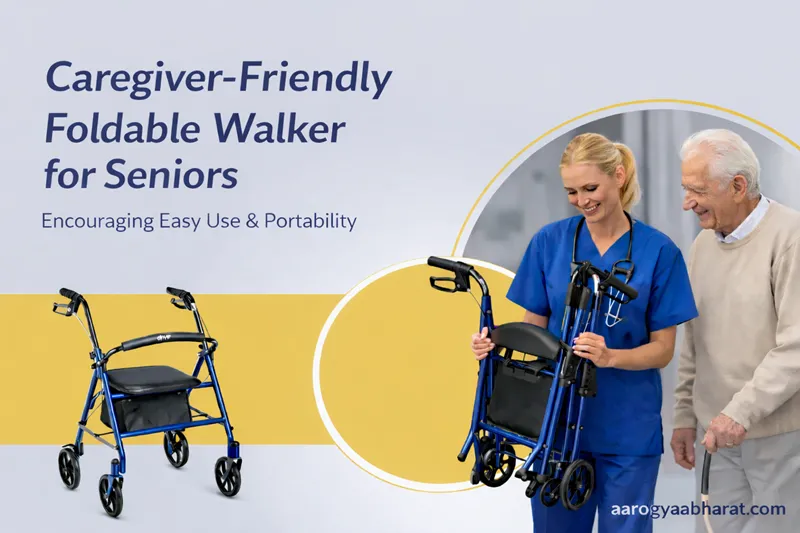
mobility aids are practical and easy to handle. Foldable walkers are designed
with caregiver convenience in mind, allowing quick adjustments and easy
transportation when moving patients between locations. Physiotherapists listed
on hospital pages often recommend foldable walkers for home care settings because
they simplify mobility management for caregivers. Aarogyaa Bharat’s home care
equipment guides emphasize that foldable walkers reduce physical strain for
caregivers while maintaining reliable balance support for seniors. Healthcare
calculators designed to measure mobility safety frequently highlight foldable
walkers as effective tools for assisted mobility management.
How Foldable Walkers Improve Caregiver Assistance
Foldable walkers provide significant advantages for
caregivers because they can be easily collapsed when not in use. This feature
allows caregivers to transport the walker in vehicles when taking seniors to
medical appointments or therapy sessions. The compact design also helps
caregivers store the walker conveniently in smaller living spaces. Hospital
pages that guide post-discharge care often emphasize the importance of portable
mobility equipment for patients transitioning from hospital care to home recovery.
Aarogyaa Bharat’s rehabilitation section highlights foldable walkers as
practical solutions that simplify mobility support while ensuring patient
safety. Healthcare calculators used to evaluate fall risk frequently recommend
walkers for seniors who require consistent walking support with caregiver
assistance.
Key Features of Foldable Walkers for Caregiver
Convenience
Foldable walkers include several structural features
designed to improve usability for both seniors and caregivers. Lightweight
aluminium frames make the walker easy to lift and transport without adding
unnecessary weight. Quick-fold mechanisms allow caregivers to collapse the
walker within seconds for storage or travel. Adjustable height handles ensure
the walker aligns properly with the user’s posture, which improves comfort
during walking. Anti-slip rubber tips provide stable contact with the ground,
preventing accidental slips during assisted mobility. Aarogyaa Bharat’s
rehabilitation equipment guides highlight walkers with ergonomic grips because
they improve comfort for seniors while walking. Families reviewing hospital
pages for mobility solutions often prioritize walkers that combine portability,
safety, and durability.
Typical Features of Foldable Walkers
|
Feature |
Description |
|
Frame
Material |
Lightweight
aluminium construction |
|
Folding
Mechanism |
Quick fold
design for easy storage |
|
Height
Adjustment |
Adjustable
handle levels |
|
Base Support |
Anti-slip
rubber tips |
|
Weight
Capacity |
Usually
supports 100–150 kg |
|
Portability |
Compact
design for transport |
Daily Situations Where Foldable Walkers Help Caregivers
Foldable walkers are especially useful in households where
caregivers assist seniors with mobility during daily routines. Caregivers can
easily unfold the walker when needed and collapse it afterward for convenient
storage. This flexibility allows seniors to move safely between rooms without
cluttering the living space. Foldable walkers are also useful when caregivers
accompany seniors to physiotherapy sessions or hospital visits listed on
hospital pages. Aarogyaa Bharat’s home care equipment guides emphasize that
foldable walkers help caregivers manage mobility support efficiently while
encouraging independence for elderly individuals. Healthcare calculators
designed to assess fall risk frequently recommend walkers as preventive
mobility aids for seniors.
Benefits of Foldable Walkers for Caregivers and Seniors
- Easy
folding mechanism for quick storage
- Lightweight
design for effortless transport
- Reliable
balance support for elderly mobility
- Convenient
for travel and medical visits
- Reduce
caregiver effort during mobility assistance
- Encourage
independent walking for seniors
- Suitable
for home care and rehabilitation use
- Durable
construction for long-term reliability
Foldable Walker vs Fixed Walker
Different walker designs provide different advantages
depending on the caregiving environment. Fixed walkers provide strong stability
but cannot be folded easily, which may make them less convenient for
transportation. Foldable walkers maintain the same stability while offering
additional portability and storage convenience. Patients consulting hospital
pages often prefer foldable walkers during home recovery because they can be
transported easily for follow-up appointments. Aarogyaa Bharat’s rehabilitation
section highlights foldable walkers as ideal mobility aids for families who
require flexible mobility support solutions. Healthcare calculators used to
evaluate mobility needs frequently indicate that foldable walkers are suitable
for both temporary and long-term mobility assistance.
Foldable Walker vs Fixed Walker
|
Feature |
Foldable
Walker |
Fixed
Walker |
|
Portability |
Easy to fold
and transport |
Difficult to
transport |
|
Storage |
Compact
storage |
Requires more
space |
|
Stability |
High
stability |
High
stability |
|
Travel Use |
Suitable for
travel |
Limited
travel use |
|
Convenience |
Caregiver
friendly |
Less
convenient |
Choosing the Right Foldable Walker for Caregiving
Selecting the correct foldable walker requires evaluating
both the senior’s mobility needs and the caregiver’s convenience requirements.
Seniors who require strong stability may benefit from walkers with reinforced
frames and anti-slip rubber tips. Individuals participating in rehabilitation
programs listed on hospital pages may prefer walkers with ergonomic handles and
adjustable heights. Aarogyaa Bharat recommends reviewing walker specifications
carefully before purchasing mobility equipment. Healthcare calculators designed
to measure fall risk and walking stability can help families determine whether
a foldable walker is the most appropriate mobility solution for their
caregiving situation.
Role of Foldable Walkers in Home Care Rehabilitation
Home care rehabilitation programs often involve regular
walking exercises to rebuild strength and balance. Foldable walkers play an
important role in these programs because they allow caregivers to assist
patients safely during mobility training. Physiotherapists listed on hospital
pages frequently recommend foldable walkers for seniors who are recovering from
surgery or illness. Aarogyaa Bharat’s rehabilitation section explains that
foldable walkers allow patients to practice walking movements while minimizing
the risk of falls. Healthcare calculators used to track rehabilitation progress
often measure improvements in walking stability and endurance over time. With
proper use and guidance, foldable walkers support both caregivers and seniors
during recovery.
Conclusion
Foldable walkers provide an excellent mobility solution for caregivers who support elderly individuals with limited walking ability. Their lightweight design, quick folding mechanism, and reliable stability make them ideal for both home care and travel situations. Unlike bulky mobility devices, foldable walkers allow caregivers to manage mobility assistance efficiently while ensuring seniors remain safe and comfortable. Aarogyaa Bharat’s home care and rehabilitation equipment collections emphasize the importance of selecting mobility aids that support both patient safety and caregiver convenience. By consulting hospital pages, exploring cities pages, and using healthcare calculators to evaluate mobility requirements, families can choose walkers that simplify caregiving while promoting independence for seniors. With the right foldable walker, caregivers can provide effective support while helping elderly individuals maintain safe and confident mobility.