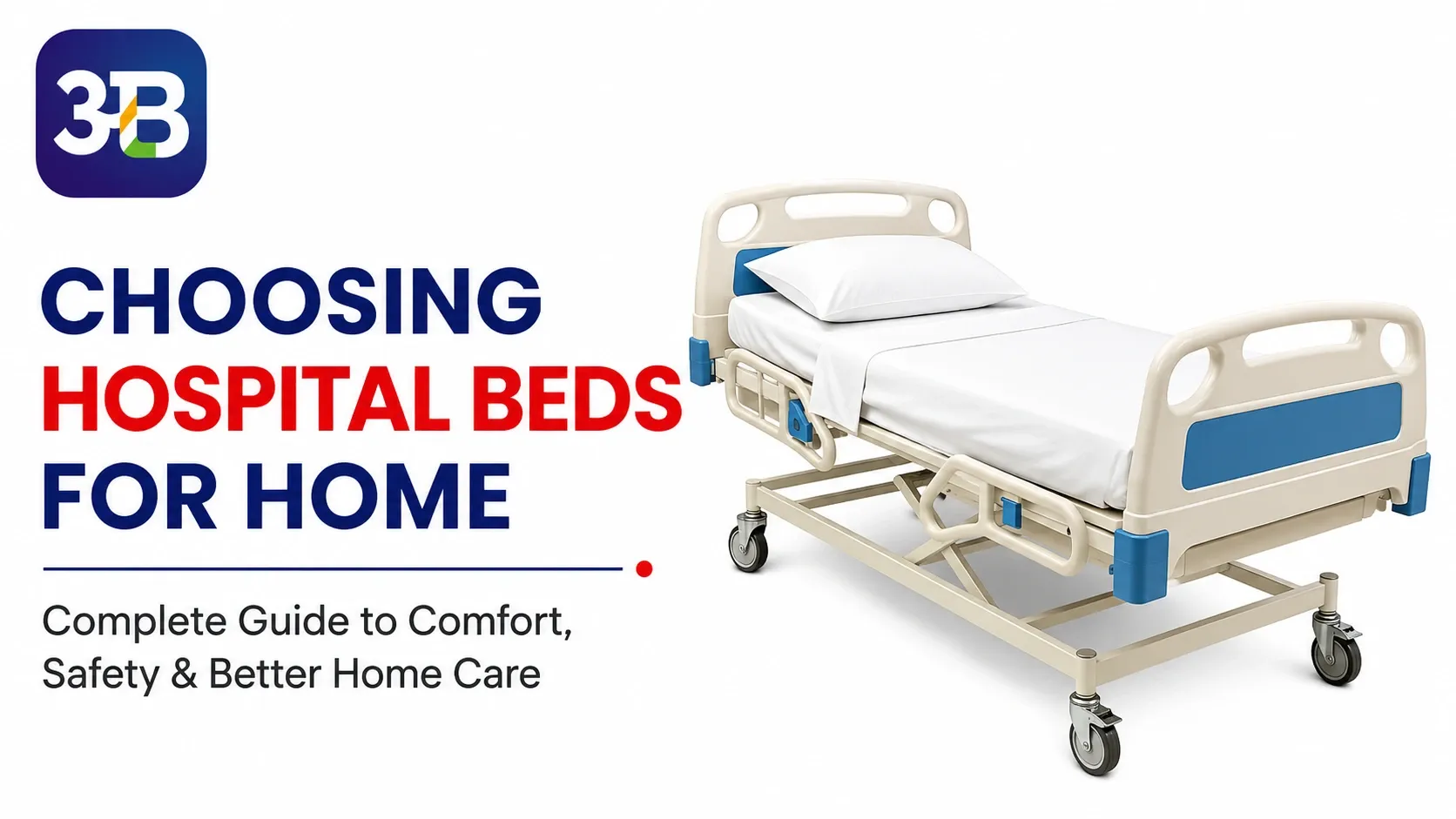
Transitioning a family member back home or opting for aging
in place requires careful planning and the right home healthcare
equipment. A home hospital bed is not just a piece of furniture; it is a
highly specialized medical device designed to facilitate healing, prevent
complications, and restore a sense of independence to the patient. This
comprehensive guide will walk you through everything you need to know to make
an informed, confident decision for your family.
Understanding the Need for a Home Hospital Bed
Before diving into the specifications, it is essential to
understand why a traditional bed falls short. Standard beds have a fixed
height, making it incredibly difficult for patients to get in and out safely.
They lack the ability to elevate the upper body or legs, which is crucial for
individuals suffering from conditions like congestive heart failure, chronic
obstructive pulmonary disease (COPD), or edema. Furthermore, attempting to care
for someone lying flat on a regular mattress often leads to severe caregiver
ergonomics issues, resulting in back strain, muscle pulls, and
burnout.
A proper hospital bed addresses all these issues. By
allowing the patient to adjust their position with the push of a button, they
can find relief from pain, breathe easier, and reduce the risk of developing
pressure ulcers. For the caregiver, the ability to raise the bed to a
comfortable working height makes tasks like changing sheets, administering
medications, and assisting with personal hygiene significantly easier and
safer. Ultimately, investing in the right bed is a foundational step in
establishing patient safety at home.
Manual vs. Semi-Electric vs. Fully Electric Beds
One of the first decisions you will face when choosing
hospital beds for home is the power source and adjustment mechanism.
Hospital beds generally fall into three categories, each with its own set of
pros and cons.
Manual Hospital Beds
Manual beds are operated entirely using a hand crank. While
they are the most affordable option on the market, they require significant
physical effort from the caregiver. To adjust the head, foot, or overall height
of the bed, someone must manually turn the crank. This can be highly
inconvenient, especially if the patient requires frequent position changes
throughout the night. Manual beds are generally only recommended for short-term
use or for patients who rarely need adjustments.
Semi-Electric Hospital Beds
Semi-electric hospital beds offer an excellent
middle ground between cost and convenience. The head and foot sections of the
bed are adjusted electronically via a handheld pendant, allowing the patient to
independently find a comfortable position. However, the overall height of the
bed frame must still be adjusted manually using a crank. This is usually
acceptable because the bed height rarely needs to be changed once it is set to
the ideal working height for the caregiver.
Fully Electric Hospital Beds
Fully electric hospital beds represent the
pinnacle of convenience and independence. Every function including the
elevation of the head, the foot, and the overall height of the bed is
controlled electronically. This is highly beneficial for patients who want to
lower the bed to get in and out independently, or for caregivers who need to
adjust the height frequently for different tasks. While they are the most
expensive option, the ease of use and the reduction in physical strain often
justify the investment for long-term care.
Critical Features to Evaluate
Once you have chosen the power type, there are several other
crucial features to consider to ensure the bed meets the specific medical and
lifestyle needs of the user.
Weight Capacity and Durability
Standard home hospital beds typically have a weight capacity
ranging from 350 to 450 pounds. However, if the patient has a larger body
frame, a standard bed may not be safe or durable enough. In these cases, you
must look into bariatric hospital beds. These heavy-duty models are
built with reinforced steel frames and wider sleeping surfaces, offering weight
capacities of 600 to 1,000 pounds. Ensuring the bed can safely support the user
is non-negotiable.
Adjustability and Positioning Options
Beyond the basic head and foot elevation, many advanced beds
offer specialized positioning options. The Trendelenburg position tilts the
entire bed so the feet are higher than the head, which can be helpful for
certain cardiovascular conditions. The reverse Trendelenburg tilts the head
higher than the feet, aiding patients with acid reflux or respiratory distress.
Additionally, some beds offer a "chair position," which bends the bed
into a seated posture, allowing the patient to eat, read, or watch television
comfortably without transferring to a separate chair.
Side Rails and Safety
Safety rails are a vital component of any home hospital bed.
They prevent the patient from rolling out of bed and provide a sturdy handhold
for repositioning or getting up. When choosing hospital beds for home,
look for rails that are easy to lower and raise. It is also highly recommended
to look for beds that comply with the FDA's Hospital Bed System Entrapment
Guidelines, which ensure the spacing between the mattress and the rails is safe
and cannot trap a patient's head or chest.
The Importance of the Right Mattress
The bed frame is only half the equation; the mattress plays
a monumental role in patient comfort and health. You cannot put a standard
innerspring mattress on a hospital bed frame, as it will not flex correctly at
the hinge points and will cause severe discomfort.
When selecting hospital bed mattresses, you must
consider the patient's risk of pressure sores (also known as bedsores or
ulcers). For low-risk patients, a high-density foam mattress is usually
sufficient. For patients at moderate to high risk, an alternating pressure
mattress or a pressure-relieving overlay is necessary. These advanced
mattresses use air cells that alternately inflate and deflate, constantly
shifting the pressure points on the patient's body to promote blood circulation
and pressure ulcer prevention. Gel-infused foam mattresses are
another excellent option, as they help regulate body temperature and provide
superior pressure redistribution.
Room Dimensions and Accessibility
Before purchasing a bed, you must carefully measure the room
where it will be placed. A standard home hospital bed takes up significantly
more space than a regular bed, especially when the head is elevated. You must
account for the footprint of the bed, the space needed for a walker or
wheelchair to navigate around it, and room for mobility aids for
seniors such as canes or lift chairs.
Additionally, consider the logistics of getting the bed into
the room. Hospital beds are shipped in pieces and assembled on-site, but you
still need to ensure the boxes can fit through hallways, doorways, and around
tight corners in your home.
Enhancing the Bed with Essential Accessories
To create a truly functional care environment, you will
likely need to pair the bed with a few essential accessories. An overbed table
is practically mandatory. These tables roll on casters and slide over the bed,
providing a stable surface for eating, using a laptop, or doing puzzles. They
adjust in height and can usually be tilted for reading.
A trapeze bar is another highly recommended accessory,
especially for patients who have upper body strength but struggle with lower
body mobility. Mounted to the headboard of the bed, the trapeze provides a
metal bar overhead that the patient can grab to pull themselves up, reposition,
or assist with transferring in and out of bed. Other helpful additions include
bed rails with organized pouches for storing remotes and tissues, and
specialized home care bed accessories like wedge pillows and
waterproof under pads.
Navigating Costs, Insurance, and Purchasing Options
The financial aspect of choosing hospital beds for
home can be daunting. Prices range from a few hundred dollars for a
basic manual bed to several thousand dollars for a fully electric bariatric bed
with an advanced pressure-relieving mattress.
Fortunately, if the bed is deemed medically necessary by a
doctor, it is often covered by insurance. Medicare home medical
equipment coverage (Part B) will typically cover the rental or
purchase of a hospital bed if the patient has a condition requiring positioning
that cannot be achieved in a standard bed, or if they require a head elevation
to breathe properly. Medicare usually covers a semi-electric bed, and the
patient is responsible for the 20% coinsurance after meeting their deductible.
Private insurance policies vary, so it is vital to contact your provider to
verify your medical equipment insurance coverage before making
a purchase. Many medical supply companies offer the option to rent-to-own,
which can be a financially savvy approach for conditions that may improve over
time.
Conclusion
Bringing a hospital bed into your home is a significant step, but it is one that profoundly improves the quality of life for both the patient and the caregiver. By carefully evaluating the level of adjustability needed, understanding the critical role of the mattress, ensuring the room can accommodate the equipment, and navigating your insurance options, you can cut through the confusion. Taking the time to research and select the perfect setup ensures that your home remains a sanctuary of comfort, safety, and dignified care.