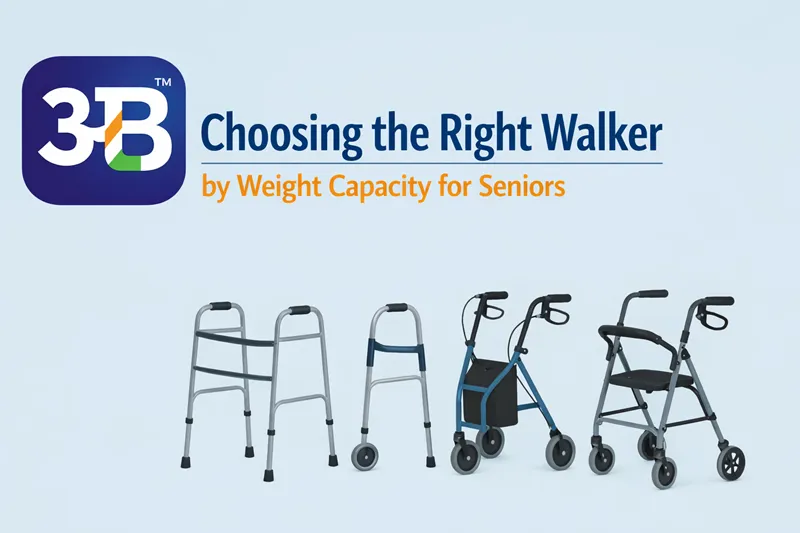
Why Weight Capacity Matters in Walkers
Weight capacity determines the maximum load a walker can safely support without structural compromise, and it directly influences frame rigidity, brake efficiency, base stability, and overall balance control during walking or seated use. When a walker is used near or beyond its maximum rated capacity, stress accumulates on joints, crossbars, wheel mounts, and brake cables, leading to gradual frame flexing or sudden mechanical failure that can increase the risk of falls. Seniors often lean heavily on walkers while transitioning from sitting to standing, which creates downward and forward pressure that must be absorbed evenly across the frame. If the device lacks sufficient reinforcement, it may tilt or shift unexpectedly. Proper weight-rated walkers distribute body load evenly across the legs and wheels, maintain alignment during turns, and reduce micro-instability that causes shaking or imbalance. In rollators, seat capacity is equally important because the entire body weight rests on the seat panel and frame supports when seated. Selecting a walker with an appropriate load rating ensures durability, smoother movement, reduced maintenance, and greater user confidence during daily activities such as walking indoors, navigating uneven outdoor surfaces, or climbing small thresholds.
Walker Weight Capacity Categories
| Walker Type | Typical Weight Capacity | Recommended For |
|---|---|---|
| Standard Walker | Up to 100–120 kg | Average-weight seniors |
| Reinforced Walker | 120–150 kg | Users needing extra durability |
| Heavy-Duty Walker | 150–200 kg+ | Bariatric users |
| Standard Rollator | 100–136 kg | Active seniors needing seat |
| Bariatric Rollator | 180–227 kg | High-weight seated mobility |
Understanding Standard vs Heavy-Duty Walker Differences
Standard walkers are typically constructed from lightweight aluminum frames designed for average body weight users who require moderate balance support, while reinforced and heavy-duty walkers incorporate thicker tubing, double crossbar reinforcements, wider base dimensions, and stronger joint welds to handle higher stress loads. Heavy-duty models often use steel or reinforced aluminum alloy to prevent frame flexing under pressure, which significantly improves long-term stability. These walkers may appear slightly bulkier, but the added width increases lateral balance and reduces tipping risk. The braking systems in heavy-duty rollators are also upgraded with stronger cables and locking mechanisms to manage increased load pressure when stopping or sitting. Additionally, heavy-duty seats are reinforced with thicker panels and enhanced weight-bearing brackets to prevent sagging. Choosing between these categories depends not only on body weight but also on mobility pattern, muscle strength, frequency of use, and whether the walker will be used primarily indoors or outdoors. While lightweight models are easier to lift and transport, reinforced walkers provide enhanced reliability and durability for users requiring extra structural support.
How to Choose the Correct Weight Rating
To select the correct walker weight capacity, healthcare experts recommend choosing a device rated at least 20–25 percent higher than the senior’s actual body weight, as this provides a safety buffer that protects against structural strain during daily use. For example, if a senior weighs 95 kilograms, selecting a walker rated for at least 120 kilograms ensures improved durability and reduced mechanical stress. This margin accounts for dynamic movement forces, such as leaning forward, sudden stopping, or uneven terrain navigation, which temporarily increase load pressure beyond static body weight. In rollators, this rule is even more critical because the seat must support full body weight during rest periods. Families should also consider future weight changes, clothing layers, or additional carried items such as bags attached to the walker frame. Choosing a slightly higher-rated walker does not compromise maneuverability but significantly enhances safety and long-term value. Consulting product specifications carefully and avoiding models that match body weight exactly is essential to prevent early wear, bending, or brake performance reduction.
Frame Strength and Stability Comparison
| Feature | Standard Walker | Heavy-Duty Walker |
|---|---|---|
| Frame Thickness | Moderate aluminum | Reinforced alloy or steel |
| Base Width | Regular width | Wider stability base |
| Cross Support | Single support | Double crossbar reinforcement |
| Brake System | Standard lock brakes | Heavy-duty reinforced brakes |
| Seat Capacity | Basic padded seat | Reinforced high-weight seat |
Additional Safety Features Beyond Weight Capacity
While weight rating is foundational, selecting a safe walker also involves evaluating anti-slip rubber tips, secure height adjustment locks, ergonomic hand grips, reinforced joints, and reliable brake systems that function smoothly under pressure. Rubber tips or larger traction wheels improve ground grip and prevent sliding on smooth floors or wet surfaces. Adjustable height ensures correct posture alignment, which reduces strain on shoulders and wrists while improving walking stability. Double crossbars add rigidity to the frame and minimize lateral wobbling. In rollators, locking brakes must hold firmly without slipping when seated, particularly for heavier users. Wide wheel bases and larger front wheels improve outdoor performance on uneven paths. Storage baskets should be securely attached without affecting balance. Each of these features complements weight capacity by enhancing overall stability, preventing tipping, and promoting safer independent movement.
Impact on Fall Prevention and Confidence
Selecting the right walker weight capacity directly contributes to fall prevention by ensuring consistent structural support during movement transitions such as standing, sitting, turning, and braking. A properly rated walker resists bending, maintains wheel alignment, and provides firm brake response even under higher load pressure. This mechanical reliability enhances user confidence, allowing seniors to walk with steadier steps and reduced fear of imbalance. When seniors trust their mobility aid, they are less likely to hesitate or move cautiously in ways that disrupt natural gait patterns. Improved posture alignment also reduces forward leaning, which is a common cause of instability. Over time, the correct walker capacity supports independence, encourages safe physical activity, and reduces caregiver dependency.
Conclusion
Choosing the right walker by weight capacity is a fundamental step toward safe, stable, and long-lasting elderly mobility support, as it directly influences structural strength, brake reliability, and balance performance during everyday activities. Selecting a walker that exceeds the senior’s body weight by a safe margin ensures durability, reduces mechanical wear, and significantly lowers fall risk. By combining proper weight rating with reinforced frame design, stable base width, and secure braking systems, families can provide seniors with confidence, independence, and safer mobility both indoors and outdoors. Aarogyaa Bharat offers a wide selection of standard, reinforced, and heavy-duty walkers designed to meet diverse weight and support requirements while prioritizing safety and comfort.