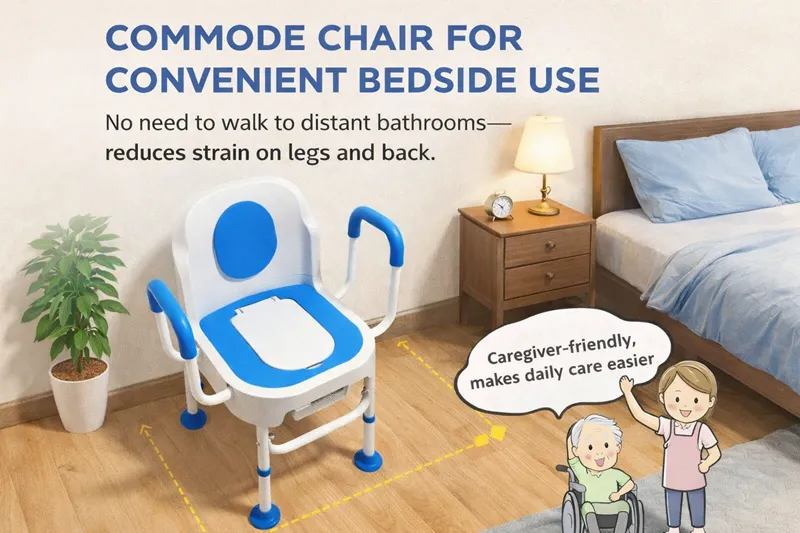
In Indian homes, where bathrooms are often located
at a distance from bedrooms, floors are tiled and slippery, lighting may be
inadequate at night, and space is limited, walking to the toilet places
enormous strain on already fragile bodies. A commode chair for bedside
convenience addresses this risk directly by bringing toileting support to the
patient instead of forcing the patient to move toward danger. At Aarogyaa
Bharat, we consider bedside commode chairs not as optional accessories, but as
essential safety equipment for dignified and responsible home care.
Why Bedside Toileting Becomes Essential In-Home Care
As mobility declines due to age, illness, surgery, or
prolonged bed rest, patients often experience reduced muscle strength, joint
stiffness, poor balance, and slower reflexes. These limitations are most
pronounced when rising from bed, a moment when blood pressure may drop suddenly
and dizziness is common. Asking such individuals to walk even a few steps to
the bathroom significantly increases fall risk, especially during urgency or
night-time use. Bedside commode chairs eliminate this hazardous journey entirely
by allowing toileting to occur within arm’s reach of the bed. This proximity
drastically reduces accidents, anxiety, and physical strain while allowing
patients to conserve energy for recovery and rehabilitation.
The Psychological Importance of Immediate Access
Toileting urgency is deeply distressing, particularly for
elderly and medically fragile patients who fear accidents or embarrassment.
When access to a toilet is delayed by distance or physical barriers, patients
often rush, ignore safety, or attempt unsafe movements, leading to falls. A
bedside commode chair provides immediate access, reducing panic and restoring a
sense of control. This psychological reassurance is critical, as fear and
stress can worsen physical weakness, disrupt sleep, and slow recovery. Knowing
that a safe toileting option is always nearby allows patients to relax, rest
better, and follow healthier routines.
Night-Time Safety and Fall Prevention
Night-time is statistically the most dangerous period for
toileting accidents due to poor visibility, sleep inertia, low blood pressure,
and disorientation. Many patients hesitate to wake caregivers and attempt to
walk to the bathroom alone in the dark. This often results in slips, falls, or
fainting episodes. A bedside commode chair transforms night-time toileting into
a controlled, low-risk activity by eliminating walking and allowing patients to
sit down safely with minimal movement. This single change dramatically reduces
hospital readmissions caused by night-time falls and injuries.
Energy Conservation and Faster Recovery
For post-surgery patients, ICU discharge patients, and those
recovering from serious illness, energy conservation is essential for healing.
Walking to the bathroom multiple times a day can exhaust patients, raise heart
rate, worsen breathlessness, and delay recovery. Bedside commode chairs allow
patients to use their limited energy more effectively, reducing unnecessary
exertion. This conservation supports wound healing, cardiovascular stability,
and overall rehabilitation progress, making bedside convenience a medical
necessity rather than a comfort choice.
Hygiene Management Without Strain
Proper hygiene requires time, balance, and stability, all of
which are compromised when patients struggle to stand or walk. A bedside
commode chair provides a stable seated posture that allows thorough cleaning
without rushing or strain. Removable buckets enable hygienic waste management
without repeated trips to the bathroom, which is especially helpful in Indian
homes with shared or small bathrooms. This controlled hygiene process reduces
infection risk and preserves dignity for users.
Reduced Caregiver Burden and Injury Risk
Caregivers often suffer physical strain while assisting
patients to walk, balance, and squat during toileting. Lifting, supporting
weight, and managing urgency repeatedly can cause back injuries and burnout. A
bedside commode chair significantly reduces caregiver effort by minimising
transfers and eliminating long walks. Caregivers can assist calmly and safely
without rushing or lifting, improving both patient safety and caregiver health.
Privacy and Dignity in Shared Homes
Indian households often have shared living spaces, limited
privacy, and cultural sensitivity around toileting. A bedside commode chair
placed thoughtfully in the bedroom allows patients to maintain privacy and
modesty, reducing embarrassment and emotional distress. This dignity
preservation is especially important for elderly parents and long-term patients
who value independence and self-respect.
Suitability for Indian Home Environments
Indian homes present unique challenges such as narrow
corridors, tiled floors, uneven thresholds, and limited bathroom modifications.
Bedside commode chairs bypass these challenges by functioning independently of
bathroom layout. Compact designs fit easily beside beds, while non-slip feet or
lockable castors ensure stability on smooth floors. This adaptability makes
bedside commode chairs ideal for apartments, rented homes, and traditional
houses alike.
Comparison Table: Bedside Commode Chair vs Bathroom
Toileting
|
Aspect |
Bedside
Commode Chair |
Bathroom
Toilet Use |
|
Walking
required |
None or
minimal |
Significant |
|
Fall risk |
Very low |
High |
|
Night-time
safety |
Excellent |
Poor |
|
Energy use |
Low |
High |
|
Caregiver
strain |
Reduced |
High |
|
Privacy |
High |
Variable |
|
Suitability
for weak patients |
Excellent |
Limited |
Choosing the Right Bedside Commode Chair
Families should choose bedside commode chairs with
adjustable height to match bed level, strong armrests for safe transfers,
non-slip feet or lockable castors for stability, and easy-to-clean buckets.
Compact footprint and comfort should be prioritised over appearance alone.
Aarogyaa Bharat helps families select bedside commode chairs that suit Indian
home layouts and patient needs without compromising safety or dignity.
Long-Term Benefits of Bedside Convenience
Over time, bedside commode chairs prevent falls, reduce
hospital visits, support independence, and ease caregiver workload. They
provide a safety net that allows patients to progress toward recovery without
pressure or fear. Even when mobility improves, many families continue using
bedside commode chairs at night as a preventive measure, recognising their
long-term value.
Why Aarogyaa Bharat Recommends Bedside Commode Chairs
Aarogyaa Bharat understands that home care is about
anticipating risk before accidents occur. By recommending bedside commode
chairs, we help families create safer living environments that support healing,
dignity, and peace of mind. Our guidance focuses on real-world Indian home
conditions rather than idealised hospital setups.
Conclusion
A commode chair for bedside convenience is one of the most impactful safety investments a family can make in home healthcare. By eliminating hazardous bathroom trips, reducing night-time falls, conserving patient energy, and protecting caregiver health, it transforms toileting from a daily risk into a controlled and dignified routine. In Indian homes where space and safety challenges coexist, bedside commode chairs offer a practical, compassionate solution that improves quality of life for both patients and caregivers. Aarogyaa Bharat remains committed to helping families choose safety-first solutions that truly support home-based care.