How the Wrong BP Cuff Can Distort Readings by 5 - 20 mmHg
In this detailed guide by Aarogyaa Bharat, we explain:
- Why
cuff size matters for BP accuracy
- How
the wrong cuff affects readings
- How
to measure your arm correctly
- BP
cuff size chart explained
- Common
mistakes people make
- Special
considerations for obesity, children, and elderly patients
What Is a Blood Pressure Cuff?
A blood pressure cuff is an inflatable band that wraps
around the upper arm and temporarily compresses the brachial artery to measure
blood pressure.
Each cuff contains:
- An
inflatable bladder (does the compression)
- A
fabric sleeve
- A
connecting tube to the monitor
For accurate readings, the bladder width and length must
match the arm size.
Why Cuff Size Matters So Much
Blood pressure measurement is based on how evenly the cuff
compresses the artery.
If the cuff is TOO SMALL:
- It
requires more pressure to compress the artery
- BP
reading appears artificially high
If the cuff is TOO LARGE:
- The
artery is compressed too easily
- BP
reading appears artificially low
Even a 5 - 10 mmHg error can:
- Change
a diagnosis from normal to hypertensive
- Lead
to unnecessary lifelong medication
- Hide
true hypertension
How the Wrong Cuff Size Affects White Coat Syndrome
White coat syndrome already causes temporary BP elevation
due to stress.
Using the wrong cuff size can:
- Exaggerate
white coat readings
- Make
anxiety-related BP spikes look like true hypertension
- Lead
to misdiagnosis
Correct cuff sizing helps distinguish between:
- White
coat hypertension
- True
sustained hypertension
What Is the Correct BP Cuff Size?
Step 1: Measure Your Arm
- Measure
the midpoint of the upper arm
- Use
a measuring tape
- Measure
bare skin, not over clothes
Step 2: Match Arm Size to Cuff
Blood Pressure Cuff Size Chart
|
Arm
Circumference |
Correct
Cuff Size |
|
18-22 cm |
Small Adult |
|
22-32 cm |
Adult |
|
32-42 cm |
Large Adult |
|
42-50 cm |
Extra-Large |
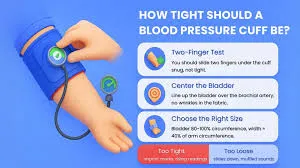
The inflatable bladder should cover 80-100% of arm
circumference
Bladder width should be 40% of arm circumference
Common Cuff Size Mistakes to Avoid
- Using a standard adult cuff for large arms
- Using a paediatric cuff on adults
- Measuring over thick clothing
- Ignoring arm size changes due to weight gain/loss
- Using wrist cuffs when arm cuffs are available
These mistakes can cause false BP readings by up to 20 mmHg.
Special Situations Where Cuff Size Is Critical
Obese or Muscular Individuals
- Often
need large or extra-large cuffs
- Standard
cuffs almost always overestimate BP
Children
- Paediatric-specific
cuffs are mandatory
- Adult
cuffs give dangerously inaccurate results
Elderly Patients
- Thin
arms still require correct cuff size
- Loose
cuffs can underestimate BP
Upper Arm Cuffs vs Wrist Cuffs
Upper Arm Cuffs
- Most accurate
- Clinically validated
- Preferred by doctors
Wrist Cuffs
- Highly position-sensitive
- Less accurate
- Not ideal for diagnosis
Upper arm cuffs with correct size are always recommended
How Often Should You Recheck Cuff Size?
You should reassess cuff size if:
- You
gain or lose significant weight
- BP
readings suddenly change without reason
- A
new BP monitor is purchased
Cuff size is not a one-time decision.
How Aarogyaa Bharat Supports Accurate BP Monitoring
At Aarogyaa Bharat, we help ensure accurate home and
clinical BP monitoring by offering:
- Clinically
validated BP monitors
- Multiple
cuff sizes (small to extra-large)
- Home
healthcare equipment
- Educational
guidance for correct usage
Our aim is to help you measure blood pressure correctly - every time..
Conclusion
Correct cuff size is not optional - it is essential for
accurate blood pressure measurement. Using the wrong cuff can falsely raise or
lower your BP, leading to misdiagnosis, unnecessary anxiety, or incorrect
treatment.
Whether you’re monitoring BP at home or in a clinic, the
right cuff size makes all the difference.
Measure right. Cuff right. Treat right.