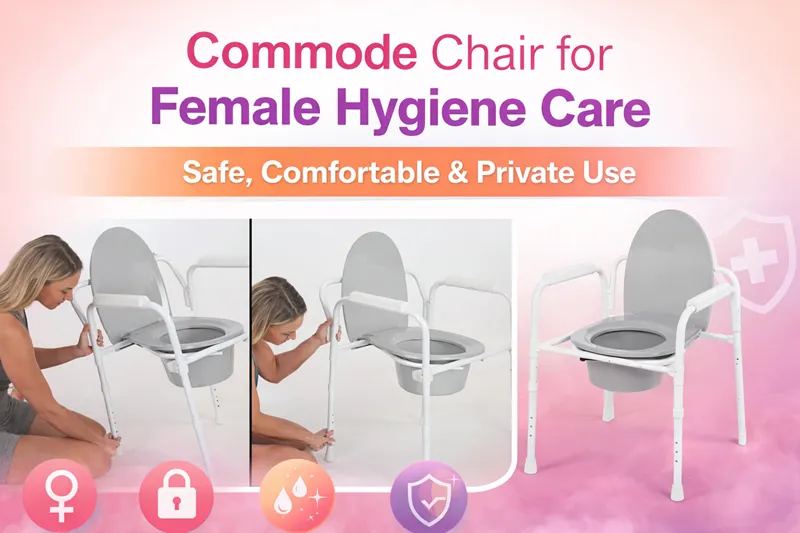
In Indian households, where bathrooms may be distant, floors slippery, privacy limited, and cultural modesty strongly valued, maintaining proper hygiene during toileting can become extremely challenging when mobility declines. A commode chair for female hygiene care is therefore not just a convenience device but an essential home-care solution that enables safe toileting, proper intimate hygiene, reduced infection risk, and preservation of self-respect. At Aarogyaa Bharat, we frequently interact with families who focus only on mobility when choosing a commode chair, overlooking hygiene-specific needs of female users. This often results in discomfort, difficulty in cleaning, dependency on caregivers, urinary or skin infections, and emotional distress. Female hygiene care demands feature that supports easy access, stable posture, comfortable seating, and discreet management, all of which are thoughtfully addressed by well-designed commode chairs. Understanding these requirements helps families make informed decisions that truly support women’s health at home.
Why Female Hygiene Requires Special Attention in Home
Care
Women face unique hygiene challenges due to anatomical
differences, menstrual health, post-menopausal changes, urinary tract
sensitivity, and higher susceptibility to infections if cleanliness is
compromised. Elderly women may struggle with incontinence, weak pelvic muscles,
and reduced flexibility, making squatting or low seating extremely
uncomfortable and unsafe. Post-surgical or post-delivery women often experience
pain, stitches, or tenderness that require stable, elevated seating and gentle
posture during toileting. In such scenarios, rushing to distant bathrooms or
balancing over Indian-style toilets increases both physical pain and hygiene
risks. A commode chair allows women to toilet safely in a seated position, with
adequate time and stability to maintain proper personal hygiene without fear of
slipping or discomfort.
Privacy, Modesty, and Emotional Comfort
For many women, especially in Indian cultural settings,
privacy and modesty are as important as physical safety. Needing assistance
during toileting can feel deeply embarrassing and emotionally distressing,
leading women to avoid asking for help or rushing the process unsafely. A
commode chair placed in a private, familiar space such as the bedroom allows
women to manage toileting with minimal assistance, preserving privacy and
dignity. This emotional comfort plays a significant role in mental well-being
and willingness to follow healthy toileting routines.
Safe Posture for Proper Hygiene
Maintaining proper hygiene requires adequate time, balance,
and access, all of which are difficult to achieve when squatting or struggling
to stand. A commode chair provides a stable, elevated seat that allows women to
clean themselves thoroughly without strain. Armrests offer support during
posture adjustment, while a well-designed seat ensures comfort during longer
use. This stable posture significantly reduces the risk of incomplete cleaning,
skin irritation, and urinary tract infections, which are common concerns in
female hygiene care.
Support During Menstrual, Postnatal, and Post-Surgical
Phases
Women recovering from childbirth, gynaecological surgery,
hysterectomy, or pelvic procedures often experience pain, weakness, and limited
mobility. Toileting during these phases requires special care to avoid pressure
on sensitive areas. A commode chair reduces bending, squatting, and strain,
allowing women to toilet gently and safely. It also enables easier management
of sanitary products and cleaning routines, which is essential during
menstruation or post-surgical recovery.
Night-Time Hygiene and Safety
Night-time toileting is particularly challenging for women
due to urgency, low visibility, and reduced strength after rest. Walking to the
bathroom at night increases fall risk and often leads to hurried hygiene
practices. A commode chair placed beside the bed allows women to toilet safely
at night, take sufficient time for hygiene, and return to bed without stress or
fear. This improves sleep quality and reduces anxiety related to night-time
accidents or infections.
Hygiene Management and Cleanliness in Indian Homes
Indian homes often have shared bathrooms and limited space,
making hygiene management more complex. Commode chairs with removable buckets
allow waste to be managed discreetly and hygienically without repeated bathroom
visits. Smooth, non-porous surfaces make cleaning easier and reduce bacterial
buildup. With proper maintenance, commode chairs support high hygiene standards
while fitting seamlessly into home environments.
Caregiver Sensitivity and Reduced Dependency
Female hygiene care requires sensitivity and respect from
caregivers. A commode chair reduces the level of direct assistance needed,
allowing caregivers to support only, when necessary, rather than being involved
in every step. This reduces emotional discomfort for women and physical strain
for caregivers, fostering a more respectful and balanced care relationship.
Comparison Table: Female Hygiene Care With vs Without a
Commode Chair
|
Aspect |
With
Commode Chair |
Without
Commode Chair |
|
Hygiene
posture |
Stable and
seated |
Unstable or
squatting |
|
Privacy |
High |
Limited |
|
Infection
risk |
Reduced |
Higher |
|
Night-time
safety |
Excellent |
Poor |
|
Physical
strain |
Low |
High |
|
Emotional
comfort |
Improved |
Reduced |
|
Caregiver
dependency |
Minimal |
High |
Choosing the Right Commode Chair for Female Hygiene Care
Families should look for commode chairs with adjustable
height, comfortable seating, strong armrests, non-slip feet, and easy-to-clean
buckets. Chairs that allow easy posture adjustment and stable sitting are
particularly important for female users. Aarogyaa Bharat helps families select
commode chairs that prioritise hygiene, dignity, and safety for women across
different care needs.
Long-Term Benefits for Women’s Health
Using a commode chair consistently helps women maintain
proper hygiene routines, reduces urinary and skin infections, prevents falls,
and supports emotional well-being. Over time, this leads to better overall
health outcomes and improved quality of life, especially for elderly women and
those with chronic mobility issues.
Why Aarogyaa Bharat Focuses on Female-Centric Home Care
Aarogyaa Bharat recognises that women’s healthcare needs are
often under-addressed in home-care planning. By emphasising commode chairs
designed for female hygiene care, we help families create safer, more
respectful, and more compassionate care environments. Our approach integrates
medical safety with cultural sensitivity and everyday practicality.
Conclusion
A commode chair for female hygiene care is a powerful yet simple solution that addresses safety, cleanliness, privacy, and dignity in one essential product. By enabling stable posture, reducing infection risk, supporting night-time safety, and minimising dependency, it transforms daily toileting into a comfortable and respectful experience for women. In Indian households where hygiene and modesty are deeply valued, a commode chair is not merely an aid but a cornerstone of compassionate home care. Aarogyaa Bharat remains committed to guiding families toward thoughtful, female-centric home-care solutions that truly improve daily living.