What Is a Commode Chair with Backrest
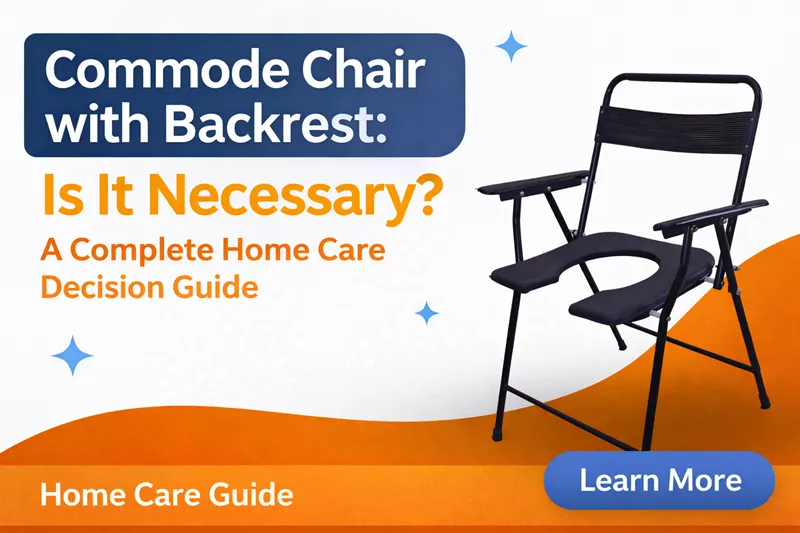
A commode chair with backrest is a toilet chair that
includes a vertical support panel behind the seat, designed to support the
user’s lower and upper back while sitting. The backrest may be made of plastic,
padded material, or metal with a molded surface. Its purpose is not only
comfort but also posture support, balance assistance, and psychological
reassurance during toileting. In contrast, commode chairs without backrests
rely entirely on armrests and core strength for stability.
Why the Backrest Feature Is Often Ignored
Many people assume a backrest is unnecessary because
toileting is a short activity. Others believe backrests are only for wheelchair
users or hospital beds. In reality, toileting is one of the most physically
demanding daily activities for people with mobility limitations. Sitting down,
maintaining balance, and standing up again place stress on the spine, hips,
knees, and core muscles. Even a short duration can feel long and exhausting for
someone with weakness, pain, or dizziness. This is where a backrest plays a
crucial supporting role.
How a Backrest Improves Safety During Toileting
Safety is the primary reason a backrest matters. When a user sits on a commode chair without a backrest, they must maintain an upright posture using only their core muscles and armrests. For elderly users, stroke patients, or post-surgery individuals, core strength is often reduced. Without back support, they may lean backward or sideways, increasing the risk of imbalance or tipping. A backrest provides a physical barrier that prevents backward leaning and supports spinal alignment. This added stability significantly reduces fall risk, especially for users who experience sudden weakness, dizziness, or fatigue while seated.
Backrest and Balance: A Critical Connection
Balance issues are common among seniors and patients recovering from illness or surgery. Conditions such as Parkinson’s disease, stroke, arthritis, vertigo, and general age-related weakness affect balance control. A backrest helps by offering an extra point of contact, improving the user’s sense of stability. Even light contact with a backrest improves body awareness and reduces anxiety, which in turn improves balance. For users who feel insecure while sitting, the presence of a backrest often determines whether they can use the commode chair independently or require constant supervision.
Comfort Benefits of a Backrest in Daily Use
Comfort directly affects how willingly and safely a commode chair is used. Without a backrest, users may rush toileting due to discomfort, leading to unsafe standing or poor posture. A backrest allows the user to sit calmly, maintain proper alignment, and complete toileting without strain. For seniors with back pain, spinal stiffness, or muscle fatigue, a backrest reduces pressure on the lower back and helps distribute body weight evenly. Over weeks and months of daily use, this comfort benefit becomes extremely important.
Importance of Backrest for Seniors Living Alone
For seniors living alone, a commode chair with backrest is
often strongly recommended. When no caregiver is present, safety margins must
be higher. A backrest reduces the likelihood of backward falls, provides
reassurance, and supports safe sitting even if the senior feels momentarily
weak or dizzy. Many falls happen not while walking, but while sitting down or
standing up. A backrest adds an extra layer of protection during these
transitions.
Role of Backrest in Post-Surgery Recovery
Post-surgery patients often have movement restrictions and reduced strength. After spinal surgery, abdominal surgery, cardiac procedures, or hip and knee operations, maintaining correct posture is essential. A backrest supports the spine and prevents excessive backward movement that could strain surgical areas. It also allows patients to rest briefly if they feel tired or lightheaded while seated. For recovery phases lasting weeks or months, a commode chair with backrest provides consistent posture support and reduces recovery-related complications.
Backrest for Bedridden and Semi-Bedridden Patients
Bedridden or semi-bedridden patients often lack the strength
to sit upright unsupported. For them, a commode chair without a backrest can be
unsafe and exhausting. A backrest allows the patient to sit with support,
reducing caregiver effort and improving patient comfort. In many cases, a
backrest is not optional but essential for safe use.
When a Backrest May Not Be Necessary
There are situations where a backrest may not be strictly necessary. Users who are physically strong, have good balance, and use the commode chair only occasionally may manage safely without a backrest. Some caregivers prefer backless commode chairs for easier access during assisted toileting. In very small bathrooms, a backless design may offer slightly better manoeuvrability. However, even in these cases, a backrest still adds safety and comfort. Choosing a backless commode chair should be a conscious decision based on the user’s abilities not just convenience or cost.
Psychological Comfort and Confidence with a Backrest
Toileting is a private and sensitive activity. Users who
feel unstable or unsupported often experience anxiety, embarrassment, or fear.
A backrest provides psychological reassurance by making the chair feel more
like a normal seating surface rather than a temporary aid. This sense of
normalcy improves confidence and encourages independent use, which is
especially important for maintaining dignity in elderly care.
Backrest vs No Backrest: Practical Comparison Table
|
Feature |
Commode
Chair with Backrest |
Commode
Chair without Backrest |
|
Sitting
stability |
Very high |
Moderate |
|
Backward fall
prevention |
Yes |
No |
|
Comfort for
weak users |
High |
Low to medium |
|
Suitable for
elderly |
Excellent |
Limited |
|
Suitable for
bedridden users |
Essential |
Not
recommended |
|
Ease of
caregiver access |
Moderate |
High |
|
Long-term use
comfort |
High |
Medium |
Backrest Material and Design Considerations
Backrests come in different designs. Plastic backrests are
easy to clean and lightweight. Padded backrests provide extra comfort for
sensitive users but require regular cleaning. Steel-framed backrests are strong
and durable. The backrest should be at an appropriate height to support the
lower and mid-back without forcing an upright posture unnaturally. Poorly
designed backrests that are too low or too narrow may not provide effective
support.
Cleaning and Maintenance of Backrest
A backrest adds one more surface that needs cleaning, but it
also improves hygiene by reducing awkward posture and accidental spillage.
Backrests should be wiped daily with a mild disinfectant. Padded backrests
should be dried thoroughly to prevent moisture buildup. Regular inspection
ensures the backrest remains firmly attached and safe.
Common Mistakes Families Make Regarding Backrests
Many families choose backless commode chairs assuming the user will “manage.” Others avoid backrests to save money without considering long-term safety. Some choose chairs with weak or poorly designed backrests that do not provide real support. The most common mistake is underestimating how quickly strength and balance can decline with age or illness.
Conclusion
A commode chair with backrest is not just a comfort feature it
is a critical safety and support component for most home care situations. While
some strong and independent users may manage without it, the majority of
elderly individuals, post-surgery patients, bedridden users, and seniors living
alone benefit greatly from the added stability, posture support, and confidence
a backrest provides. Choosing a commode chair with backrest is often the safer,
more dignified, and more future-ready decision for long-term home use.
Aarogyaa Bharat Helping you choose the right commode chair with expert-backed guidance that prioritizes comfort, safety, and dignity in home care.